

Initially, only women wore wristwatches. According to one theory, the accessory first appeared in 1571, when a high-ranking Englishman Robert Dudley presented Queen Elizabeth I with a gift — a tiny clock set in a bracelet. Another version says that a similar decoration appeared over two centuries later: a French artisan created a special accessory for Napoleon’s sister, Carolina Murat.
The first wristwatch had extremely low accuracy, it did not even have second or minute hands. Although, by the early 19th century, the spring balance had already been invented, and French watches were more accurate than English ones.
The creation of men’s wristwatches is dated to the period of the Anglo-Burmese war of 1899–1902. Ever since that time, photographs of men with improvised wristwatches started to appear: for the sake of convenience, the soldiers fixed usual pocket watches on their wrists.
The peak of wristwatch production occurred in the 1920s — 1930s.
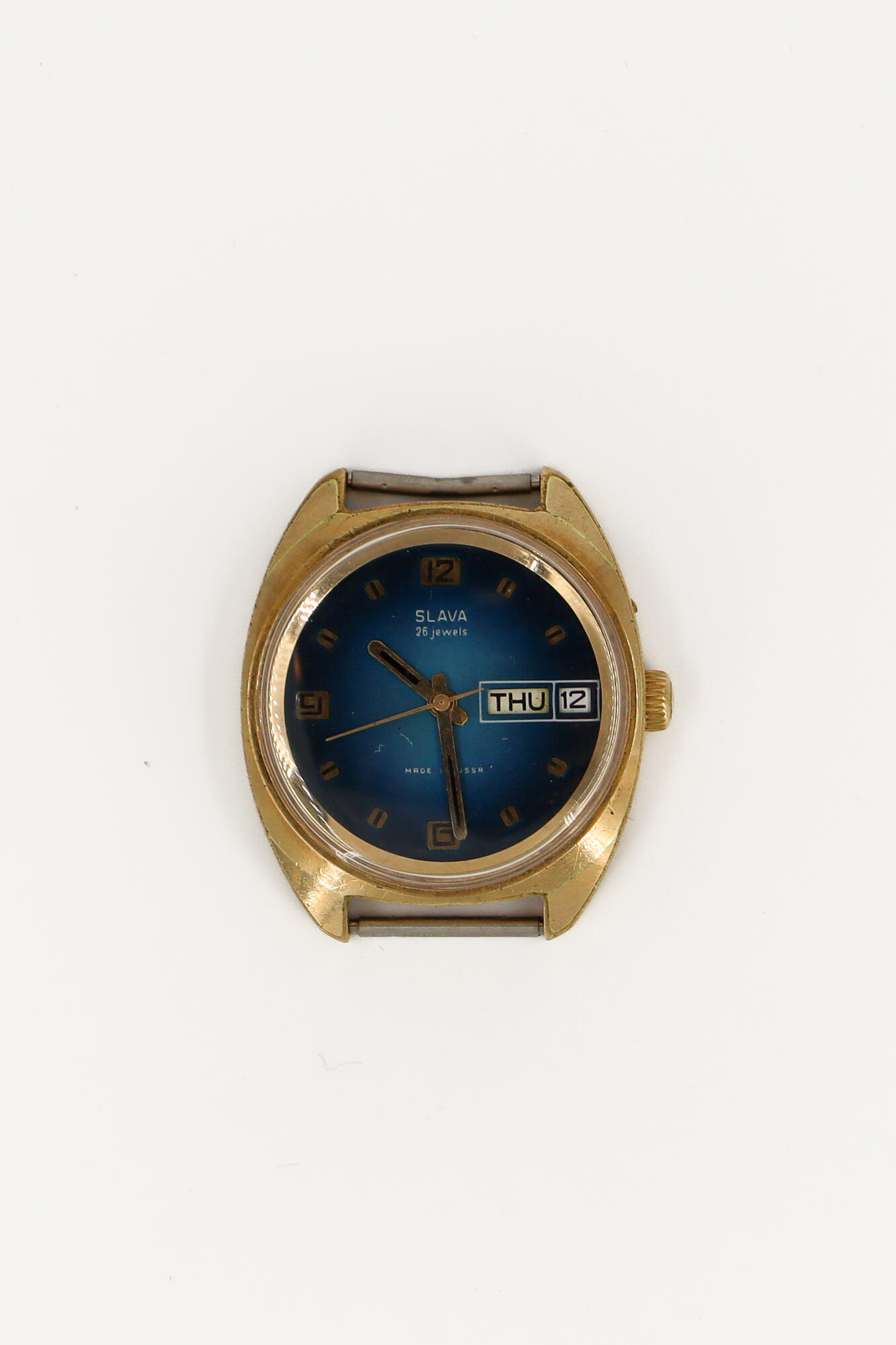
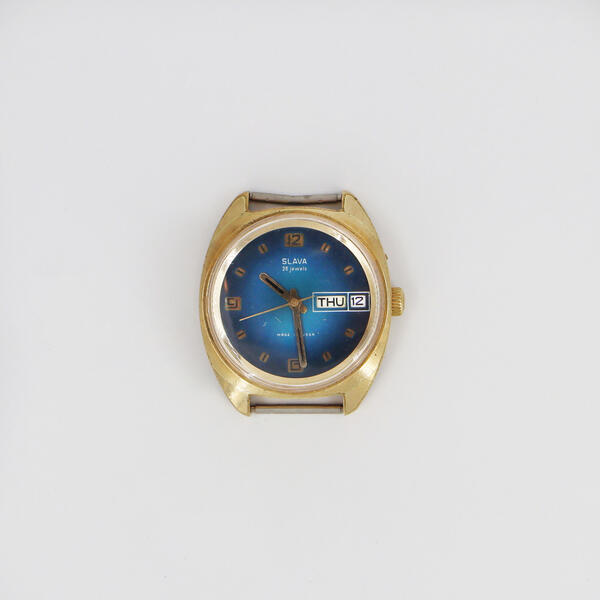
Famous men’s watches under the brand Slava were made in Russia. The history of the brand is connected with that of the Moscow Electromechanical Plant, established in 1924. First, the facility was engaged in assembling alarm clocks from imported materials. Then, when the Moscow Electromechanical Plant merged with the Aviapribor Plant, the new organization launched the production of wag-on-the-walls, wall clocks, alarm clocks, chess clocks, car dashboard clocks and electric clocks.
Over time, the range of products expanded. Since 1950, the plant had been producing women’s watches; men’s watches with one or two calendars, as well as with an automatic winding mechanism; quartz watches; mechanical alarm clocks, including small-sized ones.
Slava watches were designed in the late 1950s. Reliable chrome-plated and gilded watchcases protected the mechanism from dust and moisture. Some models did not require winding — the automatic spring winding mechanism was activated by hand movements. One of the models of men’s mechanical quartz watches featured a battery that lasted two years. Slava mechanisms were purchased by some Swiss, French and German companies and adopted for the production of their watches.
In 1974, one of the Slava watch models was awarded a gold medal by the Brno Exhibition Center. This success was repeated a year later at the Leipzig Trade Fair.
For its great achievements, the plant was awarded the Order of the October Revolution and the Order of the Red Banner of Labor.
The first wristwatch had extremely low accuracy, it did not even have second or minute hands. Although, by the early 19th century, the spring balance had already been invented, and French watches were more accurate than English ones.
The creation of men’s wristwatches is dated to the period of the Anglo-Burmese war of 1899–1902. Ever since that time, photographs of men with improvised wristwatches started to appear: for the sake of convenience, the soldiers fixed usual pocket watches on their wrists.
The peak of wristwatch production occurred in the 1920s — 1930s.
Famous men’s watches under the brand Slava were made in Russia. The history of the brand is connected with that of the Moscow Electromechanical Plant, established in 1924. First, the facility was engaged in assembling alarm clocks from imported materials. Then, when the Moscow Electromechanical Plant merged with the Aviapribor Plant, the new organization launched the production of wag-on-the-walls, wall clocks, alarm clocks, chess clocks, car dashboard clocks and electric clocks.
Over time, the range of products expanded. Since 1950, the plant had been producing women’s watches; men’s watches with one or two calendars, as well as with an automatic winding mechanism; quartz watches; mechanical alarm clocks, including small-sized ones.
Slava watches were designed in the late 1950s. Reliable chrome-plated and gilded watchcases protected the mechanism from dust and moisture. Some models did not require winding — the automatic spring winding mechanism was activated by hand movements. One of the models of men’s mechanical quartz watches featured a battery that lasted two years. Slava mechanisms were purchased by some Swiss, French and German companies and adopted for the production of their watches.
In 1974, one of the Slava watch models was awarded a gold medal by the Brno Exhibition Center. This success was repeated a year later at the Leipzig Trade Fair.
For its great achievements, the plant was awarded the Order of the October Revolution and the Order of the Red Banner of Labor.