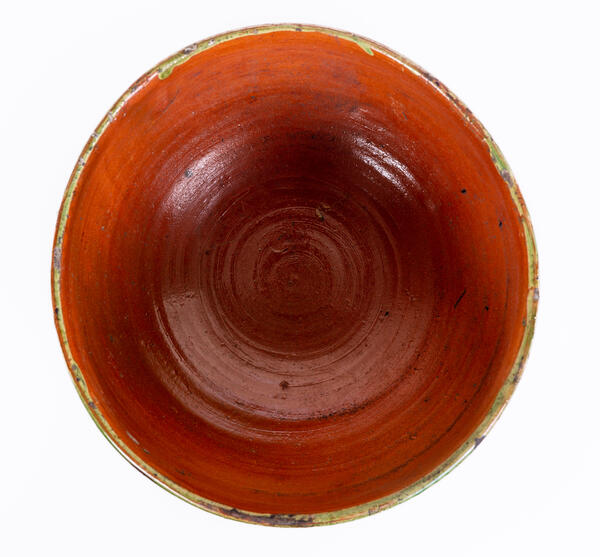
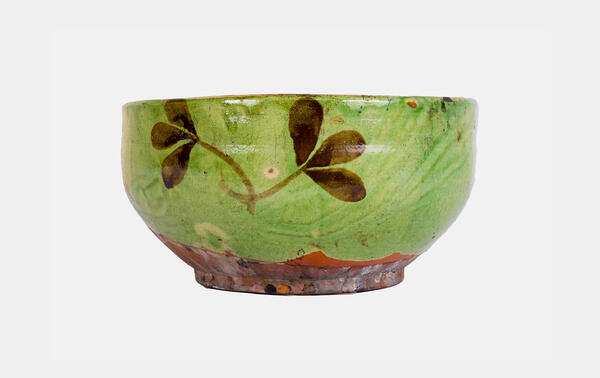
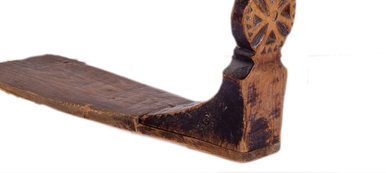
A bowl (korets, sudno) is a wooden, clay, or metal utensil of hemispherical shape on a low stand for storing and serving, as well as eating and drinking. Bowls were among the obligatory household utensils of a peasant family.
Bowls had different forms depending on their purpose. For example, a postavets bowl was supplemented with a lid, which served as a second proper vessel. Plate bowls with the salt cellars turned out in the center were rather common. A bowl with a handle — kovsh-korenets — was used to drink beverages from.
In folk culture, the bowl symbolized fate, prosperity, health and happiness, which is reflected in childbirth and wedding rituals. In the ritual of “visiting the woman in childbirth” she was served porridge with butter in a bowl “for the baby’s tooth”. During the engagement ritual, a large bowl was filled with vodka and placed on the table. The bride and her relatives were to drink the whole bowl in token of the agreement.
At the wedding feast a bowl of milk was served to the “prince and princess”, wishing that “their children would be healthy”. At the end of the meal the bowl together with bread, salt cellar, spoons, and other tableware were sewn into a tablecloth, which the young couple opened after visiting the bathhouse.
In the funeral ceremony, water was poured into the bowl to establish mediation between the worlds of the living and the dead. When a person died, the relatives watched the water in the vessel to see if it rippled: rippling meant that the soul was washed clean of its sins. If someone wanted to know more exact information about the afterlife, they turned to a witch, who also used a bowl of water as a “mirror” from the other world. To “treat” the soul of a deceased, a vessel with water and bread and salt were put on the window.
The mediating properties of the bowl also manifested themselves in fortune-telling related to marriage. On Christmas holidays, girls put nutshells with small candles in a bowl with water and watched: the girl whose nutshell would sink or candle would burn longer than others, would not marry, but the girl whose candle would be the first to burn away would marry first.
Healers dipped three embers and a copper icon into a bowl of water, whispered the incantation, and then sprinkled the water on the sick person.
It was believed that not only people ate from the bowl. After the Easter service they put a full bowl on the table, opened a window, and invited the Frost to “drink kissel with milk”, so that the year would be fertile. For a housewarming party a treat was left in the cellar for the house spirit: bread and salt and a bowl of vodka.