Most Tuvan instruments are accompanimental because they are always played along the throat singing. Aldar Konstantinovich Tamdyn explained that this is why “the sounds of the Tuvan igil, doshpuluur, byzaanchy and other instruments are characterized by a soft, velvety voice. The instrument should not drown out the voice of the performer.” Aldar Tamdyn is a master of making Tuvan national musical instruments and khoomeizhi (throat singing performer). From 2014 to 2021 he served as Minister of Culture of the Republic of Tuva.
Tuvan vocal and instrumental music originated from the sounds of nature: the sound of wind, water, birdsong, the cry of a baby musk deer (a small, deer-like animal), and the neighing of a horse.
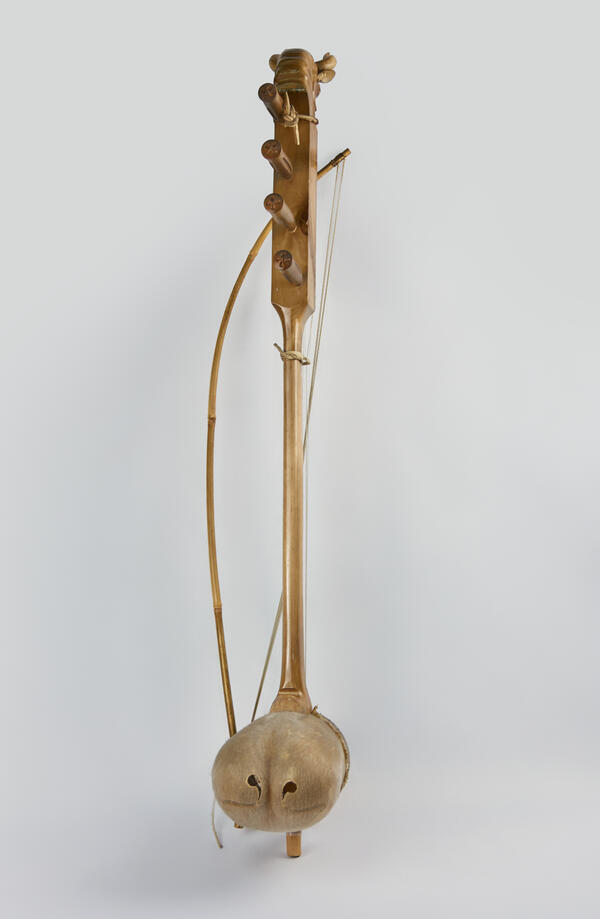
The soundboard of the byzaanchy is traditionally made of goat, calf, fish or maral skin. The hides of a calf, goat or maral are processed, while the fish skin is stretched over the finished body and dried immediately after being removed. Fish skin does not need glue, it glues itself perfectly to the wood.
The strings for the traditional byzaanchy are made of unspun horsehair. Their length can be easily adjusted by means of a movable upper yoke.
The bow-shaped fiddle of this instrument is usually made of osier-bed (willow shrubs). In the past, traditional byzaanchy were not brightly decorated on the outside, but later items were painted with national patterns.
In contrast to the soft, velvety timbre of the igil, that of the byzaanchy is harsher, even creaky and nasal. The music played on the byzaanchy is monophonic. The byzaanchy is mostly used as an accompaniment to the singer, or in ensemble with other instruments.
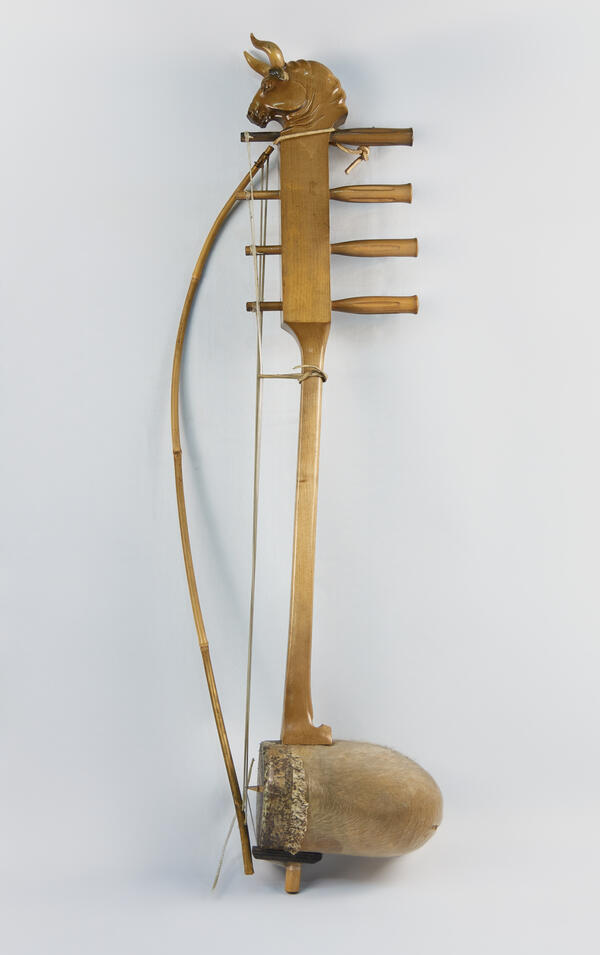
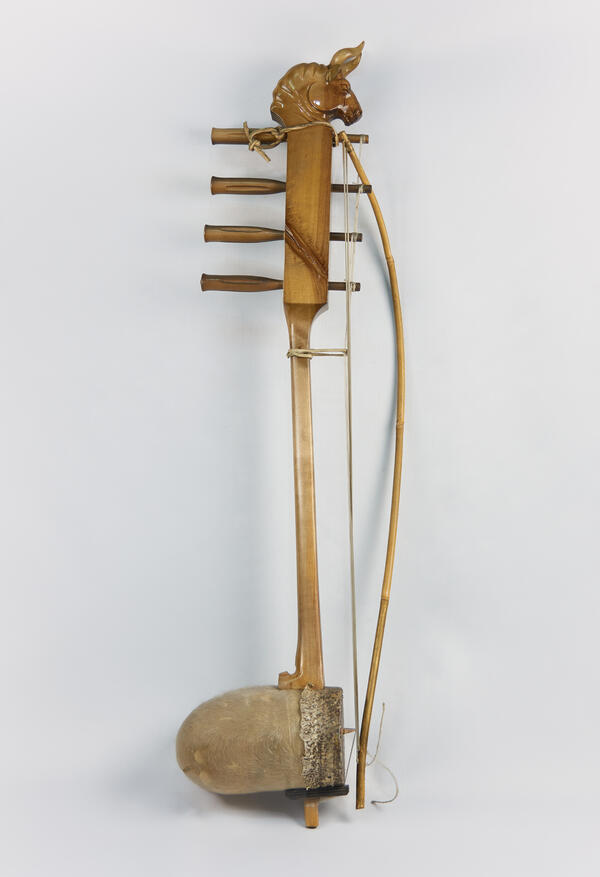
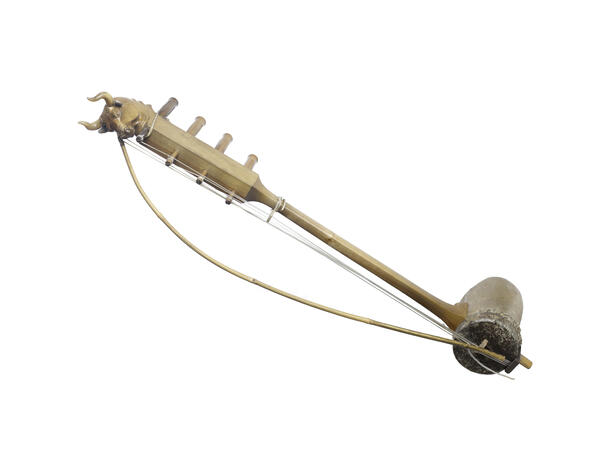
The museum exhibition presents a modern author’s interpretationof the traditional byzaanchy. It consists of two main parts: the body, made of dried bull’s scrotum, with a soundboard made of fish skin and a wooden neck, ending with a carved head in the form of a stylized bull’s head.
Four long tuning pins are inserted into the head,
on which the strings are strung. The strings are made of unspun horsehair. The
bow-shaped fiddle is passed between the strings. The tension of the bow’s hair
is regulated while playing with the ring and middle fingers of the right hand.
While playing the Tuvan byzaanchy, the performer’s fingers are under the
strings. Musicians touch the strings with their fingernails from underneath.