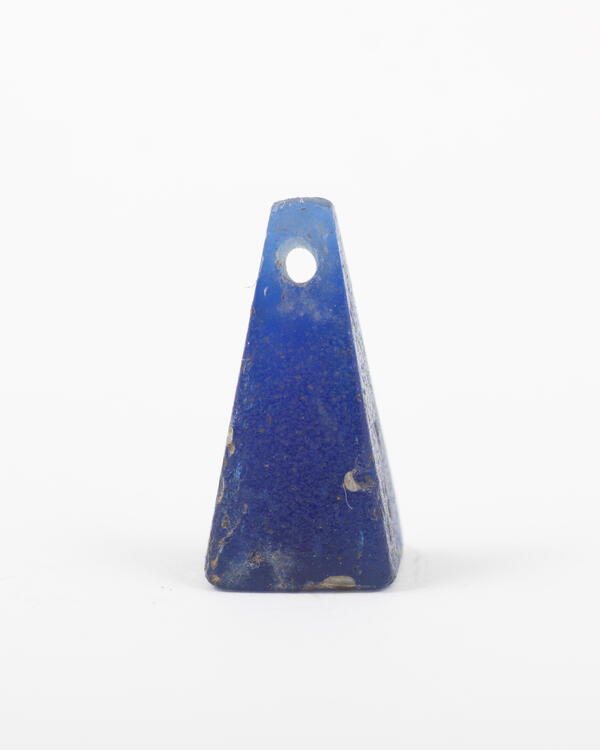
craftsmanship, beads and pendants provide researchers with information about the place, time, and technical level of production; as property, they characterize the social status of the owner; as components of a costume, they demonstrate ethnographic distinctiveness; and as decorative items, they reflect the aesthetic norms of the era.
Most glass beads, including polychrome ones, were imported into the area inhabited by the Chernyakhov archaeological culture rather than made locally. The same applies to coral beads, items made from semi-precious stones, and seashells. Corals and seashells were brought from settlements near the Mediterranean and Red Seas. Carnelian was mined and processed in India, Arabia, and Egypt. Amber beads were brought from the Baltic region.
Jewelry made by local artisans — such as horn pyramidal pendants and pendants made of iron and bronze — accounts for just over three percent of the total. Therefore, beads and pendants were predominantly imported items, which largely determined their specificity. Like other categories of mass imports, beads and pendants were luxury items intended to reinforce the status of the barbarian elite. This is evidenced, in particular, by the fact that only a quarter of the Chernyakhov burials contained such decorations, most of which were female.
In the structure of the Chernyakhovsky women’s
costume, beads and pendants were used to adorn the headdress (beaded trim on
the forehead band), hair (hair accessories), neck and chest (single neck
jewelry and necklaces), hands (bracelets or sleeve trims), belts (belt trim,
belt pouch trim, and belt amulets). The vast majority of beads and pendants
served as neck decorations. Men’s set was complemented by single neck decorations:
a bead or pendant. Men
rarely wore necklaces.