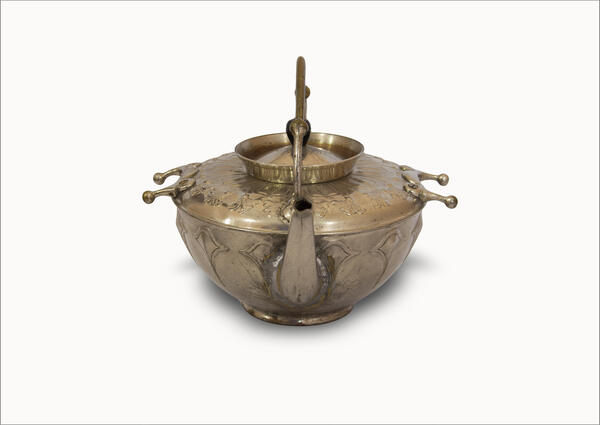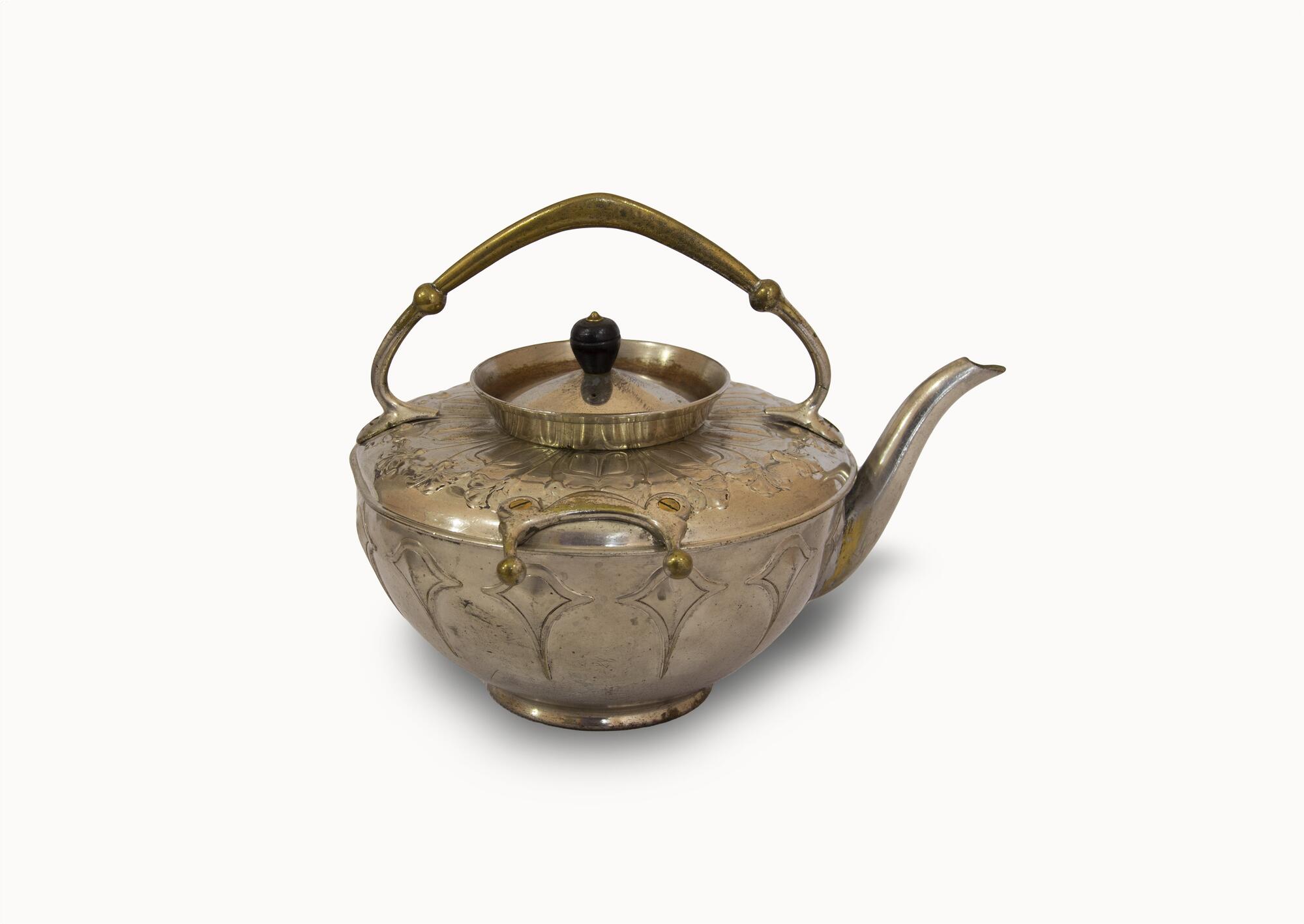


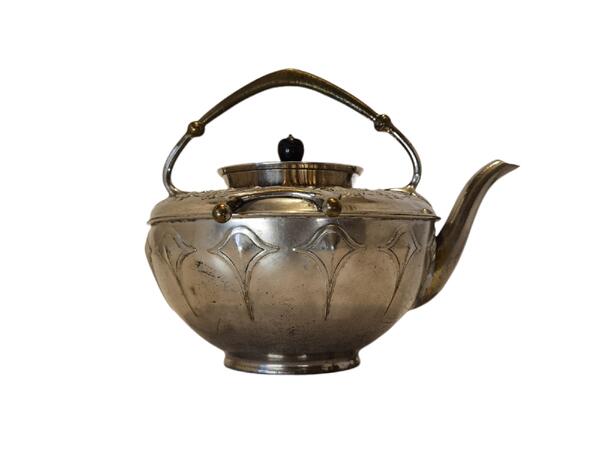
A spirit kettle (the Russian name “bouillotte” comes from a French word meaning “hot water bottle) is a vessel with a handle and a spout that sits upon a stand and has a burner beneath it. This type of kettles was made of silver, copper or their alloys with tin, zinc and other non-ferrous metals.
A spirit kettle would normally have a mounting stand with three or four legs. The height of the legs allowed putting a burner that used spirits under the bottom of the kettle.
This type of teapots was invented to heat water in field conditions, but spirit kettles turned out to be perfectly convenient at home — for serving tea. The kettle was filled with boiling water and placed over a low heat to maintain the temperature of water. Such kettles came in several shapes: they could be pear-shaped, bulbous, bullet-shaped, oval, spherical or melon-shaped. Teapots originated in the UK (the first mention dates back to 1687), but they first gained popularity in the early 18th during the reign of Queen Anne. At that time, teapots were small since tea was a luxury item and people brewed precious tea leaves in hot water many times. And the burner would use camphor instead of spirits.
In the last third of the 18th century, this type of kettles was replaced by tea urns. They were shaped like a lidded chalice and had a spout in the lower part of the body. Such tea urns were heated by putting suspended preheated bars in water. The tea urns from Western Europe had been modified and led to the invention of the samovar. The tea urn was placed next to the lady of the house in the living room, and hot water was brought from the kitchen by the maid, who filled the kettle with boiling water. Then tea was poured into the cups of the hosts and guests from the teapot, and boiling water was added from the tea urn. Sometimes tea, coffee or even other hot drinks — mulled wine, punch or grog — were brewed directly in tea urns.
A spirit kettle would normally have a mounting stand with three or four legs. The height of the legs allowed putting a burner that used spirits under the bottom of the kettle.
This type of teapots was invented to heat water in field conditions, but spirit kettles turned out to be perfectly convenient at home — for serving tea. The kettle was filled with boiling water and placed over a low heat to maintain the temperature of water. Such kettles came in several shapes: they could be pear-shaped, bulbous, bullet-shaped, oval, spherical or melon-shaped. Teapots originated in the UK (the first mention dates back to 1687), but they first gained popularity in the early 18th during the reign of Queen Anne. At that time, teapots were small since tea was a luxury item and people brewed precious tea leaves in hot water many times. And the burner would use camphor instead of spirits.
In the last third of the 18th century, this type of kettles was replaced by tea urns. They were shaped like a lidded chalice and had a spout in the lower part of the body. Such tea urns were heated by putting suspended preheated bars in water. The tea urns from Western Europe had been modified and led to the invention of the samovar. The tea urn was placed next to the lady of the house in the living room, and hot water was brought from the kitchen by the maid, who filled the kettle with boiling water. Then tea was poured into the cups of the hosts and guests from the teapot, and boiling water was added from the tea urn. Sometimes tea, coffee or even other hot drinks — mulled wine, punch or grog — were brewed directly in tea urns.