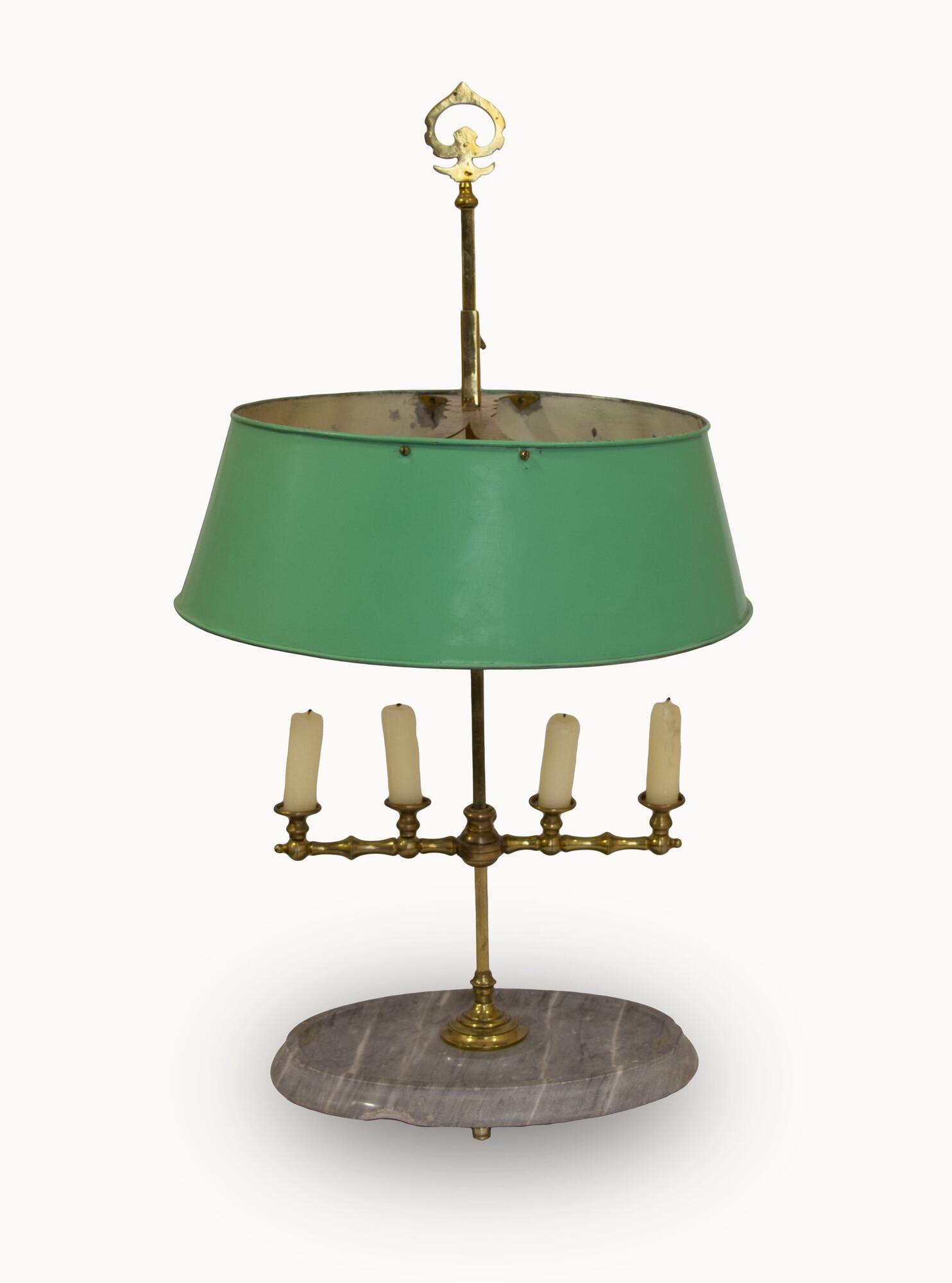


A lampshade with several candlesticks came to be known as a bouillotte lamp, taking its name from a popular French card game. The lamp came into use at the turn of the 19th century.
The standard game was for three to five players, using cards and chips. The card pack is reduced by removing the 6s, 7s and 9s. The main goal of the game is to score as many points as possible. The option of raising the stakes makes the game exciting and can lead to tragic consequences when the players start losing. Having originated in France, the game made its way to other European countries and became popular in the United States and the Russian Empire.
The card game was played in the evening and inspired a special lamp of the same name. Unlike a candelabrum, a bouillotte lamp used an opaque metal lampshade that moved along a vertical shaft. Below the shade, the lamp could have from one to four arms that were attached to the shaft and held the candles. A bouillon lamp was placed in the center of the card table, and the shade height was chosen in such a way as to leave the gamblers’ faces in the shadow, but illuminate their hands and cards. The lampshade design made it possible to adjust the light level during the game. The more intense the game became, the more light was needed on the hands of those present at the table.
A bouillotte lamp was used at card tables for other games as well, such as Preferans, Pharaoh or Farobank, and Skat. These lamps witnessed many dramas in Russian society in the first half of the 19th century, that were later depicted in literature, painting and genre scenes on objects of decorative and applied art.
Over time, the role of the bouillotte lamp had changed, and it had become a distinctive item present on the desk of a Russian government official. Cast gilded bronze was used to make these expensive lamps, and the lampshades were decorated with ornamental compositions on a red or green background. This bureaucratic tradition was followed way into the Stalin era when political leaders would place lamps with green shades in their cabinets. The green cloth of the card tables was also used for the Soviet desks.
The standard game was for three to five players, using cards and chips. The card pack is reduced by removing the 6s, 7s and 9s. The main goal of the game is to score as many points as possible. The option of raising the stakes makes the game exciting and can lead to tragic consequences when the players start losing. Having originated in France, the game made its way to other European countries and became popular in the United States and the Russian Empire.
The card game was played in the evening and inspired a special lamp of the same name. Unlike a candelabrum, a bouillotte lamp used an opaque metal lampshade that moved along a vertical shaft. Below the shade, the lamp could have from one to four arms that were attached to the shaft and held the candles. A bouillon lamp was placed in the center of the card table, and the shade height was chosen in such a way as to leave the gamblers’ faces in the shadow, but illuminate their hands and cards. The lampshade design made it possible to adjust the light level during the game. The more intense the game became, the more light was needed on the hands of those present at the table.
A bouillotte lamp was used at card tables for other games as well, such as Preferans, Pharaoh or Farobank, and Skat. These lamps witnessed many dramas in Russian society in the first half of the 19th century, that were later depicted in literature, painting and genre scenes on objects of decorative and applied art.
Over time, the role of the bouillotte lamp had changed, and it had become a distinctive item present on the desk of a Russian government official. Cast gilded bronze was used to make these expensive lamps, and the lampshades were decorated with ornamental compositions on a red or green background. This bureaucratic tradition was followed way into the Stalin era when political leaders would place lamps with green shades in their cabinets. The green cloth of the card tables was also used for the Soviet desks.


