

For centuries, etiquette required women to wear headdresses in public. Together with them, special stiff rods about ten centimeters long with a decorated tip were common. They were used to fasten veils, kerchiefs and later, at the turn of the 20th century, hats. At that time, the rods began to be rightly called hat pins.
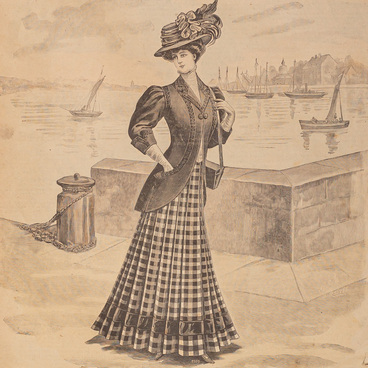
Hats at the turn of the 20th century represented an elaborate structure that was decorated with laces, ribbons, feathers and flowers that had to be held on the head. In the 1880s and 1920s the fashion for flamboyant hats and bouffant curls reached its height. Fashionable hairstyles were often created by artificial means — using chignons. They were actually part of the headdress and were removed together with it. A long pin was used to pierce both the hat and the artificial curls and fix them to the hair. Creating the look was time-consuming, and women willingly took advantage of the rule that allowed them to keep their hats on indoors.
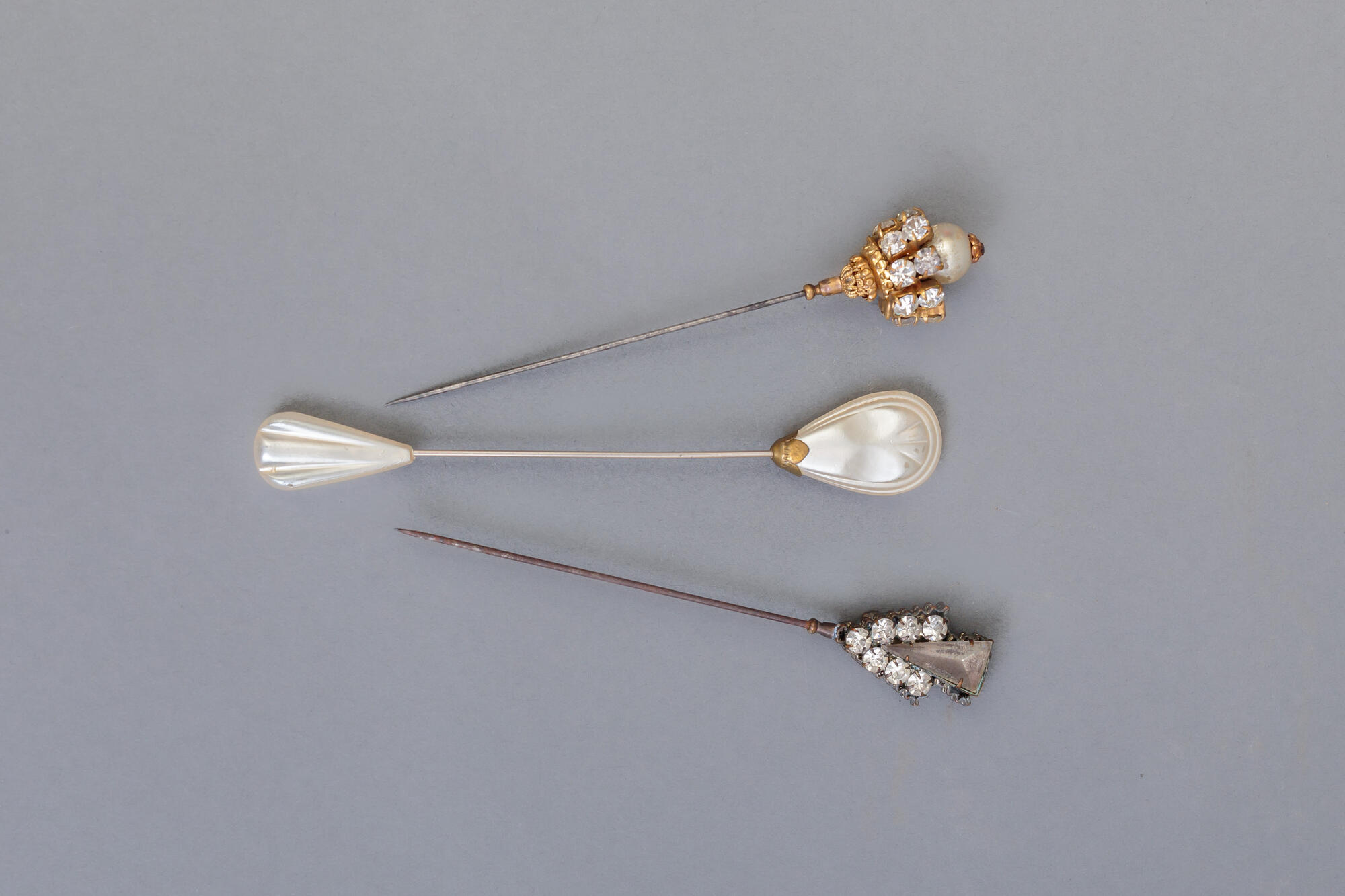
Hat pins resembled tie pins — having an ornament on one end and a safety tip on the other — but were considerably longer. They were works of jewelry and applied art: decorated with carved bone, mother-of-pearl, opals, aquamarines, pearls or large beads; there were pieces finished with enamel, strasses or filigree. An unusual and practical decoration was a powder box or a mirror on the end.
The length and danger of hat pins in the early 20th century were both a target of ridicule and fear. The metal, rigid rod served as an excellent tool for self-defense and sometimes for committing crimes. In public places, particularly in horse trams, pins were often the cause of injuries. Ladies “bristling” with pins became the characters of numerous caricatures in which gentlemen were forced to take cover and dodge the fashionable spikes.
In the United States and Europe, and later in Russia, it was forbidden by law to wear pins that were too long without a safety tip. However, it proved difficult to enforce this requirement: the tips often came unscrewed, and women did not agree to give up the fashion accessory. The danger of hat pins only passed when they fell out of fashion.
Hats at the turn of the 20th century represented an elaborate structure that was decorated with laces, ribbons, feathers and flowers that had to be held on the head. In the 1880s and 1920s the fashion for flamboyant hats and bouffant curls reached its height. Fashionable hairstyles were often created by artificial means — using chignons. They were actually part of the headdress and were removed together with it. A long pin was used to pierce both the hat and the artificial curls and fix them to the hair. Creating the look was time-consuming, and women willingly took advantage of the rule that allowed them to keep their hats on indoors.
Hat pins resembled tie pins — having an ornament on one end and a safety tip on the other — but were considerably longer. They were works of jewelry and applied art: decorated with carved bone, mother-of-pearl, opals, aquamarines, pearls or large beads; there were pieces finished with enamel, strasses or filigree. An unusual and practical decoration was a powder box or a mirror on the end.
The length and danger of hat pins in the early 20th century were both a target of ridicule and fear. The metal, rigid rod served as an excellent tool for self-defense and sometimes for committing crimes. In public places, particularly in horse trams, pins were often the cause of injuries. Ladies “bristling” with pins became the characters of numerous caricatures in which gentlemen were forced to take cover and dodge the fashionable spikes.
In the United States and Europe, and later in Russia, it was forbidden by law to wear pins that were too long without a safety tip. However, it proved difficult to enforce this requirement: the tips often came unscrewed, and women did not agree to give up the fashion accessory. The danger of hat pins only passed when they fell out of fashion.