

Shamanism was widespread among the Khakasses until the middle of the 19th century. According to their beliefs, the world was filled with countless spirits, good and evil ones. The intermediary between the creators of the world, man, and spirits was a shaman — kam. He was believed to have an extra bone in his body.
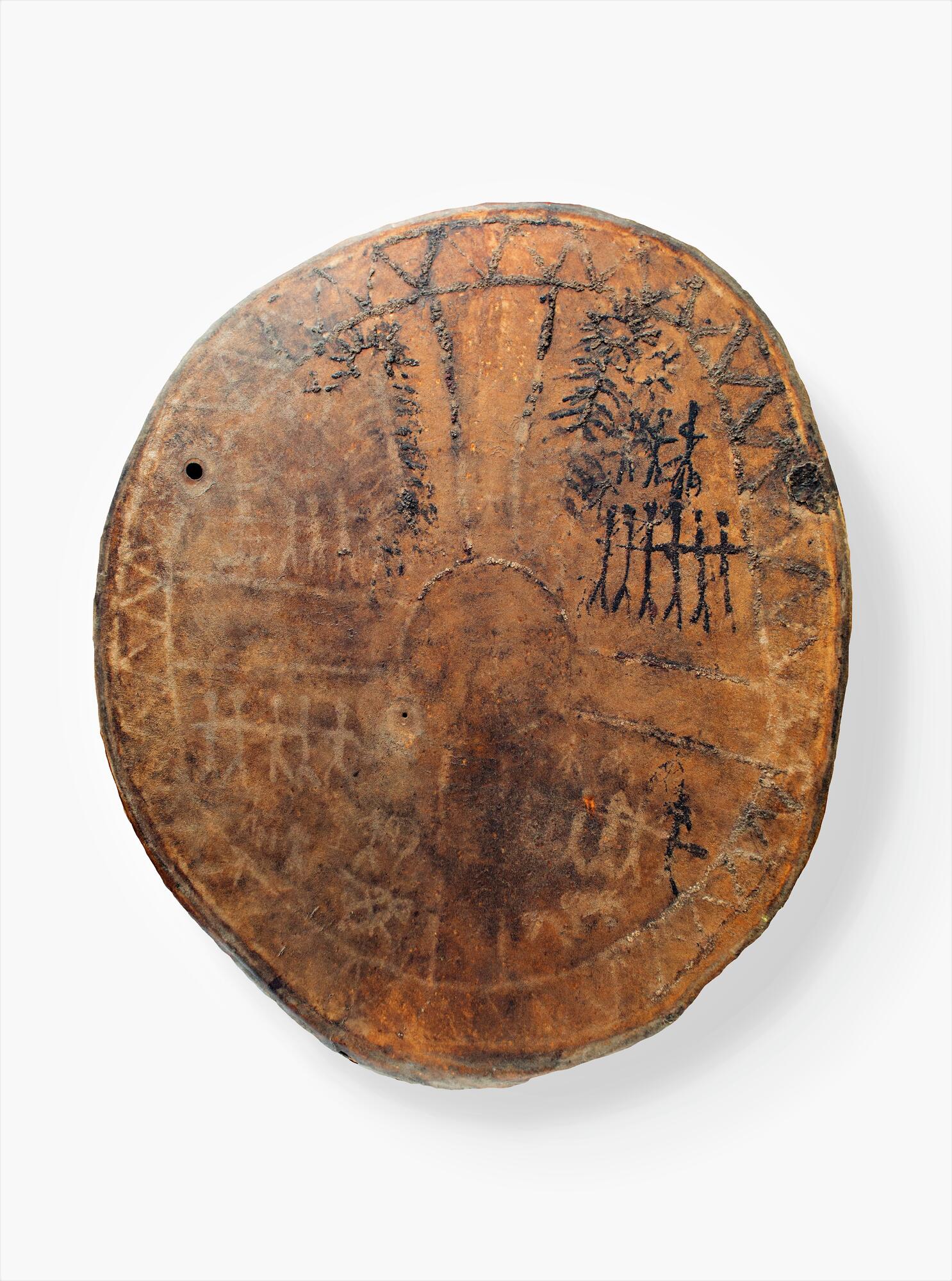
A tambourine was considered the most important shamanic attribute. Not everyone could make it, it was important to observe all the rules and customs. For the tambourine a master chopped the material from a living tree, without cutting it down. The shaman himself indicated the location of such a tree. The rim was then covered with leather and after that symbolic drawings were applied on the leather.
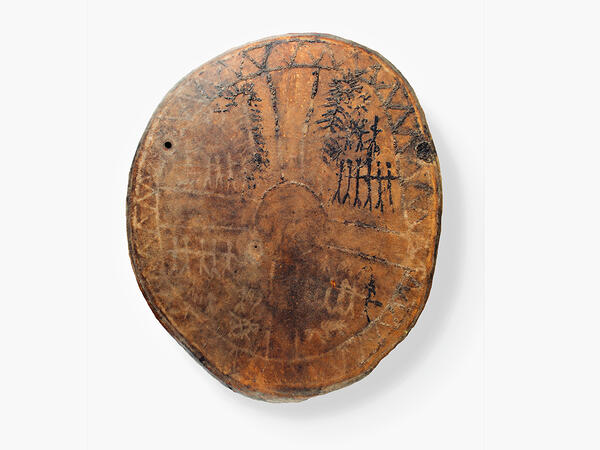
The Kachins, a branch of the Khakass people, depicted spirits on the face of the tambourine that supposedly helped the shaman: a cuckoo, two eagles, two other white birds, and a humanoid spirit on horseback.
Each drawing had its own meaning. The cuckoo was believed to echo the shaman when he was performing shamanistic rituals (communicating with spirits) and describing the mountains and waters he traversed in the Upper World. With this, the bird enhanced his magical gift. Without the image of the cuckoo, the owner of the tambourine could not pray to the gods of the Upper World.
The two eagles symbolized the spirits, which became the shaman’s vision during shamanistic rituals — they helped him to describe the mountains and waters in the Upper World. They were also believed to cure coughs. Two white birds cured eye diseases. And the humanoid spirit helped to find out who caused disease to the person who invited the shaman to perform the ritual.
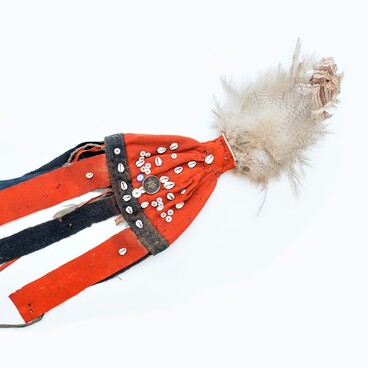
In addition to spirits-helpers, in the upper part of tambourines Kachins drew the sun, moon, seven stars (Big Dipper), evening star, morning star (Venus), and two birches. A figure of the master of the tambourine himself was depicted near one of the birches. In the picture he stood with cloth rags in his hands — shamans used them during shamanistic rituals.
When a tambourine was ready, a ritual of its ‘revival’ was performed. For this purpose, a shaman would look for a kut — the soul of the animal whose skin was wrapped around the tambourine — and catch it. Then the tambourine ‘came alive’.
Kachin people considered a tambourine a sacred object — only the one for whom it was made could use it. After a shaman died, a tambourine was hung on a tree not far from his burial place. Relatives kept the mallet and later handed it over to the successor of the shaman.
A tambourine was considered the most important shamanic attribute. Not everyone could make it, it was important to observe all the rules and customs. For the tambourine a master chopped the material from a living tree, without cutting it down. The shaman himself indicated the location of such a tree. The rim was then covered with leather and after that symbolic drawings were applied on the leather.
The Kachins, a branch of the Khakass people, depicted spirits on the face of the tambourine that supposedly helped the shaman: a cuckoo, two eagles, two other white birds, and a humanoid spirit on horseback.
Each drawing had its own meaning. The cuckoo was believed to echo the shaman when he was performing shamanistic rituals (communicating with spirits) and describing the mountains and waters he traversed in the Upper World. With this, the bird enhanced his magical gift. Without the image of the cuckoo, the owner of the tambourine could not pray to the gods of the Upper World.
The two eagles symbolized the spirits, which became the shaman’s vision during shamanistic rituals — they helped him to describe the mountains and waters in the Upper World. They were also believed to cure coughs. Two white birds cured eye diseases. And the humanoid spirit helped to find out who caused disease to the person who invited the shaman to perform the ritual.
In addition to spirits-helpers, in the upper part of tambourines Kachins drew the sun, moon, seven stars (Big Dipper), evening star, morning star (Venus), and two birches. A figure of the master of the tambourine himself was depicted near one of the birches. In the picture he stood with cloth rags in his hands — shamans used them during shamanistic rituals.
When a tambourine was ready, a ritual of its ‘revival’ was performed. For this purpose, a shaman would look for a kut — the soul of the animal whose skin was wrapped around the tambourine — and catch it. Then the tambourine ‘came alive’.
Kachin people considered a tambourine a sacred object — only the one for whom it was made could use it. After a shaman died, a tambourine was hung on a tree not far from his burial place. Relatives kept the mallet and later handed it over to the successor of the shaman.