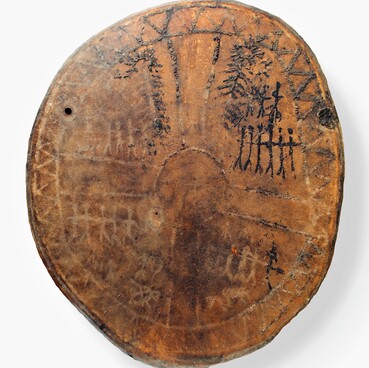


The Minusinsk Museum’s collection of shamanism and shamanistic attributes includes over 250 items. They reflect the religious beliefs of several indigenous peoples: Khakasses, Tuvans, Ostyaks (Khanty), Tungusses, and Altaians.
Officially, the Khakasses were considered Christians. However, a great part of their life was occupied by shamanism, an early religion based on ritual communication of shamans with spirits and shamanistic rituals.
According to beliefs, many good and evil spirits inhabited the entire material world that surrounded men, including valleys, forests, rivers, the sky, and the underworld. Those spirits needed to be propitiated.
Khakasses divided spirits into heavenly and underground ones. The god Ulgen was in charge of the heavenly spirits (chayannar). These creatures were kind and brought people prosperity and happiness. The underground spirits (aynalar) headed by the lord of the underworld Erlik-khan (or Il-khan) caused evil things and sent diseases.
There were also spirits called tyoses. According to folk beliefs, tyoses were invisible eternal beings. It was believed that they chose their masters among shamans and became their obedient assistants. The more of them a shaman had, the more powerful he was.
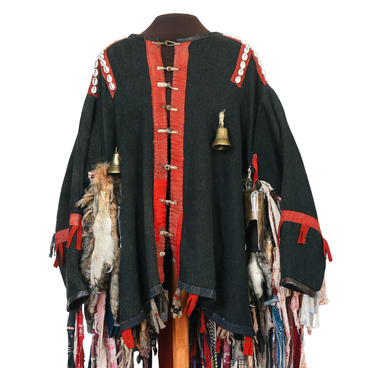
A shaman (kam) was a mediator between the creators of the world, people and spirits. The name of the shamanistic ritual (kamlaniye) also derives from the word ‘kam’. During the ritual, Khakass shamans dressed in a special costume that consisted of a jacket (or a cloak), a hat, and boots.
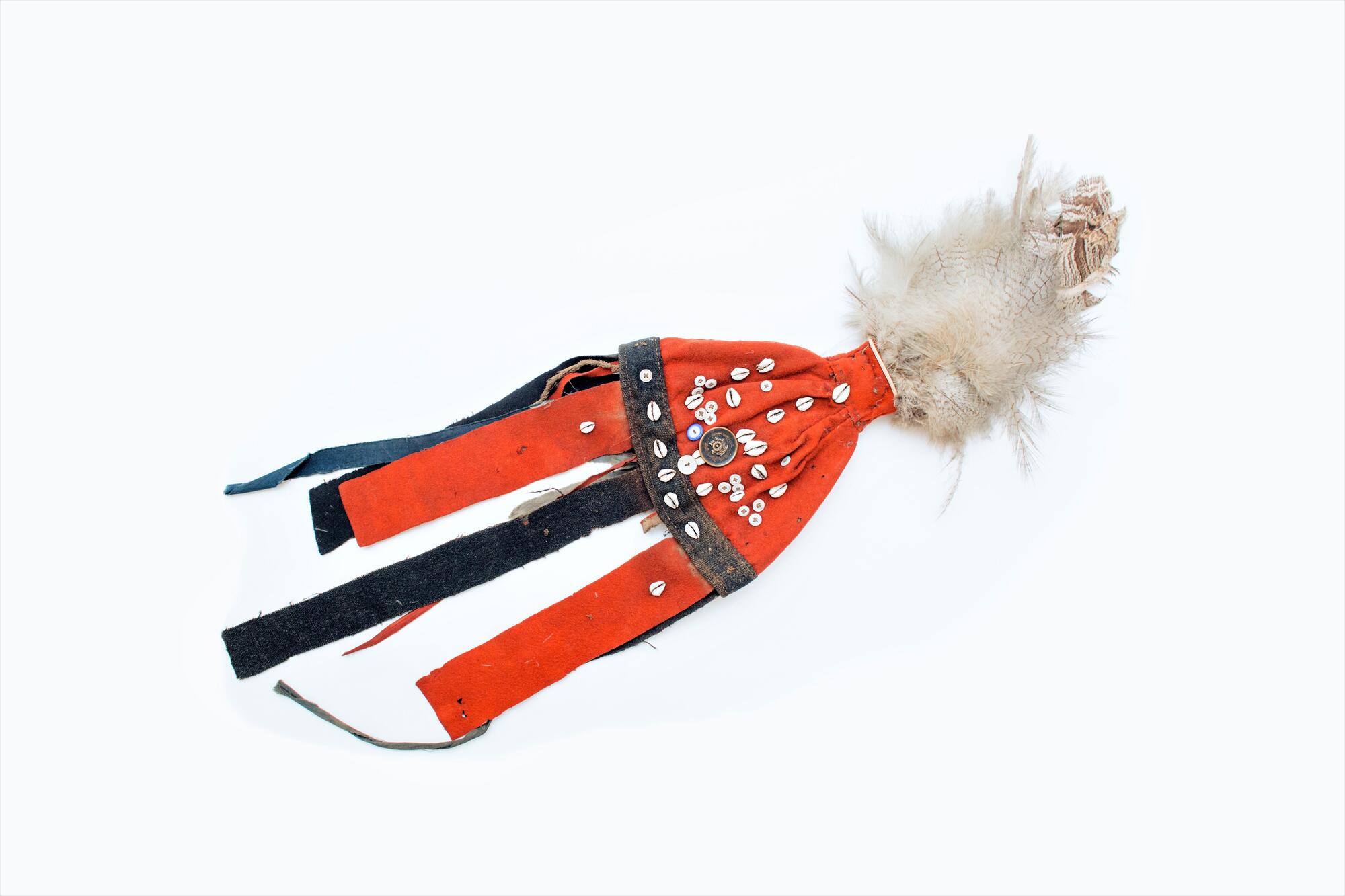
The ritual headdress of a Khakass shaman is called Kham pyurik. Such hat, resembling a top hat, was sewn from a piece of red woolen cloth. Kachin shaman hats necessarily had a tail braid made of a bundle of ribbons or a wide cloth ribbon.
An attribute made of a bird’s beak or feathers of a bird of prey was placed on top of the hat and there it was tilted back. The entire surface of the hat was decorated with cowrie (chylynmas) clamshells and mother-of-pearl buttons, and the edges were fringed with lace to cover a shaman’s face. During the shamanistic ritual, shamans would look through the lace.
The whole ritual costume symbolized a bird, into which the shaman could turn at the right moment, when he was, for example, looking for enemies during the ritual or fighting them.
Officially, the Khakasses were considered Christians. However, a great part of their life was occupied by shamanism, an early religion based on ritual communication of shamans with spirits and shamanistic rituals.
According to beliefs, many good and evil spirits inhabited the entire material world that surrounded men, including valleys, forests, rivers, the sky, and the underworld. Those spirits needed to be propitiated.
Khakasses divided spirits into heavenly and underground ones. The god Ulgen was in charge of the heavenly spirits (chayannar). These creatures were kind and brought people prosperity and happiness. The underground spirits (aynalar) headed by the lord of the underworld Erlik-khan (or Il-khan) caused evil things and sent diseases.
There were also spirits called tyoses. According to folk beliefs, tyoses were invisible eternal beings. It was believed that they chose their masters among shamans and became their obedient assistants. The more of them a shaman had, the more powerful he was.
A shaman (kam) was a mediator between the creators of the world, people and spirits. The name of the shamanistic ritual (kamlaniye) also derives from the word ‘kam’. During the ritual, Khakass shamans dressed in a special costume that consisted of a jacket (or a cloak), a hat, and boots.
The ritual headdress of a Khakass shaman is called Kham pyurik. Such hat, resembling a top hat, was sewn from a piece of red woolen cloth. Kachin shaman hats necessarily had a tail braid made of a bundle of ribbons or a wide cloth ribbon.
An attribute made of a bird’s beak or feathers of a bird of prey was placed on top of the hat and there it was tilted back. The entire surface of the hat was decorated with cowrie (chylynmas) clamshells and mother-of-pearl buttons, and the edges were fringed with lace to cover a shaman’s face. During the shamanistic ritual, shamans would look through the lace.
The whole ritual costume symbolized a bird, into which the shaman could turn at the right moment, when he was, for example, looking for enemies during the ritual or fighting them.