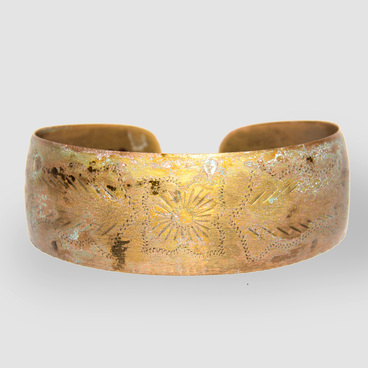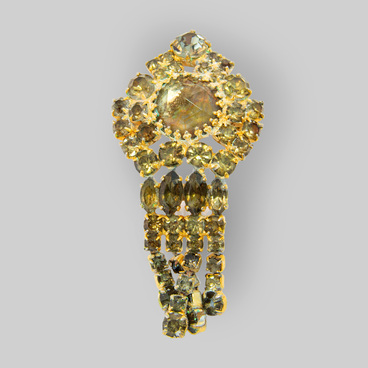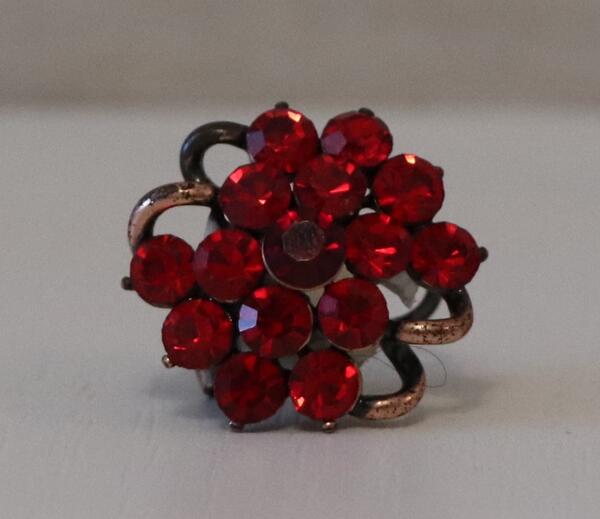
The history of the brooch is inextricably linked with the evolution of clothing. As soon as people began to wear something more complicated than a loincloth, there was an urgent need for a device to fasten the edges of the clothes so that they did not fall off. Hence the name that arose in French — broche, which meant, among other things, “a product with a long needle.”
There are a lot of varieties of brooches, the most common options are the fibula, badge, brooch-chatelaine, boutonniere, engraved gem (a cameo has a design projecting out of the backround, and an intaglio has a sunken image), corsage brooch, dress clip, sévigné, and various pins. The fibula is arguably the most ancient type of brooch — it was common from the Bronze Age to the early Middle Ages. A metal clasp fastened parts of clothing and at the same time served as decoration. Fibulas were used by the ancient Greeks, Romans, Slavs and Vikings, but it was the Latin name that has remained.
Brooches could come in different shapes, but they were always made of metal and consisted of a needle, a needle holder, and a body. Bronze clasps were worn by ordinary people, while aristocrats could afford brooches made of precious metals.
The widespread use of buttons from about the 13th century and the appearance of hooks in the 14th century led to the fact that brooches lost their practical purpose. The main function of the ancient brooch was decorative, and as a decorative item, the brooch became widespread. Brooches are distinguished by the material, the type of decorative processing and the type of fastening.
According to the material used for manufacturing, brooches are divided into products made of precious metals (with and without inlays), those made of brass or other alloys and those made of other materials (polymer clay, plastic, leather, beads, wood, textiles, and felted wool). According to the type of decorative processing, brooches are divided into openwork, smooth, gem brooches, mosaic and enamel. According to the type of attachment, brooches are divided into a brooch-pin, a brooch-hairpin and a brooch-needle.