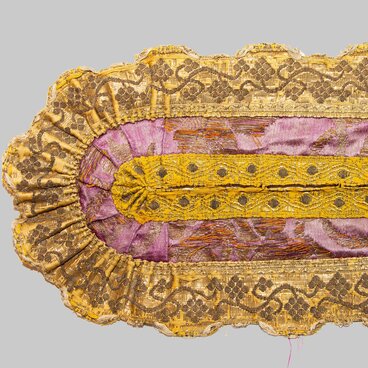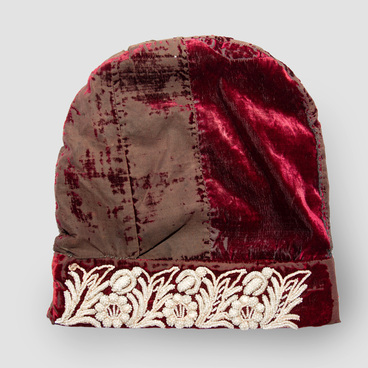
The story of the Tatar national costume dates back to the middle of the 18th century, but the outfit that has survived to this day was formed a little later, around the 19th century. The Tatar costume was influenced by the Volga Tatars and the traditions of the peoples of the East.
From a young age, Tatar women learned to sew and embroider. When making clothes, they applied all their skill and patience, and as a result, obtained beautiful and feminine costumes. Like a mirror, the costume reflected the occupations of the ancestors — those who tilled the ground and raised cattle. It also contained allusions to the climate, trade routes, ideals of beauty, religion, changing socio-economic conditions, and contacts with other peoples.
At the turn of the 20th century, the fashion for short sleeveless waistcoats spread among young people under the influence of European costume. Young men began to wear vest-type coats, girls — tightly fitted waistcoats with an open chest neckline and non-wrap front parts, which were sometimes fastened with hooks, and sometimes with a beautiful buckle called “captyrma”. Both men and women wore the waistcoat, mainly as a festive costume, on top of a shirt.
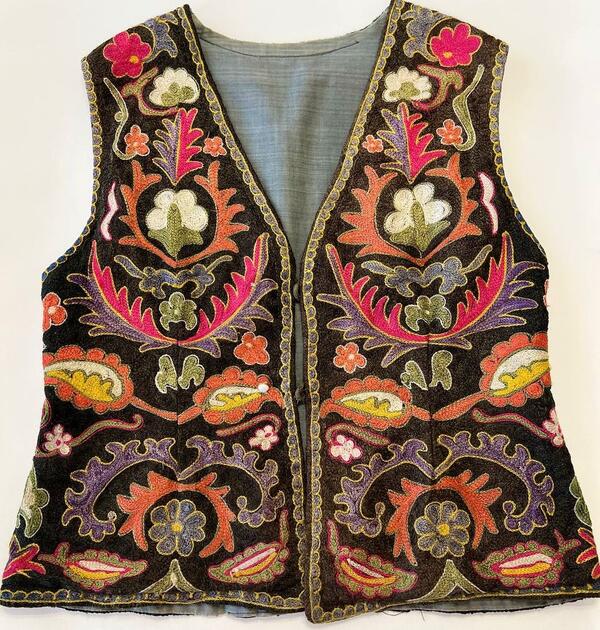
The exhibition features a women’s vest made in the early 20th century. A short and narrow sleeveless jacket tightly fitting the body was wrapped on the left side and fastened with buttons or hooks. It always had a lining and, like other clothes of this kind, was sewn from factory fabrics of a dark, mainly black color. The vest had no pockets. A floral pattern was embroidered with tambour technique all over the vest, and the edges were embroidered with a zigzag. The lining was often made of fabric — mainly expensive materials (velvet, brocade, plush, cloth, and silk) were used, less often — fur.
The cut of the men’s waistcoat differed from the women’s — it had an additional small stand-up collar and it was not fitted as tightly. Usually, a women’s vest was cut so that it tightly fitted the waist, and the inserted wedges formed wide coattails towards the hip line. According to the number of wedges, there were three-seam and five-seam waistcoats. Along the edges, hem and armholes, the women’s vest was decorated with cords, applied woven braids, or swan’s down.
From a young age, Tatar women learned to sew and embroider. When making clothes, they applied all their skill and patience, and as a result, obtained beautiful and feminine costumes. Like a mirror, the costume reflected the occupations of the ancestors — those who tilled the ground and raised cattle. It also contained allusions to the climate, trade routes, ideals of beauty, religion, changing socio-economic conditions, and contacts with other peoples.
At the turn of the 20th century, the fashion for short sleeveless waistcoats spread among young people under the influence of European costume. Young men began to wear vest-type coats, girls — tightly fitted waistcoats with an open chest neckline and non-wrap front parts, which were sometimes fastened with hooks, and sometimes with a beautiful buckle called “captyrma”. Both men and women wore the waistcoat, mainly as a festive costume, on top of a shirt.
The exhibition features a women’s vest made in the early 20th century. A short and narrow sleeveless jacket tightly fitting the body was wrapped on the left side and fastened with buttons or hooks. It always had a lining and, like other clothes of this kind, was sewn from factory fabrics of a dark, mainly black color. The vest had no pockets. A floral pattern was embroidered with tambour technique all over the vest, and the edges were embroidered with a zigzag. The lining was often made of fabric — mainly expensive materials (velvet, brocade, plush, cloth, and silk) were used, less often — fur.
The cut of the men’s waistcoat differed from the women’s — it had an additional small stand-up collar and it was not fitted as tightly. Usually, a women’s vest was cut so that it tightly fitted the waist, and the inserted wedges formed wide coattails towards the hip line. According to the number of wedges, there were three-seam and five-seam waistcoats. Along the edges, hem and armholes, the women’s vest was decorated with cords, applied woven braids, or swan’s down.