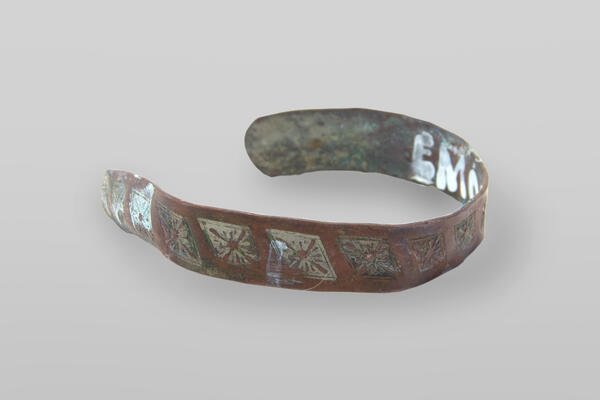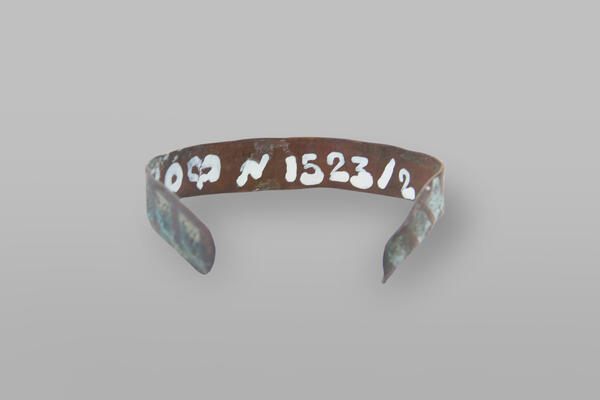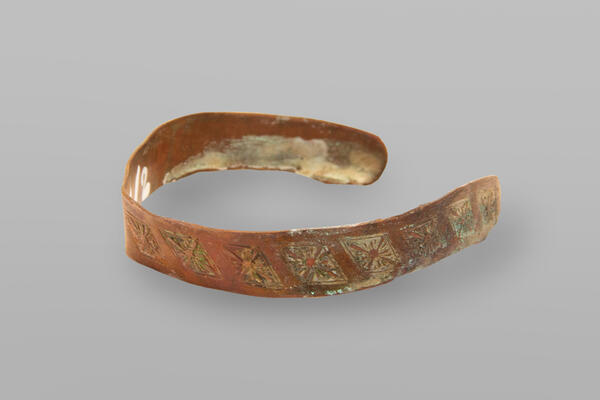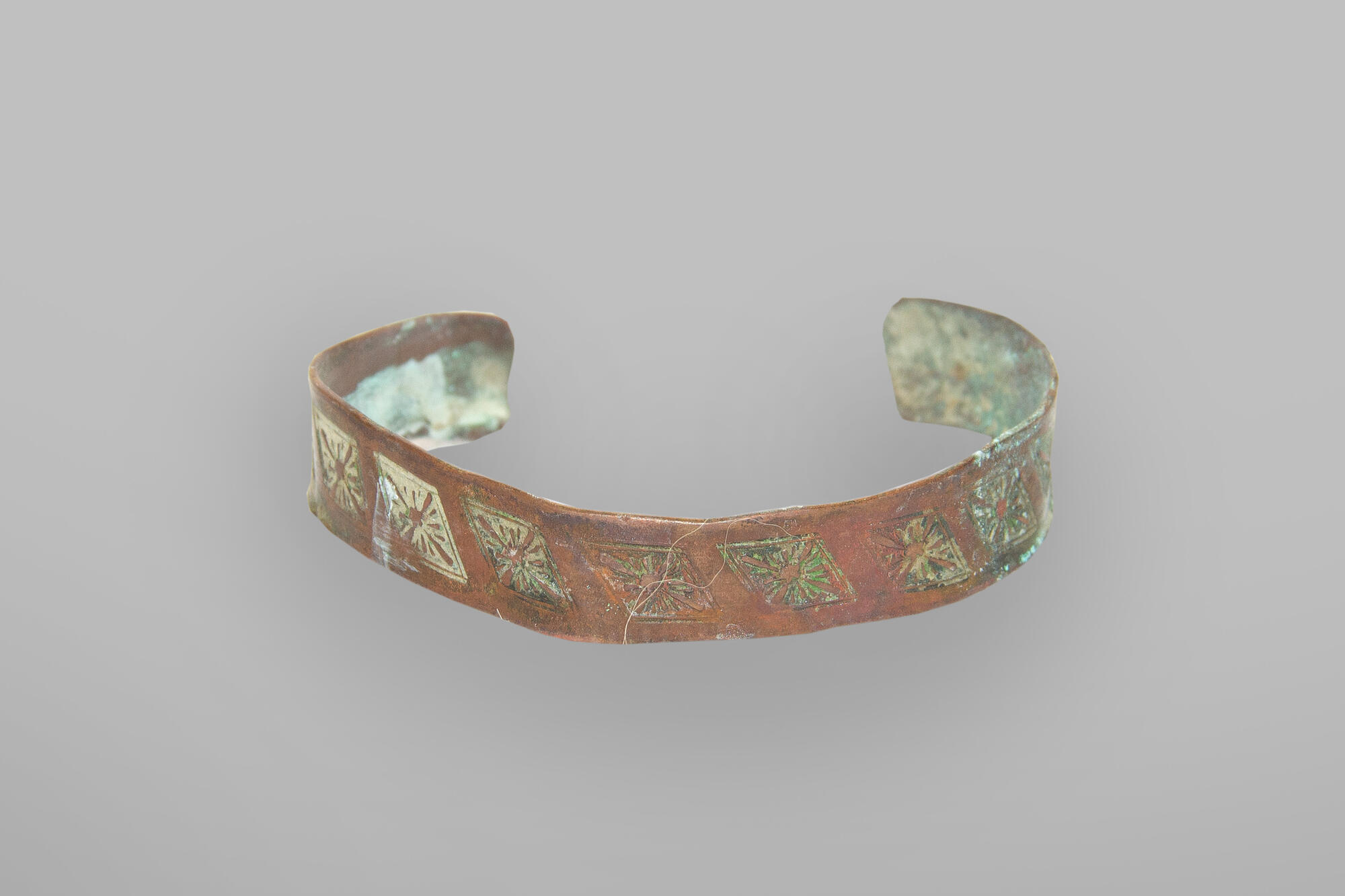


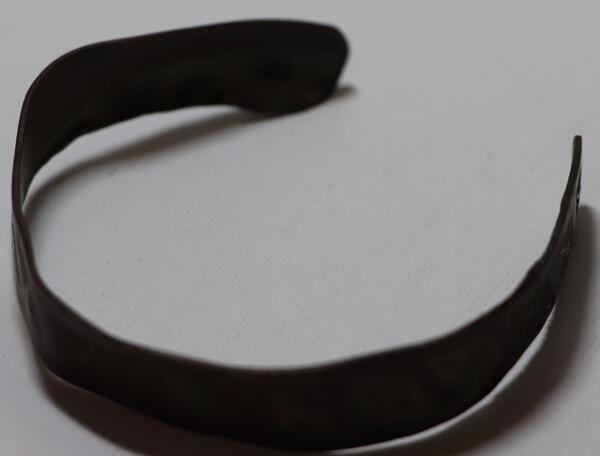
The bracelet from the permanent exhibition was kept for a long time by the Sharipovs, residents of the Turaev village in the Tyumen region. It was not just a piece of jewelry, but a protective amulet as well. The family heirloom was transferred to the Embaevo village museum in 2015, where it has remained up to this day.
The bracelet is made of copper and is plate-shaped. On the outer side, a national ornament is engraved along the circumference. Due to its age, the bracelet has traces of use: it is deformed and darkened.
The main material from which jewelry was made was silver (“kumish”) that had varying degrees of purity. Cheap items had the smallest percentage of silver; also, inexpensive decorations were made of tin, copper, bronze, and brass. Gold as a material for jewelry was used much less frequently. Products were decorated by chasing, engraving, stamping, casting, enamel and flat filigree.
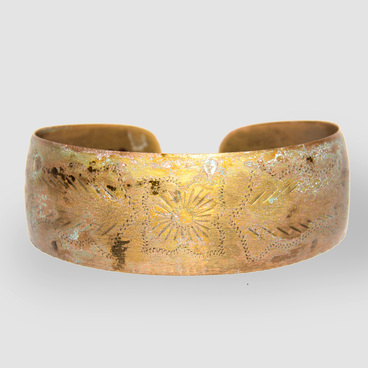
Bracelets could be solid or compound. A solid one was a plate bent into a ring, closed or open around the circumference of the arm; its width could vary. Two, three or more fragments — plates, coins, and gems — were combined into composite bracelets. These bracelets were closed on the arm into a single ring using a hook and loop or a specific clasp.
A “belezek” (Tatar for “bracelet”) was an indispensable element of the national costume. Married women wore paired bracelets on both hands, girls — one or more on one hand.
Tatar jewelers made items of various shapes and decorative designs: from unpretentious engraved silver pieces intended for wide sale to custom-made decorations made from the finest gilded filigree with inlaid stones. The precious stones that Tatars preferred most were carnelian, aquamarine, amethyst, jasper, turquoise, and topaz. In jewelry, they were placed in the form of a rosette or at the edges of the product. The color scheme was dominated by green and blue hues, often there were models with yellow and purple tones. Red was rarely used. Until the 1930s–1940s, Tatar women wore bracelets all the time.
The bracelet is made of copper and is plate-shaped. On the outer side, a national ornament is engraved along the circumference. Due to its age, the bracelet has traces of use: it is deformed and darkened.
The main material from which jewelry was made was silver (“kumish”) that had varying degrees of purity. Cheap items had the smallest percentage of silver; also, inexpensive decorations were made of tin, copper, bronze, and brass. Gold as a material for jewelry was used much less frequently. Products were decorated by chasing, engraving, stamping, casting, enamel and flat filigree.
Bracelets could be solid or compound. A solid one was a plate bent into a ring, closed or open around the circumference of the arm; its width could vary. Two, three or more fragments — plates, coins, and gems — were combined into composite bracelets. These bracelets were closed on the arm into a single ring using a hook and loop or a specific clasp.
A “belezek” (Tatar for “bracelet”) was an indispensable element of the national costume. Married women wore paired bracelets on both hands, girls — one or more on one hand.
Tatar jewelers made items of various shapes and decorative designs: from unpretentious engraved silver pieces intended for wide sale to custom-made decorations made from the finest gilded filigree with inlaid stones. The precious stones that Tatars preferred most were carnelian, aquamarine, amethyst, jasper, turquoise, and topaz. In jewelry, they were placed in the form of a rosette or at the edges of the product. The color scheme was dominated by green and blue hues, often there were models with yellow and purple tones. Red was rarely used. Until the 1930s–1940s, Tatar women wore bracelets all the time.