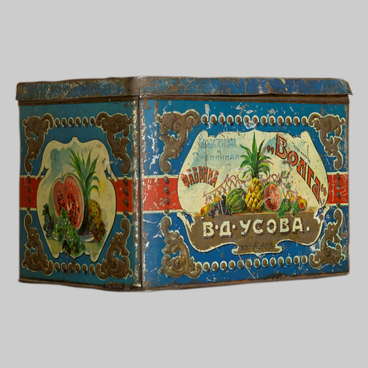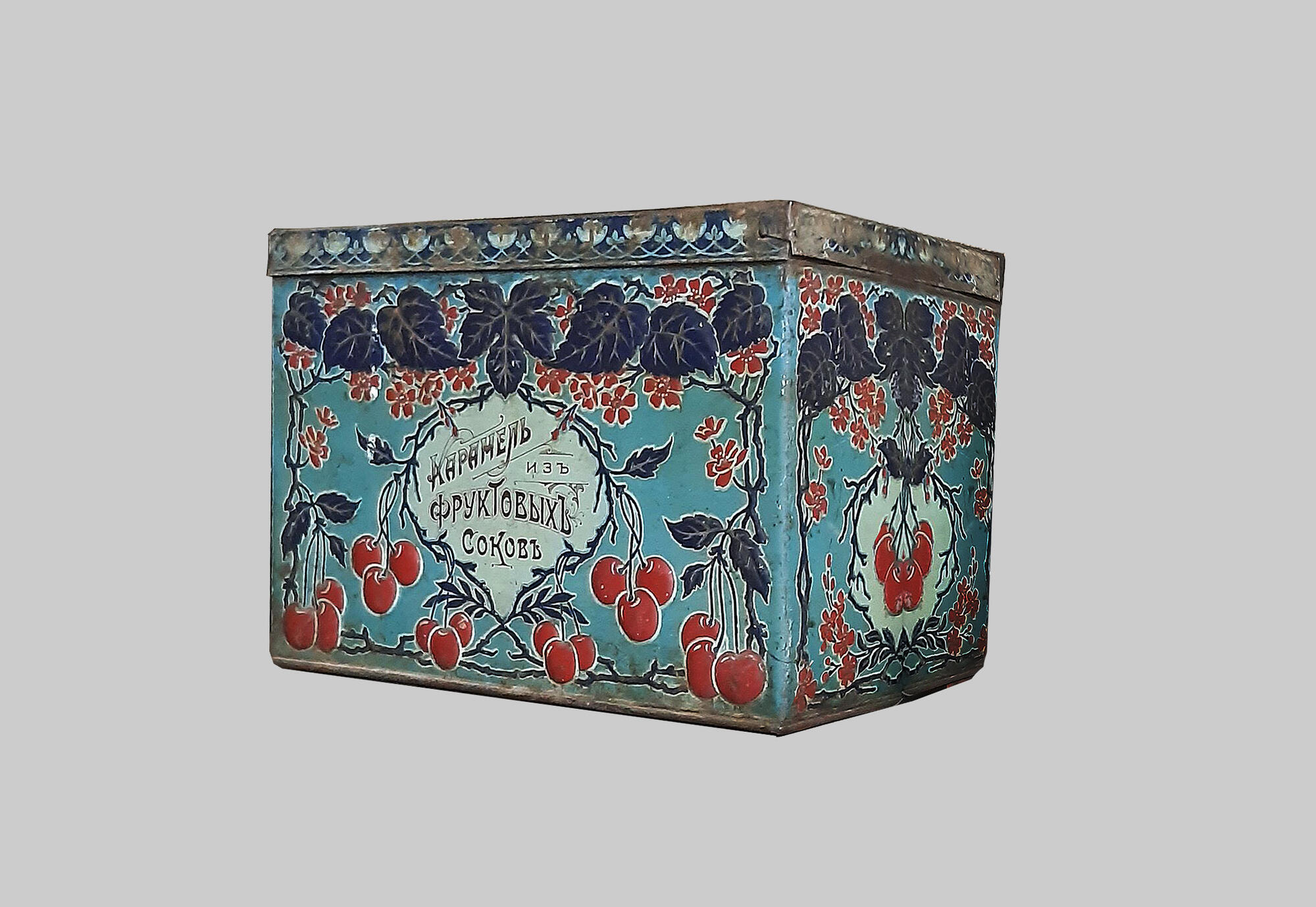


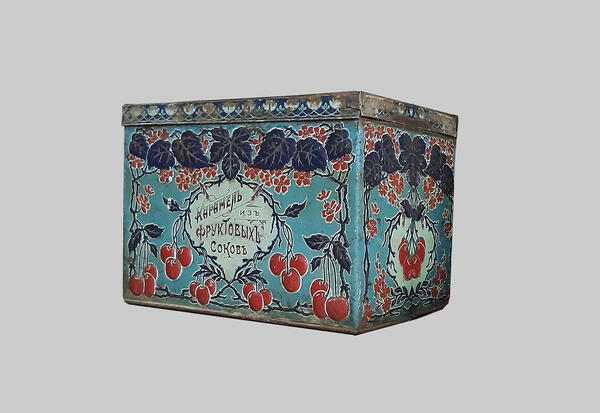
The exhibition showcases a fancy box for bonbons ‘Candies Made of Fruit Juices.’ A bonbonniere (French for ‘a candy box’) is a fancy box for candies. At first, there were two types of bonbonnieres: high cube-shaped and shaped as a chest for storing loose candies. These boxes were made of wood, or metal: silver, copper, brass, and tin-plate. Flat boxes were made of cardboard. Confectionery employees arranged candies in a single row in these boxes.
Candies called Montpensier (a French word, too) were sold in tin boxes. These were small, colorful drops with a distinct flavor. Montpensier candies were more affordable in price than chocolate sweets. So they were very popular among the population. The candy name derives from the Duchess of Montpensier, known as La Grande Mademoiselle in the novels of Alexandre Dumas. The name was adopted in Russia to distinguish these candies from large colored lollipops shaped like bears and other animals, as well as from rectangular and cylindrical sugar candies known as barberry or mint candies.
Montpensier candies were also known in Russia as Landrin. There was an interesting story about it. Once upon a time, there lived a young lollipop seller named Landrin. He knew how to make lollipops, which no one else could make: half white and half red. He wrapped these Montpensier candies in papers. Once, the confectioner cooked a whole batch of candies, put them in a tray, covered them and forgot to wrap them. In the morning, he woke up, saw the tray, grabbed it, and hurried to Yeliseev, the store owner, to be in time. Yeliseev refused to buy the candies. The upset young man sat down on a bench near a gymnasium. Schoolgirls running to the gymnasium, purchased all the candies. Landrin’s profit exceeded the usual figure then. The confectioner often took his goods to the gymnasium after that. Girls called him every time during a break, as they could not leave the gymnasium until the end of lessons. Gradually, the shouts “Landrin!” became so familiar to people around, that the candies were associated with this name. The successful confectioner soon opened his own store in the center of the capital and called it Georg Landrin.
Candies called Montpensier (a French word, too) were sold in tin boxes. These were small, colorful drops with a distinct flavor. Montpensier candies were more affordable in price than chocolate sweets. So they were very popular among the population. The candy name derives from the Duchess of Montpensier, known as La Grande Mademoiselle in the novels of Alexandre Dumas. The name was adopted in Russia to distinguish these candies from large colored lollipops shaped like bears and other animals, as well as from rectangular and cylindrical sugar candies known as barberry or mint candies.
Montpensier candies were also known in Russia as Landrin. There was an interesting story about it. Once upon a time, there lived a young lollipop seller named Landrin. He knew how to make lollipops, which no one else could make: half white and half red. He wrapped these Montpensier candies in papers. Once, the confectioner cooked a whole batch of candies, put them in a tray, covered them and forgot to wrap them. In the morning, he woke up, saw the tray, grabbed it, and hurried to Yeliseev, the store owner, to be in time. Yeliseev refused to buy the candies. The upset young man sat down on a bench near a gymnasium. Schoolgirls running to the gymnasium, purchased all the candies. Landrin’s profit exceeded the usual figure then. The confectioner often took his goods to the gymnasium after that. Girls called him every time during a break, as they could not leave the gymnasium until the end of lessons. Gradually, the shouts “Landrin!” became so familiar to people around, that the candies were associated with this name. The successful confectioner soon opened his own store in the center of the capital and called it Georg Landrin.