

The plaques, belt buckles, were found in an elite burial of the Middle Sarmatian period (from the 2nd century BC to the mid of the 1st century AD). This burial in the BEra mound near the KOsika village in the YenotAyevsky District was discovered and destroyed in the course of local water supply trench laying in 1984.
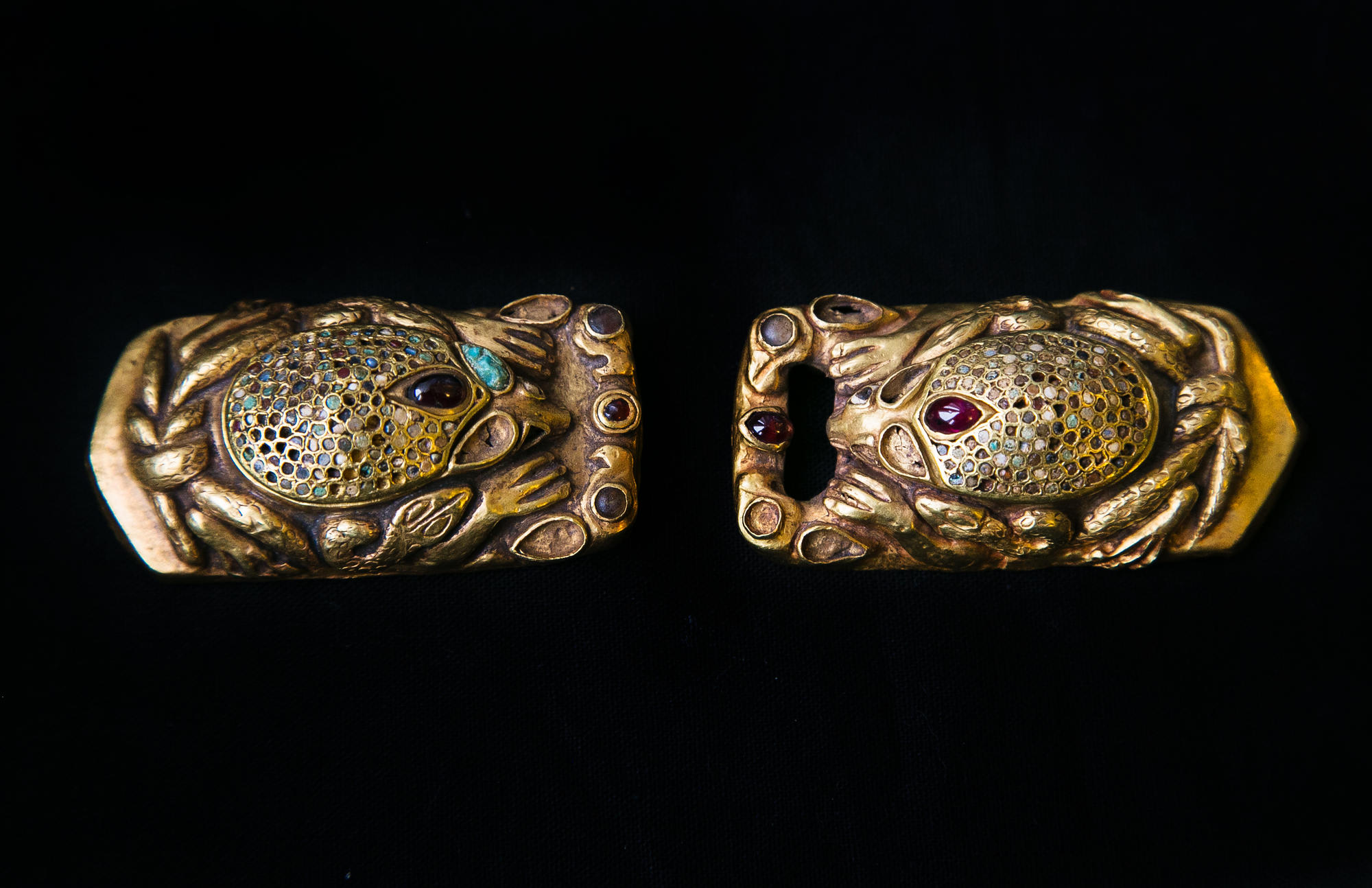
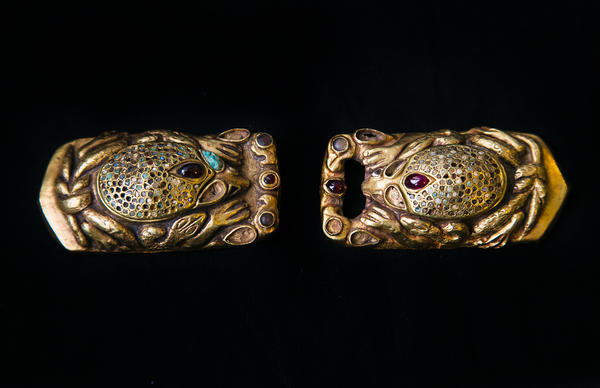
The hedgehog-shaped buckles are gold cast. An ancient craftsman depicted lying hedgehogs; the front legs of the animals are stretched forward. Snakes are wrapping the hedgehogs around along their sides and behind as a Hercules knot or a square knot where the ends of both ropes are pulled into each other’s loops. There are heads of griffins in the front corners of the buckles. The eyes and ears of hedgehogs are made as large holders or special frames that were embossed separately from the jewelry, and then soldered onto the base. Such holders were used to insert some additional precious jewelry. The hedgehogs from our collection are decorated with inserts made of coloured stone, glass and paste. Their ears and eyes, as well as the heads of griffins, are decorated with larger stones, while many small stones in small holders are scattered over their backs.
The jewelry is crafted in the Scythian-Sarmatian animal style that was typical for Siberia. This style was formed from the 7th to the 4th century BC. It was essential for the style to decorate the jewelry with images of animals that then were covered with colored inserts. Each animal had its own semantic magical meaning. Most often craftsmen depicted deer, rams, birds or predatory cats. For example, the hedgehog in our certain case acts as a triumphant who defeated the snakes and griffins.
The buckle has a hole to pull a belt. The fact that the appliqués have secret compartments located under the buckle and belt part covers is particularly noteworthy. It is known that since the antiquity, as reported by written sources of various eras, such tiny secret containers in jewelry were designed to store poisons. However, the chemical tests of our appliqués showed no poison. Perhaps the Sarmatian who owned the appliqués did not store anything in.
In 2005, the appliqués and other archaeological finds from the Astrakhan Museum Reserve were exhibited at the Astrakhan Steppe Treasures show at the National Museum of the Palazzo Venezia in Rome.
The hedgehog-shaped buckles are gold cast. An ancient craftsman depicted lying hedgehogs; the front legs of the animals are stretched forward. Snakes are wrapping the hedgehogs around along their sides and behind as a Hercules knot or a square knot where the ends of both ropes are pulled into each other’s loops. There are heads of griffins in the front corners of the buckles. The eyes and ears of hedgehogs are made as large holders or special frames that were embossed separately from the jewelry, and then soldered onto the base. Such holders were used to insert some additional precious jewelry. The hedgehogs from our collection are decorated with inserts made of coloured stone, glass and paste. Their ears and eyes, as well as the heads of griffins, are decorated with larger stones, while many small stones in small holders are scattered over their backs.
The jewelry is crafted in the Scythian-Sarmatian animal style that was typical for Siberia. This style was formed from the 7th to the 4th century BC. It was essential for the style to decorate the jewelry with images of animals that then were covered with colored inserts. Each animal had its own semantic magical meaning. Most often craftsmen depicted deer, rams, birds or predatory cats. For example, the hedgehog in our certain case acts as a triumphant who defeated the snakes and griffins.
The buckle has a hole to pull a belt. The fact that the appliqués have secret compartments located under the buckle and belt part covers is particularly noteworthy. It is known that since the antiquity, as reported by written sources of various eras, such tiny secret containers in jewelry were designed to store poisons. However, the chemical tests of our appliqués showed no poison. Perhaps the Sarmatian who owned the appliqués did not store anything in.
In 2005, the appliqués and other archaeological finds from the Astrakhan Museum Reserve were exhibited at the Astrakhan Steppe Treasures show at the National Museum of the Palazzo Venezia in Rome.