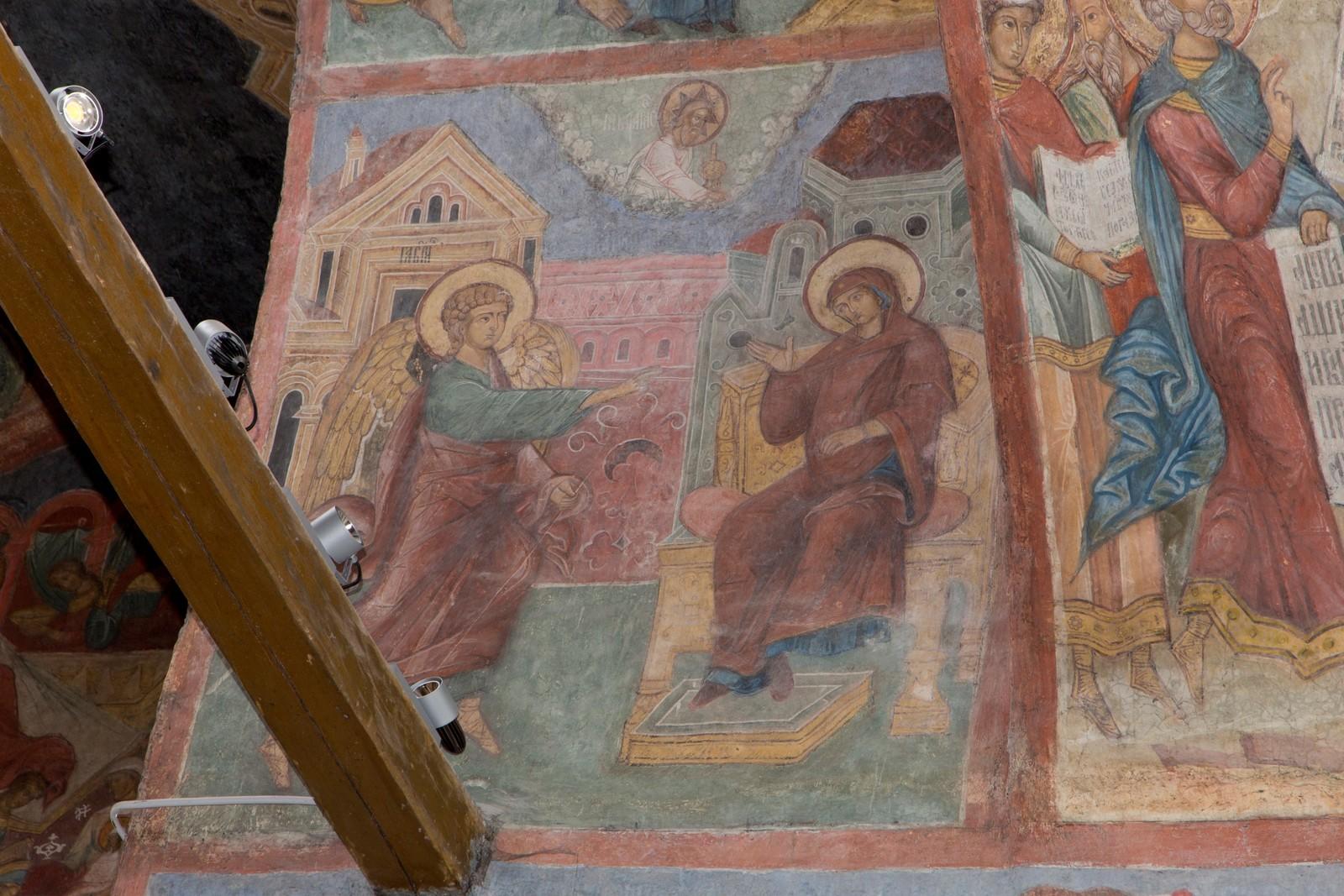



The fresco presents the composition of the Protoevangelium cycle (XIII). Archangel Gabriel informs the Virgin Mary the good news and explains to Her the mystery of the Incarnation: ‘Fear not, Mary, for you have found grace from God and conceive according to His word… the power of the Most High will overshadow you, therefore the Holy One you born of you will be called the Son of the Highest’ (Protoevangelium, XI). The composition presents a common version of the iconography.
Annunciation, dating back to the Byzantine art of the Palaeologus period (XIII — XV centuries). The image of the Mother of God sitting on the throne with yarn in her hands, with her head bowed, and the Archangel, who is walking widely to Her, is traditional for the monuments of ancient Russian painting of the 15th — early 16th centuries and quite archaic for the iconography of the 17th century.
General Information:
Protoevangelium of James is early Christian apocrypha about the life of the Virgin Mary and the Nativity of Jesus Christ. Apocrypha became the basis for a comprehensive narrative cycle, traditionally included in the decoration system of the Virgin’s temples. In ancient Russian monumental painting of the 16th-17th centuries the Protoevangelium cycle is often adjacent to the cycle of the Akathist to the Virgin Mary.
Full name: Annunciation of the Virgin Mary
Creation Time: 1641
Technique: Fresco, Tempera
Location: Western slope of the north spring arch
The image of a Blessing God-Father in the opened skies is a characteristic detail of the iconography of the ‘Annunciation’ from the middle of the 16th century.