By the beginning of the 13th century, the Bosphorus Strait was controlled by Italian merchants with rich expertise in shipbuilding, navigation and finances. Three Italian republics — Venice, Genoa and Pisa — held leading positions among the trading centers. Their ships — cargo and passenger vessels — traveled considerable distances.
The presence of convenient harbors, as well as favorable currents, predetermined the establishment of the largest centers of transit trade. These conditions, as noted by Viktor Lebedinsky, Natalya Ginkut and Yuliya Pronina (“Navigation in the Northern Black Sea Region in the Context of the Mediterranean Maritime Trade in the Second Half of the 10th — early 13th Centuries (According to the Data of the Studied Shipwrecks”), were met by Sinop, Amisos, Kherson, Trebizond, the Bosphorus and Soldaya (that is, Sudak).
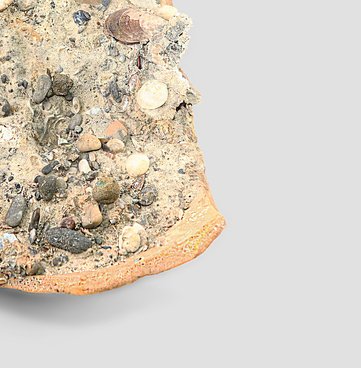
Researchers managed to establish and document an interesting fact: the cause of the wreck of the ship that carried the displayed amphora was a fire. The site of the accident was covered with a layer of sand, which allowed many finds to preserve traces of ash and soot, and some parts of the discovered amphorae were scorched. Scientists tend to explain the abundance of ash by the fact that the crockery was packed in rags for safety purposes.
Ceramics were the main cargo on merchant ships and served not only as containers for various liquids and bulk products but also both as independent goods and ballast. They “ensured the stability of the ship and selling them at various points brought a certain income” (Viktor Lebedinsky et al., “Navigation in the Northern Black Sea Region”).
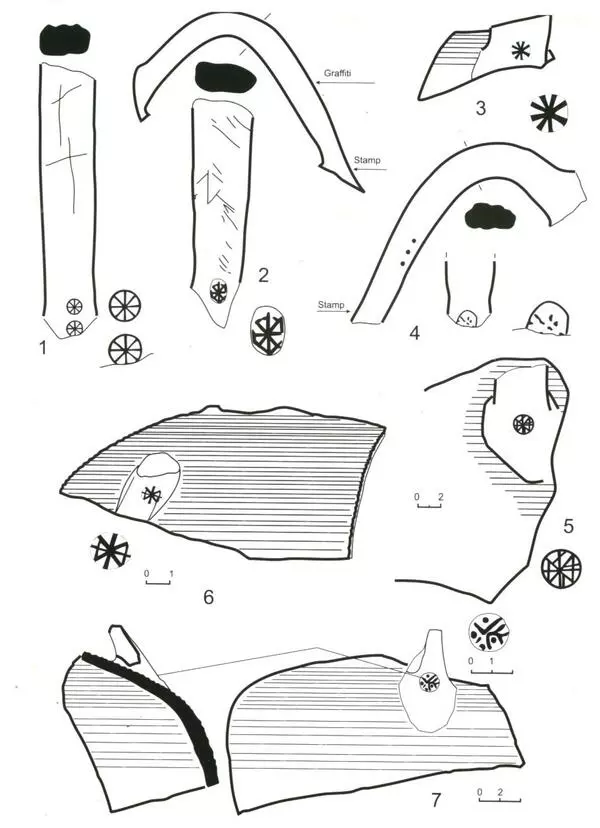
The sides and handles of many such vessels were decorated with graffiti represented by letters of the Greek alphabet, monograms and symbols of dots and dashes. The number of such marks on an amphora indicates how many times it underwent customs inspection with the imposition of a tariff.
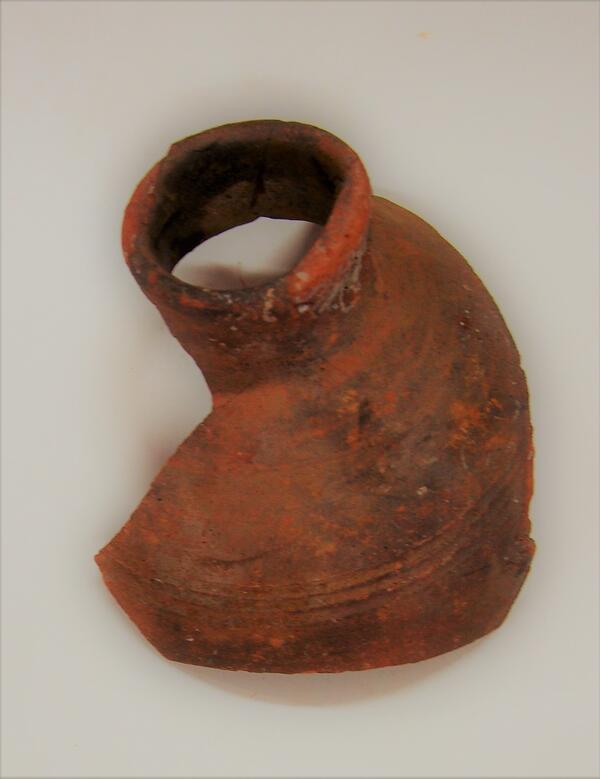
There are visible parallel strips on the body of the vessel that were cut on the raw clay surface. They can be either a merchant’s mark to keep track of the goods or a trademark of a certain workshop.