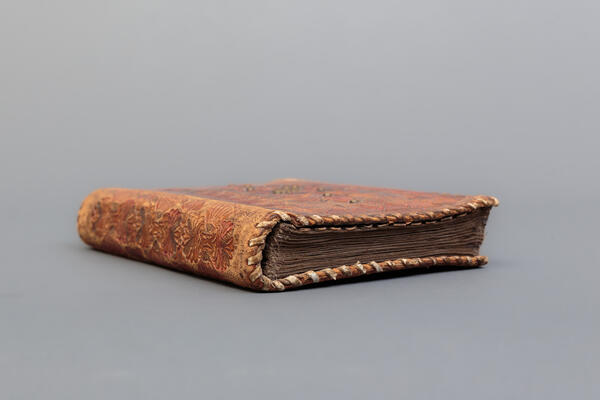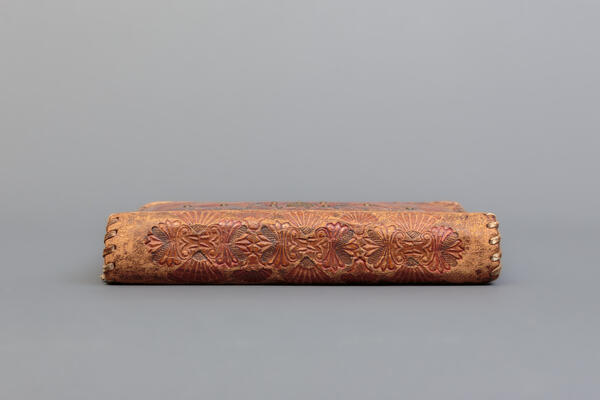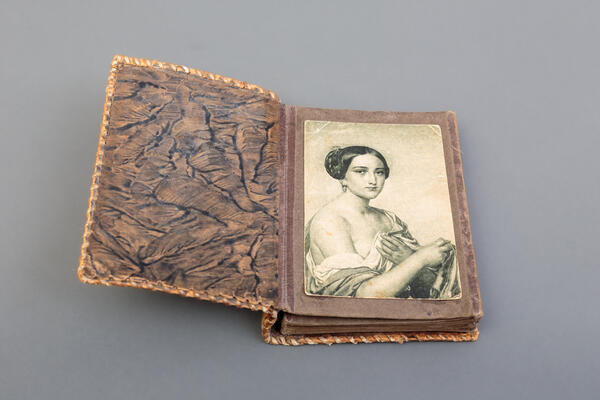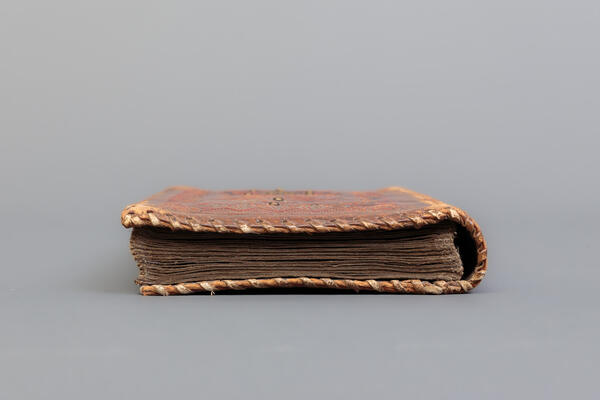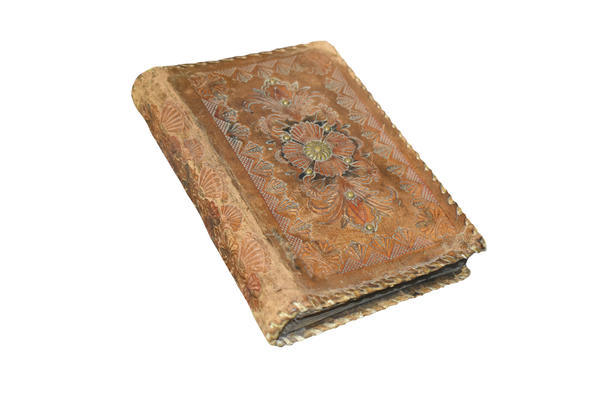
Back in the early 19th century, it was common to see an “autograph” album in virtually every parlor: family friends would leave poems, warm confessions and sketches in it as a keepsake for their hosts.
French inventors Joseph Nicéphore Niépce and Louis Jacques Mandé Daguerre introduced the art of photography to the world (the term was coined by the English scientist John Frederick William Herschel). Less than a year later Englishman William Henry Fox Talbot compiled the first photo album, and in 1846 he published an entire book entitled “The Pencil of Nature” with photographic illustrations of landscapes and architectural monuments.
In the 1850s cartes-de-visite — 11.4×6.4 cm format photo cards — became fashionable in France. They were designed as business cards, but soon became a collector’s item: they were bought, given as gifts, and exchanged with like-minded people. The demand for the cards, driven by collectors, also led to the advent of special photo albums. They had slits and pockets of the appropriate format for the cards, and a sturdy book binding provided durable protection for the collection. Later on, there were no more slits and pockets, just thick cardboard pages: not only cartes-de-visite, but also keepsake letters, postcards, newspaper clippings with portraits of actors, musicians and other famous personalities.
At the end of the 19th century in Russia, “autograph” albums gave way to photographic ones, which also had frames in them, but now in different formats. To protect photocards from fading and scratching, the pages were interlaid with sheets of tissue paper or tracing paper. The corners for fixing photographs allowed for pulling out the relics and reading inscriptions on the back if necessary. Also, it was believed that the photos, fixed with corners rather than glue, tended to be less affected by the temperature changes and were thus less likely to warp. The thick cardboard pages make the photo album look very elegant.
By the second half of the 19th century photo albums had gained wide popularity. There was an increasing emphasis on their quality and distinctive design.
The collection albums evolved to become purely household items: the photos kept in them could tell the family’s history, introduce children to their ancestors and keep alive the memory of important events in the life of the family.
French inventors Joseph Nicéphore Niépce and Louis Jacques Mandé Daguerre introduced the art of photography to the world (the term was coined by the English scientist John Frederick William Herschel). Less than a year later Englishman William Henry Fox Talbot compiled the first photo album, and in 1846 he published an entire book entitled “The Pencil of Nature” with photographic illustrations of landscapes and architectural monuments.
In the 1850s cartes-de-visite — 11.4×6.4 cm format photo cards — became fashionable in France. They were designed as business cards, but soon became a collector’s item: they were bought, given as gifts, and exchanged with like-minded people. The demand for the cards, driven by collectors, also led to the advent of special photo albums. They had slits and pockets of the appropriate format for the cards, and a sturdy book binding provided durable protection for the collection. Later on, there were no more slits and pockets, just thick cardboard pages: not only cartes-de-visite, but also keepsake letters, postcards, newspaper clippings with portraits of actors, musicians and other famous personalities.
At the end of the 19th century in Russia, “autograph” albums gave way to photographic ones, which also had frames in them, but now in different formats. To protect photocards from fading and scratching, the pages were interlaid with sheets of tissue paper or tracing paper. The corners for fixing photographs allowed for pulling out the relics and reading inscriptions on the back if necessary. Also, it was believed that the photos, fixed with corners rather than glue, tended to be less affected by the temperature changes and were thus less likely to warp. The thick cardboard pages make the photo album look very elegant.
By the second half of the 19th century photo albums had gained wide popularity. There was an increasing emphasis on their quality and distinctive design.
The collection albums evolved to become purely household items: the photos kept in them could tell the family’s history, introduce children to their ancestors and keep alive the memory of important events in the life of the family.