The first devices for boiling water were around back in the ancient world, but the samovar, known to many, is a genuinely Russian invention.
Until the late 18th century, few people could afford to enjoy tea drinking: tea was expensive, and the price of a samovar (4 rubles 80 kopecks) was almost double that of a cow. By comparison, a good izba cost 10 and a whole house 20 rubles. With time, however, when samovars were mass-produced, their price went down, tea also became more affordable and tea drinking became one of the favorite Russian traditions.
Pyotr Silin was the first major producer and supplier of samovars. His factory was located in Moscow Governorate; it produced annually about 3,000 pieces, which were enough to satisfy the needs of Moscow and its suburbs. In 1812, the factory was destroyed by fire, and it was impossible to restore production.
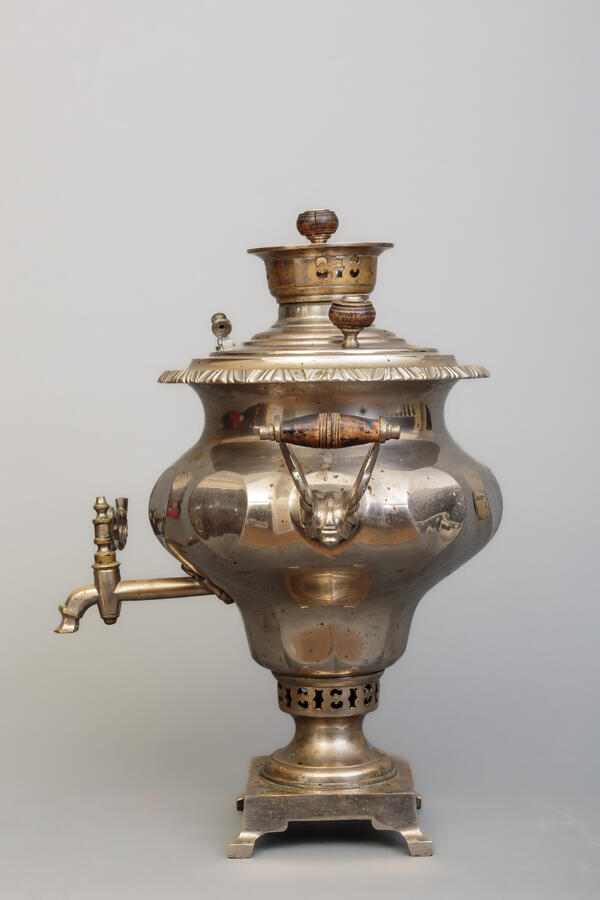
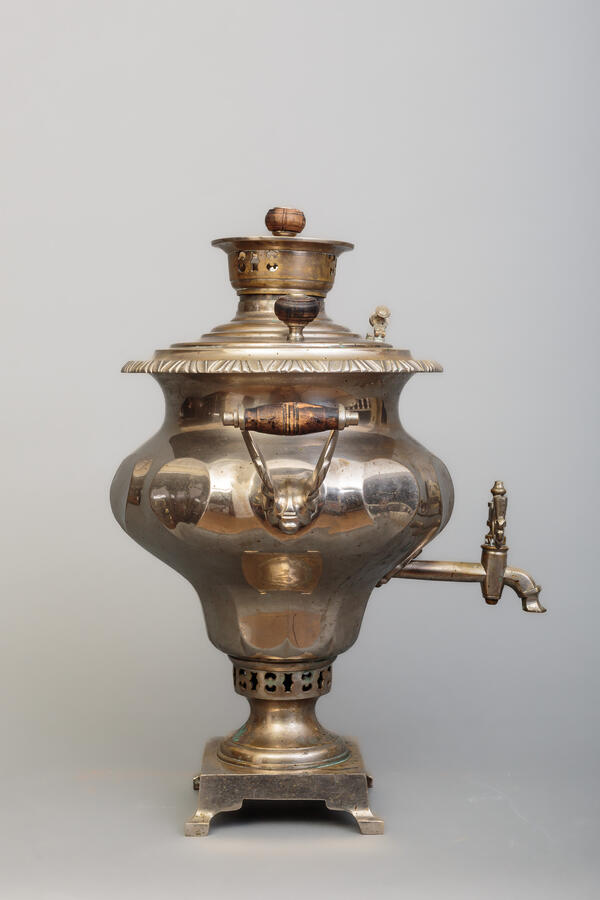
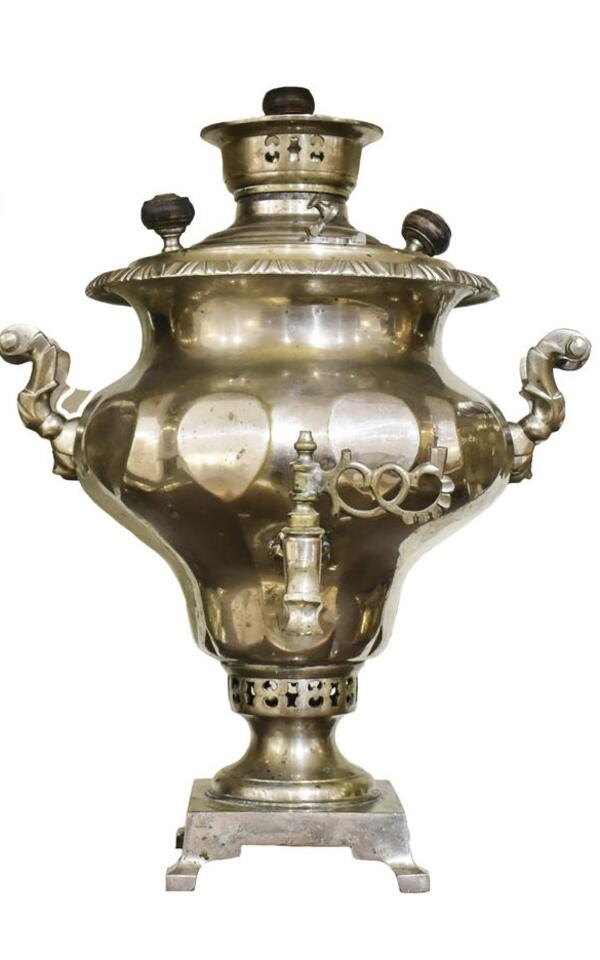
In the 1820s, the center of samovar manufacture moved to Tula. Soon there were already 28 factories, from which about 120 000 samovars with all kinds of accessories were made every year. Both at the Silin’s factory and later at the Tula factories, samovars of the most various styles were made: “vase”, “shot glass”, “empire”, “jar”, “pear”, “crater”… At the same time there were no differences in the design of these products. The main part of every samovar is a “stenka” where water is poured for boiling. On top there is a hob — the “krug”. The samovar’s faucet starts with a plate — “repeek” — attached to the wall. The knob of the faucet (otherwise known as a “vetka”), in addition to its practical purpose, has always been a special decoration. An unusual and sometimes fancy shape was chosen for it. Apart from the proper devices for tea, there were also samovars-coffee pots and samovars-kitchens with three compartments: for soup, main course and tea. Travelers were offered special travel versions.
In the Caucasus, kerosene samovars were particularly in demand. All of them had practically disappeared by the end of the 19th century, although they could be occasionally found even in the first half of the 20th century. Only classic tea samovars did not disappear from the homes. By the beginning of the First World War the Tula factories produced more than 660, 000 samovars per year.
The idea of stamping samovars belonged to artisans. The hallmarks with the name and surname of the craftsman, town or village were hot stamped. The mark was not very deep, but still it gave the item its unique identity. Among collectors, the value of hallmarked pieces depends on the date of manufacture, number and condition of the imprints.
Until the late 18th century, few people could afford to enjoy tea drinking: tea was expensive, and the price of a samovar (4 rubles 80 kopecks) was almost double that of a cow. By comparison, a good izba cost 10 and a whole house 20 rubles. With time, however, when samovars were mass-produced, their price went down, tea also became more affordable and tea drinking became one of the favorite Russian traditions.
Pyotr Silin was the first major producer and supplier of samovars. His factory was located in Moscow Governorate; it produced annually about 3,000 pieces, which were enough to satisfy the needs of Moscow and its suburbs. In 1812, the factory was destroyed by fire, and it was impossible to restore production.
In the 1820s, the center of samovar manufacture moved to Tula. Soon there were already 28 factories, from which about 120 000 samovars with all kinds of accessories were made every year. Both at the Silin’s factory and later at the Tula factories, samovars of the most various styles were made: “vase”, “shot glass”, “empire”, “jar”, “pear”, “crater”… At the same time there were no differences in the design of these products. The main part of every samovar is a “stenka” where water is poured for boiling. On top there is a hob — the “krug”. The samovar’s faucet starts with a plate — “repeek” — attached to the wall. The knob of the faucet (otherwise known as a “vetka”), in addition to its practical purpose, has always been a special decoration. An unusual and sometimes fancy shape was chosen for it. Apart from the proper devices for tea, there were also samovars-coffee pots and samovars-kitchens with three compartments: for soup, main course and tea. Travelers were offered special travel versions.
In the Caucasus, kerosene samovars were particularly in demand. All of them had practically disappeared by the end of the 19th century, although they could be occasionally found even in the first half of the 20th century. Only classic tea samovars did not disappear from the homes. By the beginning of the First World War the Tula factories produced more than 660, 000 samovars per year.
The idea of stamping samovars belonged to artisans. The hallmarks with the name and surname of the craftsman, town or village were hot stamped. The mark was not very deep, but still it gave the item its unique identity. Among collectors, the value of hallmarked pieces depends on the date of manufacture, number and condition of the imprints.