

The Numismatic Collection at the Karasuksky Regional Museum includes a five-kopek coin from the time of Catherine II, minted in 1781. It is a round, solid copper coin with a diameter of 40 millimeters. That makes it two millimeters smaller than the five-kopek coins produced in 1765. The coin to copper ratio for this coin - the number of coins of one particular type made from a pood (or 16.3 kilograms) of copper - remained the same as before. 16.3 kilograms of copper was turned into 16 rubles of five-kopek coins.
On the obverse face of this Catherine-era five-kopek coin is a two-headed eagle with three crowns, an orb and scepter. A shield on the eagle’s chest bears the Moscow coat of arms: The Great Martyr of Saint George in armor, without a mantle, gallops on horseback, striking a dragon with his spear. The chain of the order of Saint Andrew the Apostle is positioned around the shield. This order was established by Peter the Great in 1698, “In the name of Saint Andrew the Apostle, the First-Called, by Holy baptism, our limits were first enlightened.” This Imperial order only had one level and until 1714, it was the only award in the Russian Empire.
The symbols of the Order of Saint Andrew are a cross, an eight-pointed silver star with the inscription “For Faith and Loyalty” and a gold figured chain, covered in multicolored enamels. It was only worn on the most solemn of occasions. This is the chain depicted on the five-kopek coin. Because these coins were in high demand, their designs gradually wore away and therefore now only the slightest details can be deduced as to where the coin was minted.
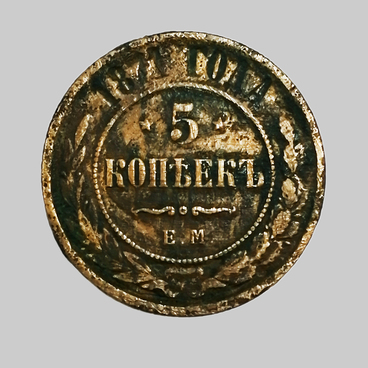
The letters “E M” are positioned beneath the eagle’s talons, signifying that the five-kopek coin was minted at the Yekaterinburg Mint. This is the most widely produced coin from the whole circulation. Five-kopek coins were also minted at the Suzunsky Mint, and there are records of three designs of official re-mints - one from the Suzunsky Mint and two from the Saint Petersburg Mint. Official re-mints are coins minted later and following the design of the original. They are exactly the same except for an updated date of issuance. These re-minted coins differ from forged coins as they were issued officially, using the original or specially recreated coin stamps.
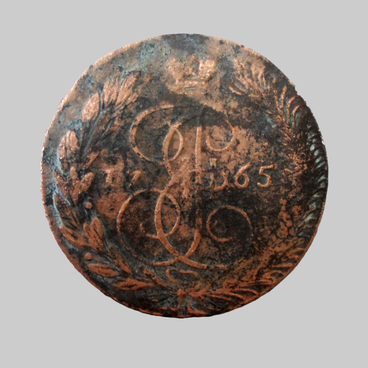
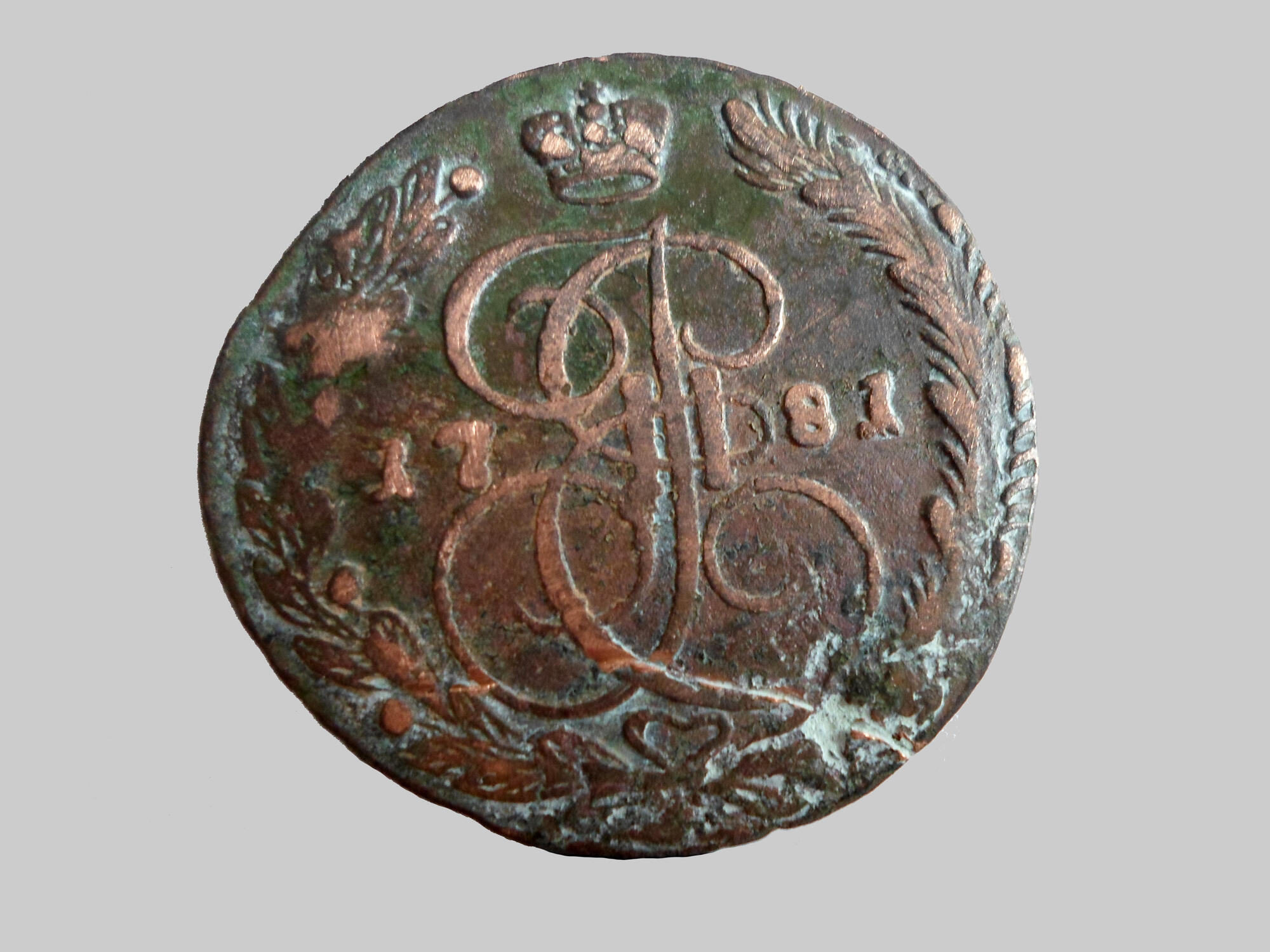
Catherine II’s royal cipher is depicted on the coin’s reverse. The cipher is formed of the letters ‘I’, ‘E’ and the number ‘II’. The date of issuance is stamped either side of the cipher. The crown, slightly titled to the right, sits above the cipher. The coin’s rim or edge is latticed, meaning that it is formed of little cuts pointing in different directions. On rarer five-kopek coins minted at the Suzunsky Mint, the edge’s cuts all point in one direction.
On the obverse face of this Catherine-era five-kopek coin is a two-headed eagle with three crowns, an orb and scepter. A shield on the eagle’s chest bears the Moscow coat of arms: The Great Martyr of Saint George in armor, without a mantle, gallops on horseback, striking a dragon with his spear. The chain of the order of Saint Andrew the Apostle is positioned around the shield. This order was established by Peter the Great in 1698, “In the name of Saint Andrew the Apostle, the First-Called, by Holy baptism, our limits were first enlightened.” This Imperial order only had one level and until 1714, it was the only award in the Russian Empire.
The symbols of the Order of Saint Andrew are a cross, an eight-pointed silver star with the inscription “For Faith and Loyalty” and a gold figured chain, covered in multicolored enamels. It was only worn on the most solemn of occasions. This is the chain depicted on the five-kopek coin. Because these coins were in high demand, their designs gradually wore away and therefore now only the slightest details can be deduced as to where the coin was minted.
The letters “E M” are positioned beneath the eagle’s talons, signifying that the five-kopek coin was minted at the Yekaterinburg Mint. This is the most widely produced coin from the whole circulation. Five-kopek coins were also minted at the Suzunsky Mint, and there are records of three designs of official re-mints - one from the Suzunsky Mint and two from the Saint Petersburg Mint. Official re-mints are coins minted later and following the design of the original. They are exactly the same except for an updated date of issuance. These re-minted coins differ from forged coins as they were issued officially, using the original or specially recreated coin stamps.
Catherine II’s royal cipher is depicted on the coin’s reverse. The cipher is formed of the letters ‘I’, ‘E’ and the number ‘II’. The date of issuance is stamped either side of the cipher. The crown, slightly titled to the right, sits above the cipher. The coin’s rim or edge is latticed, meaning that it is formed of little cuts pointing in different directions. On rarer five-kopek coins minted at the Suzunsky Mint, the edge’s cuts all point in one direction.