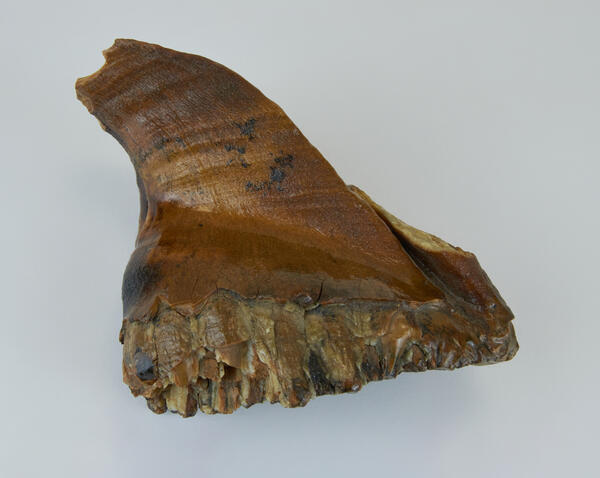
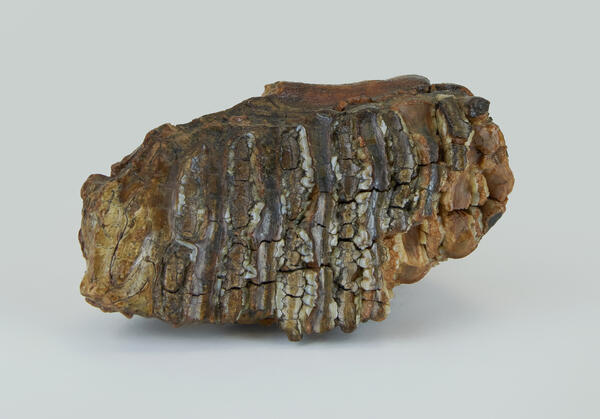
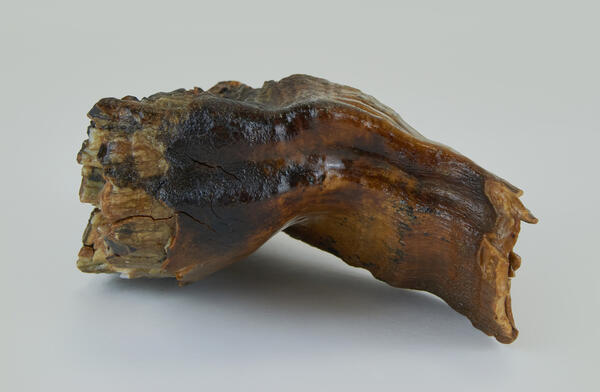
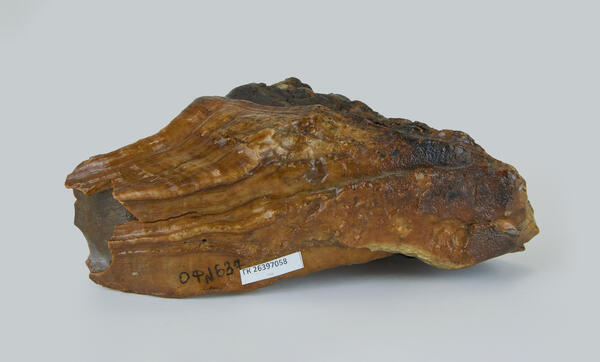
Wooly mammoths fed on grass and twigs of various trees: willow, larch, and pine. This was determined based on the contents of the stomachs of mammoth carcasses found in the permafrost. The animal’s grinding teeth were also adapted to grate coarse vegetation. Filled with tooth substance, the plates of dentine are much wider and harder than those of the elephant and have an enamel shell. Enamel is incredibly durable: its hardness can exceed that of hardened steel. The teeth are the most intriguing and easily recognizable part of the skeleton of these ancient mighty animals.
For a long time, scientists debated whether to view the animal’s tusks as teeth. Careful study of mammoth bodies of different ages allowed experts to assert that a tusk is a modified incisor and therefore an animal tooth, and its direct purpose was to find food or, in some cases, to pluck it out of the ground. The teeth of these animals enable scientists to determine the age of each individual and obtain other data of interest. The teeth help to establish what kind of food mammoths ate. The chewing of coarse vegetation contributed to the gradual attrition of the teeth, which consisted of several plates. As soon as a tooth was worn out, it fell out and a new one grew in its place. New dental bone spurs appeared over the period of up to ten years. As mammoths had a lot of teeth, they experienced four such periods throughout their life. If for some reason teeth changed faster, the animal was left without them and starved to death. When an old mammoth wore down its last set of teeth, it would leave the herd and find a secluded place where it starved to death.
Mammoth teeth are a decoration
and basis of any paleontological collection; these strange, bulky objects, which
do not resemble anything else, not only confirm the huge size of their extinct
owners but also quicken and expand the limits of our imagination. It is no
coincidence that the ancient peoples of Eurasia regarded the mammoth as one of
the most important mythological characters and called him the creator of rivers
and lakes, “the underground devil”, “the land deer”, the wooly giant, “the big
bison”, and the receptacle of souls. The mammoth is one of the closest extinct
ancient animals to the modern world that ruled the vast expanses of the
Northern Hemisphere.