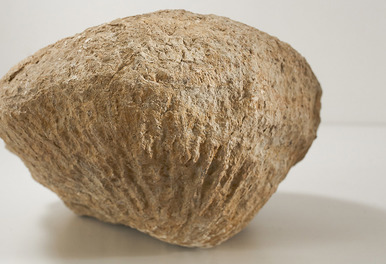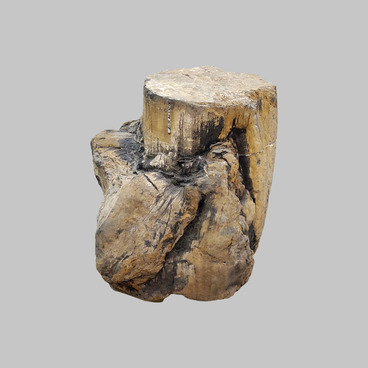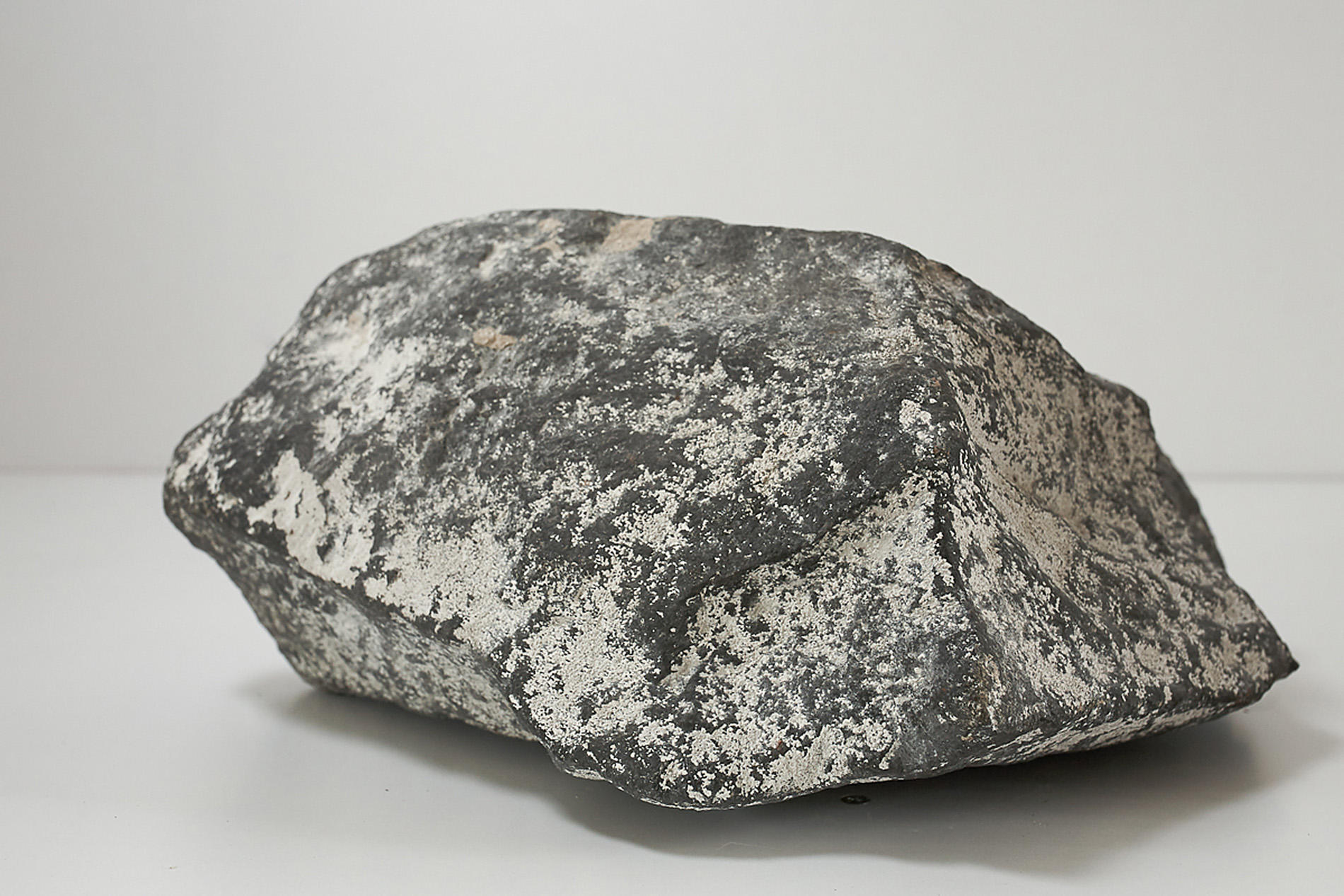


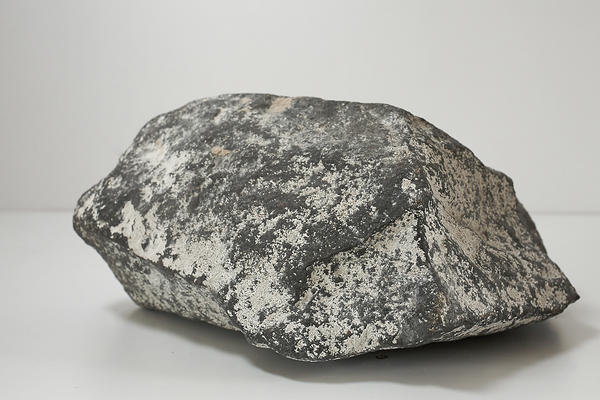
The sample was found on the territory of Kemerovo Region, in Mountainous Shoria. Mountainous Shoria owes its name to the Siberian people, Shors, who have long been famous for their ability to smelt iron.
Here, in the territory of the magnetic anomaly, large deposits of iron ore are concentrated. They were discovered in the late 1920’s. Iron mineralization in Mountainous Shoria occurred in the early Cambrian period, more than 500 million years ago, as a result of the volcanic caldera formation. During the geological uplift, the deposits got close to the surface and became available for extraction.
By its chemical and mineralogical composition, the sample belongs to magnetite scarns. The name comes from the Swedish word skarn which is translated as “dirt” or “garbage”. Scarns appeared as a result of volcanic activity, when hot silicate magma was ejected from the bowels of the earth and penetrated into the layers of dolomite, melting everything in its path.
A fundamentally new breed was born in the contact zone: contact-metasomatic. It consists of particles of magmatic solution and host carbonate rocks. As a result of natural substitution processes, whose nature depends on the depths where they take place, the initial composition of mineral complexes can vary. Dissolution of the former minerals and the formation of new ones occurs almost simultaneously while the volume is maintained.
Scarn bodies are most often formed in mountainous regions; industrial ore accumulations are confined to them. These deposits are of great practical importance, as they provide for about 25% of the annual iron production.
The scarn under consideration has magnetic properties; compass needle will deviate in its proximity. The main rock forming mineral is magnetite (FeO • Fe2O3), or magnetic iron ore, with more than 72% iron content. This mineral was discovered thanks to its natural magnetism.
The ancient Roman scholar Pliny the Elder claimed that magnetite was named after a famous Greek, Magnes. This legendary shepherd tended his flock on the slopes of Mount Ida. Suddenly, the iron-bound soles of his shoes literally stuck to the inconspicuous dark gray stone of the mountain surface.
There’s another curious theory, according to which the name of the mineral is associated with the ancient city of Magnesia (modern Turkey). Not far from it, there is a mountain constantly struck by lightnings. Russia can also boast such a mountain; it is located in the Urals, and it is almost completely composed of magnetite. Mount Zimirt in Ethiopia, according to legend, is able to pull nails out of ships and drag up iron objects.
The mineral gave its name to the magnet and the amazing phenomenon of magnetism, which has been studied from the time of Aristotle to this day. Magnetite is very heavy: a stone the size of an apple weighs about 1.5 kg. The rocks composing scarn ore areas display a direct relationship between their density index and iron content.
Here, in the territory of the magnetic anomaly, large deposits of iron ore are concentrated. They were discovered in the late 1920’s. Iron mineralization in Mountainous Shoria occurred in the early Cambrian period, more than 500 million years ago, as a result of the volcanic caldera formation. During the geological uplift, the deposits got close to the surface and became available for extraction.
By its chemical and mineralogical composition, the sample belongs to magnetite scarns. The name comes from the Swedish word skarn which is translated as “dirt” or “garbage”. Scarns appeared as a result of volcanic activity, when hot silicate magma was ejected from the bowels of the earth and penetrated into the layers of dolomite, melting everything in its path.
A fundamentally new breed was born in the contact zone: contact-metasomatic. It consists of particles of magmatic solution and host carbonate rocks. As a result of natural substitution processes, whose nature depends on the depths where they take place, the initial composition of mineral complexes can vary. Dissolution of the former minerals and the formation of new ones occurs almost simultaneously while the volume is maintained.
Scarn bodies are most often formed in mountainous regions; industrial ore accumulations are confined to them. These deposits are of great practical importance, as they provide for about 25% of the annual iron production.
The scarn under consideration has magnetic properties; compass needle will deviate in its proximity. The main rock forming mineral is magnetite (FeO • Fe2O3), or magnetic iron ore, with more than 72% iron content. This mineral was discovered thanks to its natural magnetism.
The ancient Roman scholar Pliny the Elder claimed that magnetite was named after a famous Greek, Magnes. This legendary shepherd tended his flock on the slopes of Mount Ida. Suddenly, the iron-bound soles of his shoes literally stuck to the inconspicuous dark gray stone of the mountain surface.
There’s another curious theory, according to which the name of the mineral is associated with the ancient city of Magnesia (modern Turkey). Not far from it, there is a mountain constantly struck by lightnings. Russia can also boast such a mountain; it is located in the Urals, and it is almost completely composed of magnetite. Mount Zimirt in Ethiopia, according to legend, is able to pull nails out of ships and drag up iron objects.
The mineral gave its name to the magnet and the amazing phenomenon of magnetism, which has been studied from the time of Aristotle to this day. Magnetite is very heavy: a stone the size of an apple weighs about 1.5 kg. The rocks composing scarn ore areas display a direct relationship between their density index and iron content.