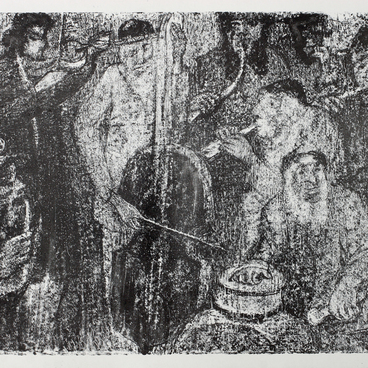
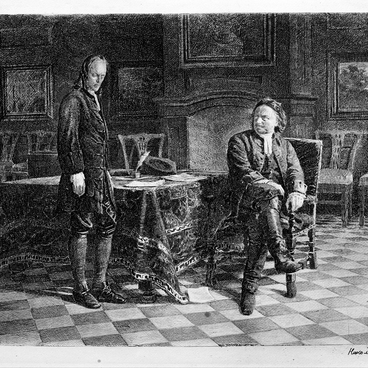
Yakov Ivanovich Potapov’s linocut “Waiting for the Groom” is a profound and multifaceted work rooted in folk culture, reflecting folk traditions and wedding customs. The artist masterfully conveys an atmosphere of anticipation imbued not only with awe but also with hope for the future.
Three key figures occupy the foreground: two women in vibrant national costumes and a bride in a white dress, symbolizing purity and innocence. Bold color contrasts underscore their emotional states and social roles. Their expressions blend joy and nervous excitement, creating a poignant tension between outward composure and inner feeling.
The background is rich with meticulously rendered interior details that evoke a sense of domestic warmth and intimacy. Ruffled curtains at the windows admit soft, diffused light that fills the room — a visual metaphor for hope and the dawn of a new chapter in the bride’s life. Photographs on the walls, possibly depicting ancestors or the couple’s future family, reinforce the connection to inherited traditions and enduring values.
The combination of linocut, paper, brush, and watercolor yields a textured, rhythmic image that draws the viewer in. Every detail — from the intricate patterns on the garments to the subtle nuances of facial expression — is charged with meaning, lending the composition depth and symbolic resonance.
Potapov structures the composition so that the viewer’s eye is drawn first to the bride, centered in the frame, yet the surrounding figures also command attention. This balance emphasizes that the moment holds significance not only for the young woman but for her entire family. Their collective anticipation amplifies the emotional weight of the scene.
“Waiting for the Groom” is more than a depiction of a ceremonial pause — it is a metaphor that explores timeless themes: life, love, family, and the social role of women. The work invites viewers to reflect on the meaning of these values within their historical and cultural context.
Yakov Ivanovich Potapov (1924–2010) was a Soviet muralist, graphic artist, and painter. He worked extensively in linocut and also devoted himself to teaching. During the Soviet era, Potapov was widely recognized as a master of monumental art; his works adorned the facades and interiors of numerous public buildings. Some of these have been preserved, for example, in Sergiev Posad, while others were lost in the post-Soviet period.