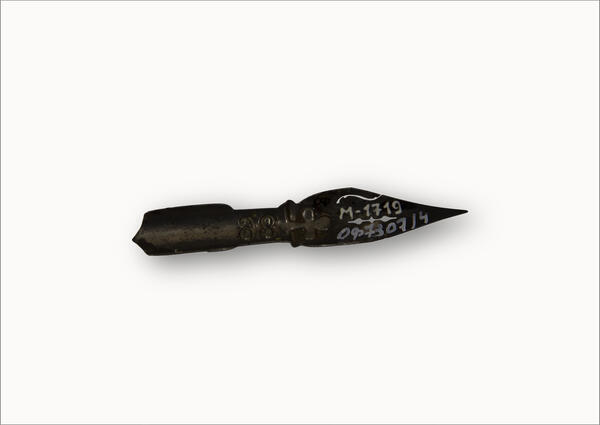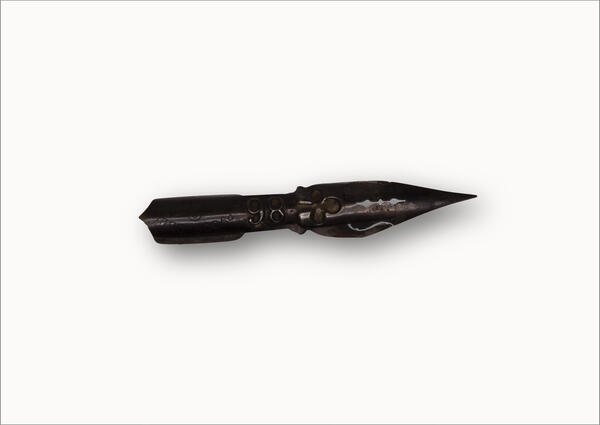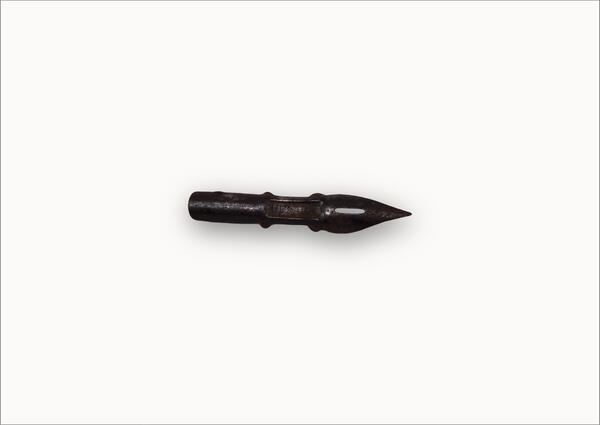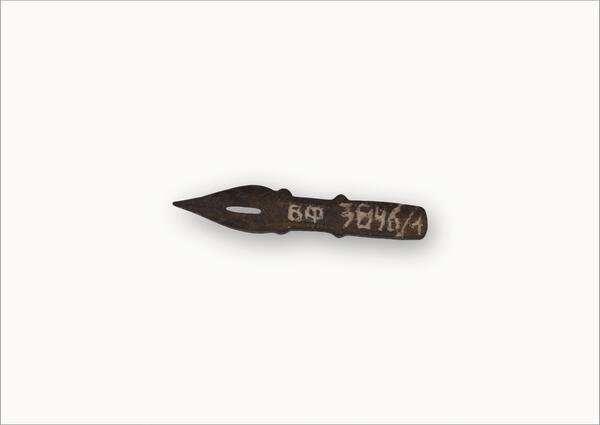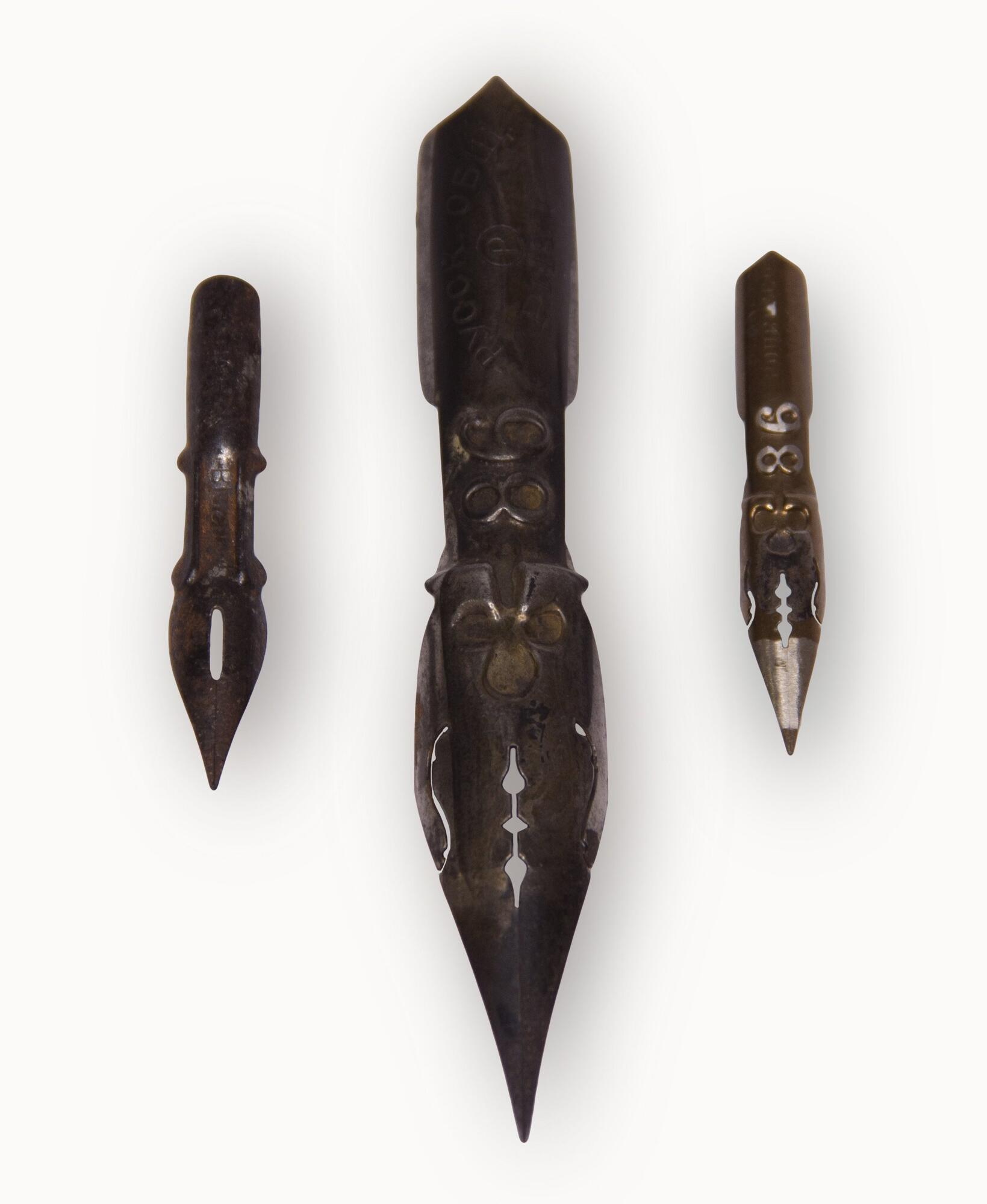


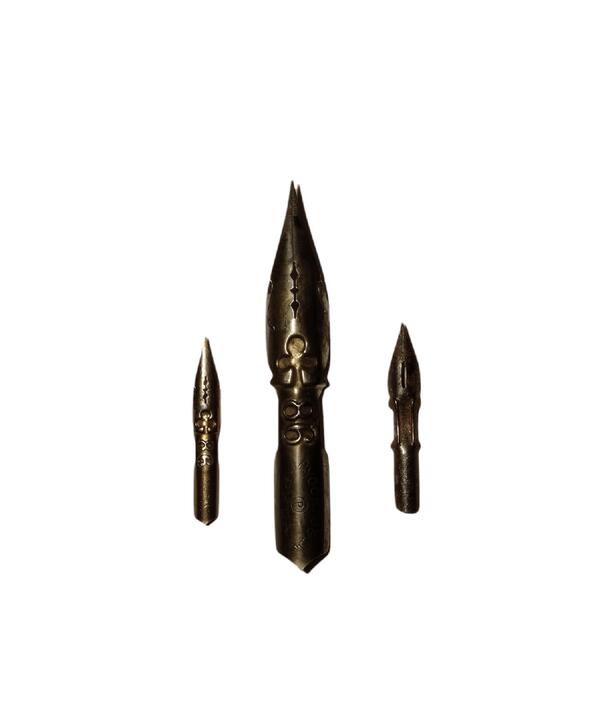
Fountain pens were the norm of everyday life in the late 19th and early 20th century. The museum houses pens made by two companies — the French “Blanzy Poure & Cie” and the “Russian Society for Manufacturing of Steel Nibs in Riga”.
Metal fountain pens have been known for a long time, but before the industrial revolution they were all handmade and were expensive and rare. Mass industrial production began thanks to the English inventor and innovator Joseph Gillott, who founded a private factory in 1827 in the city of Birmingham. Subsequently, Birmingham became the world center for the production of metal nibs.
The success of English enterprises was so great that similar factories began to appear in other European countries. For example, Pierre Blanzy and Auguste Poure completed an internship in Birmingham and founded a partnership for the production of dip pens in Boulogne-sur-Mer, in the north of France. The company was called Blanzy Poure & Cie.
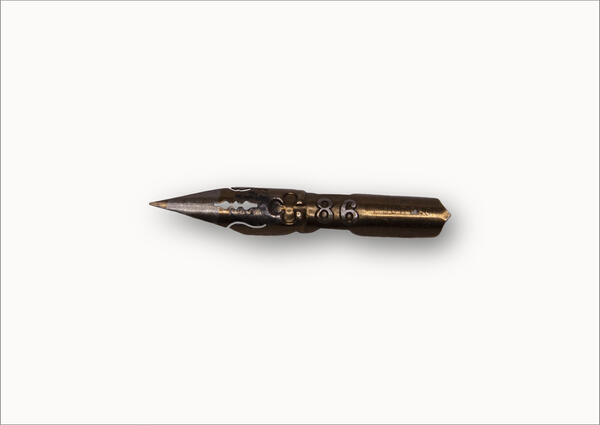
Blanzy Poure & Cie produced a variety of nib designs. The nib from the museum collection is model No. 86 Dimitri, named after the prominent Russian statesman, Prince Dmitry Pozharsky. The pen was made specifically for deliveries to the Russian Empire. There was also pen No. 086 Minin, named after Kuzma Minin, who, together with Prince Pozharsky, led the Zemstvo militia in 1611–1612 during the struggle of the Russian people against the interventions of Poland, Lithuania and Sweden. Probably, the name Kuzma was unusual and difficult for the French language, and the name Pozharsky would not fit on a pen.
It is known that the great Russian writer Leo Tolstoy used pen No. 86 Dimitry. Among the objects of the first Tolstoy collection, which Sophia Tolstaya, the writer’s wife, took from the family estate in Yasnaya Polyana in 1906 and brought for storage to Moscow, there was a cardboard box of Blanzy Poure & Cie pens, where there were four nibs, four paper clips and a pen with an “86” nib.
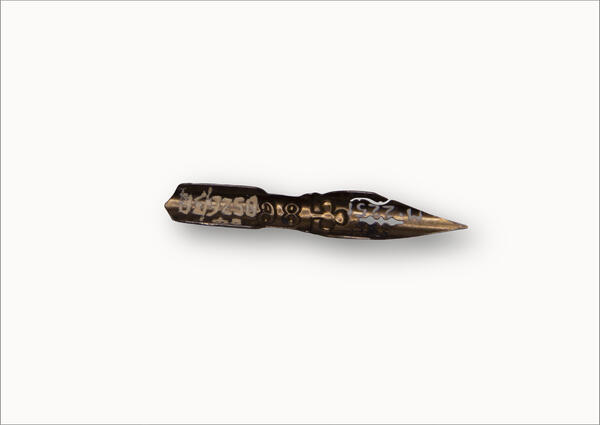
The other two nibs were made by the largest steel nib factory in the Russian Empire, the Russian Society for Manufacturing of Steel Nibs in Riga. The society was founded in 1895 and was located at the address, 147 Alexandrovskaya (now Brivibas) street, in Riga. The owners were prominent Riga entrepreneurs: Teodor Eduard Pihlau, R.R. von Büngner and K.L. Leather.
Metal fountain pens have been known for a long time, but before the industrial revolution they were all handmade and were expensive and rare. Mass industrial production began thanks to the English inventor and innovator Joseph Gillott, who founded a private factory in 1827 in the city of Birmingham. Subsequently, Birmingham became the world center for the production of metal nibs.
The success of English enterprises was so great that similar factories began to appear in other European countries. For example, Pierre Blanzy and Auguste Poure completed an internship in Birmingham and founded a partnership for the production of dip pens in Boulogne-sur-Mer, in the north of France. The company was called Blanzy Poure & Cie.
Blanzy Poure & Cie produced a variety of nib designs. The nib from the museum collection is model No. 86 Dimitri, named after the prominent Russian statesman, Prince Dmitry Pozharsky. The pen was made specifically for deliveries to the Russian Empire. There was also pen No. 086 Minin, named after Kuzma Minin, who, together with Prince Pozharsky, led the Zemstvo militia in 1611–1612 during the struggle of the Russian people against the interventions of Poland, Lithuania and Sweden. Probably, the name Kuzma was unusual and difficult for the French language, and the name Pozharsky would not fit on a pen.
It is known that the great Russian writer Leo Tolstoy used pen No. 86 Dimitry. Among the objects of the first Tolstoy collection, which Sophia Tolstaya, the writer’s wife, took from the family estate in Yasnaya Polyana in 1906 and brought for storage to Moscow, there was a cardboard box of Blanzy Poure & Cie pens, where there were four nibs, four paper clips and a pen with an “86” nib.
The other two nibs were made by the largest steel nib factory in the Russian Empire, the Russian Society for Manufacturing of Steel Nibs in Riga. The society was founded in 1895 and was located at the address, 147 Alexandrovskaya (now Brivibas) street, in Riga. The owners were prominent Riga entrepreneurs: Teodor Eduard Pihlau, R.R. von Büngner and K.L. Leather.