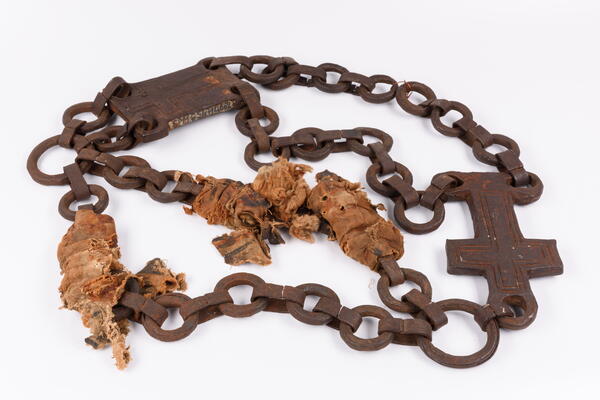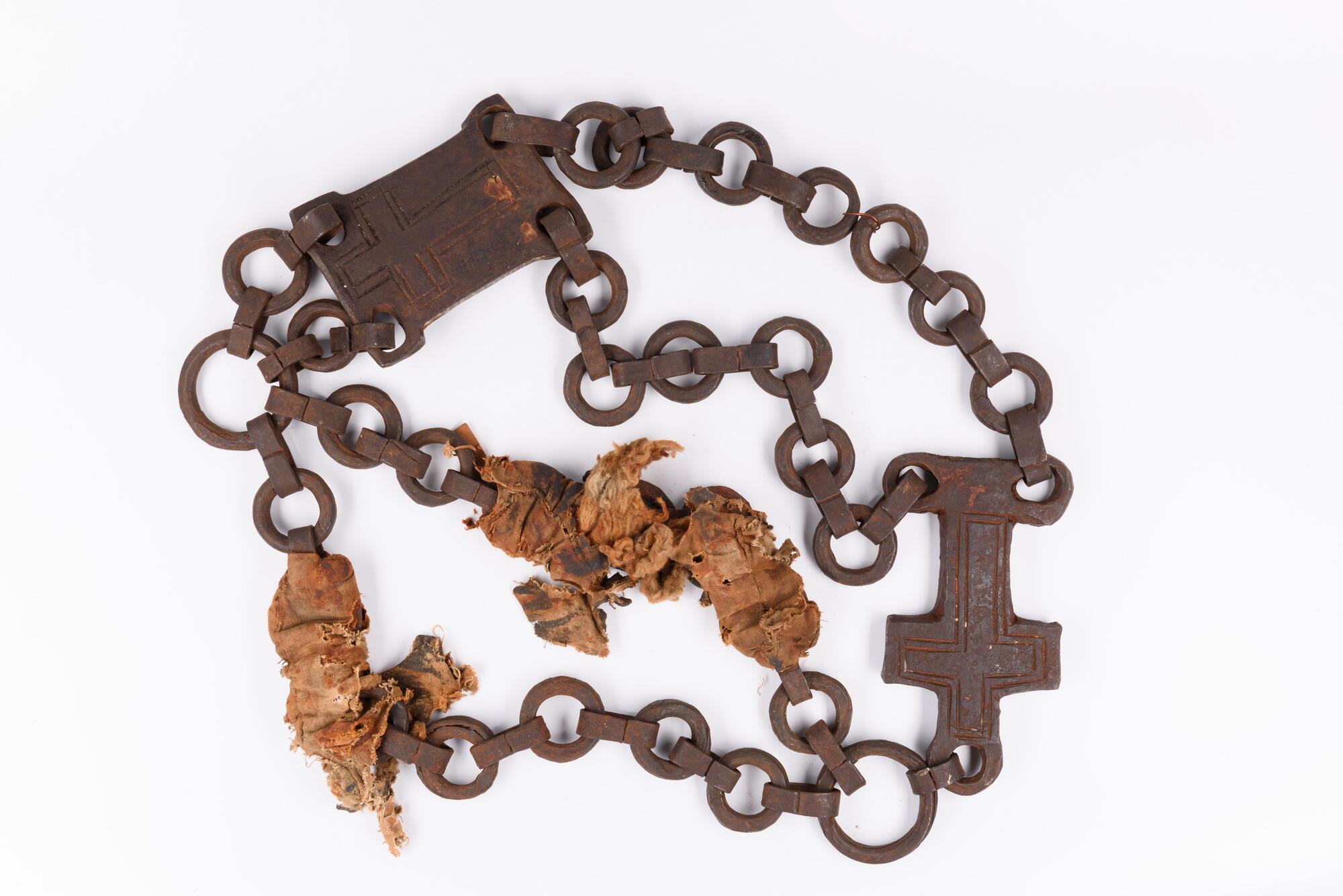


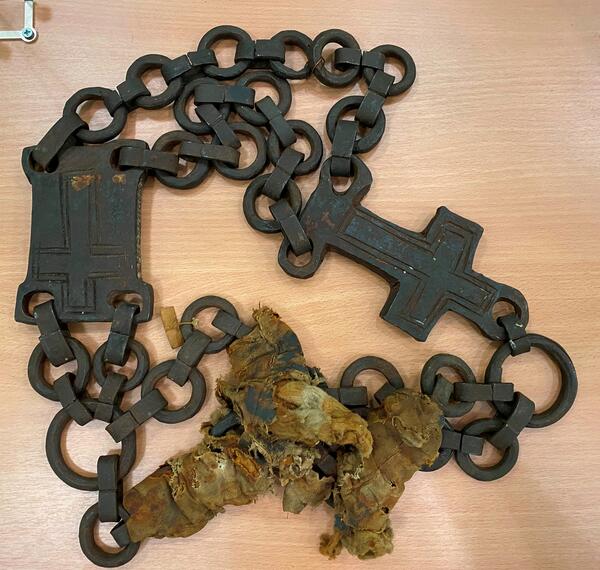
The Russian word for chains worn by ascetics — verigi — comes from the Old Slavonic “veriga” — chain. Most chains are made of iron; they can also be in the form of iron stripes, rings, or soles worn on the naked body, under clothes.
For Christian ascetics, chains serve as a means of humility, mortification of the flesh to commemorate Christ, an opportunity to become closer to the Lord by suffering voluntarily.
The hagiography of Nikita Stylites, the wonderworker of Pereyaslavl, is indicative in this respect. After wearing his chains for a long time, they began to shine like silver; his relatives were tempted by this illusion and killed him in order to take possession of the treasure. Later, the chains thrown into the river were found on the surface of the water and became a source of miraculous healings. Thus, the zealous love of the man for the Savior and the desire to endure suffering, like He did, turned the chains into a martyr’s crown and revealed the holiness of the wonderworker.
Iron chains were worn in addition to the analavos (a square kerchief with a depiction of the Passion of the Lord) to strengthen the spirit through the impact on the body. Wearing chains was originally a privilege of monastic ascetics who had already become true believers. For a spiritually immature person, who may even be a sincere believer, such a feat represents a strong temptation of pride.
St. Seraphim of Sarov called in his teachings to first “wear” spiritual chains: “If we bear offenses in the evangelical way, then we are wearing our chains, we are wearing our cilice.” He recognized the wise and perfect Fathers of the Church as worthy of this feat, and commanded the “infants”, he also believed himself to be one, to first humble the spirit, and then take on such a venerable burden.
Eastern hermits were famous for this kind of ascetic practice at the dawn of Christianity: they exhausted themselves by carrying stones, baskets of sand and other heavy objects from place to place. In Rus, the custom of wearing chains has been known since the 11th–12th centuries. It is associated with the names of the Venerable Theodosius of the Caves, Mark the Cave Dweller, John the Much-Suffering, Euphrosyne of Polotsk, Cyril of Beloozero, Nicetas Stylites, Joseph of Volotsk, Basil the Blessed, Irenarch of Rostov, Gennady of Kostroma and others.
The presented chains of the 16th–18th centuries once belonged to the monks of the Intercession Monastery.
For Christian ascetics, chains serve as a means of humility, mortification of the flesh to commemorate Christ, an opportunity to become closer to the Lord by suffering voluntarily.
The hagiography of Nikita Stylites, the wonderworker of Pereyaslavl, is indicative in this respect. After wearing his chains for a long time, they began to shine like silver; his relatives were tempted by this illusion and killed him in order to take possession of the treasure. Later, the chains thrown into the river were found on the surface of the water and became a source of miraculous healings. Thus, the zealous love of the man for the Savior and the desire to endure suffering, like He did, turned the chains into a martyr’s crown and revealed the holiness of the wonderworker.
Iron chains were worn in addition to the analavos (a square kerchief with a depiction of the Passion of the Lord) to strengthen the spirit through the impact on the body. Wearing chains was originally a privilege of monastic ascetics who had already become true believers. For a spiritually immature person, who may even be a sincere believer, such a feat represents a strong temptation of pride.
St. Seraphim of Sarov called in his teachings to first “wear” spiritual chains: “If we bear offenses in the evangelical way, then we are wearing our chains, we are wearing our cilice.” He recognized the wise and perfect Fathers of the Church as worthy of this feat, and commanded the “infants”, he also believed himself to be one, to first humble the spirit, and then take on such a venerable burden.
Eastern hermits were famous for this kind of ascetic practice at the dawn of Christianity: they exhausted themselves by carrying stones, baskets of sand and other heavy objects from place to place. In Rus, the custom of wearing chains has been known since the 11th–12th centuries. It is associated with the names of the Venerable Theodosius of the Caves, Mark the Cave Dweller, John the Much-Suffering, Euphrosyne of Polotsk, Cyril of Beloozero, Nicetas Stylites, Joseph of Volotsk, Basil the Blessed, Irenarch of Rostov, Gennady of Kostroma and others.
The presented chains of the 16th–18th centuries once belonged to the monks of the Intercession Monastery.