In the late 19th century, apart from the heavy furniture that was fashionable at the time, there was also practical Vienna furniture.
The term Vienna furniture was used to refer to light and durable furniture made from steamed bent beechwood. Such furniture was first produced by the Austrian craftsman Michael Thonet.
Michael Thonet was born in 1796 in Boppard, Germany. Following a carpenter’s apprenticeship, he set himself up as an independent cabinetmaker.
He strove to create unusual and elegant furniture that was both light and durable. In 1842, he moved to Vienna and invented a new method for wood processing. He received a royal patent for his invention, which allowed him to “bend wood of any type, even the most inflexible, using chemical and mechanical methods to create the desired shapes, including round ones.”
Soon after, the inventor established the company “The Thonet Brothers”. He set up a production facility with an established system at all stages, including the procurement of raw materials, factories, warehouses, advertising, and shops. Vienna furniture was sold not only to European countries but also to Latin America.
In 1851, at the Great Exhibition in London, the company received the first bronze medal for its furniture, and in 1878, at the World’s Fair in Paris, a gold medal.
“The Thonet Brothers” became the official supplier to the Russian Imperial Court. A significant part of the factory’s production was aimed at the Russian market.
Stores with warehouses appeared in many Russian cities. To avoid high duties on importing goods to the Russian Empire, in 1881 Thonet opened a new factory in Novoradomsk, a town in “Russian Poland.” More than half of the company’s products started to be sold in the Russian market.
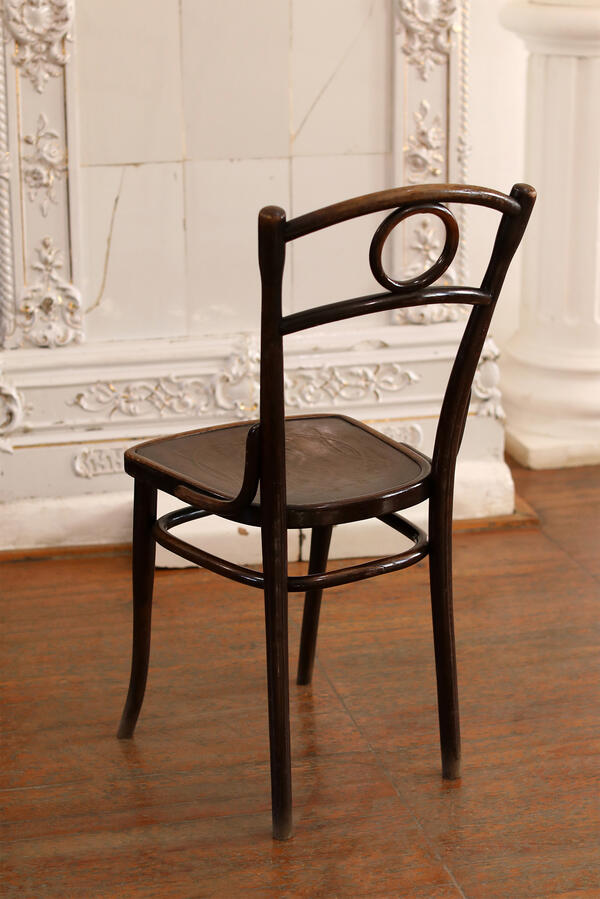
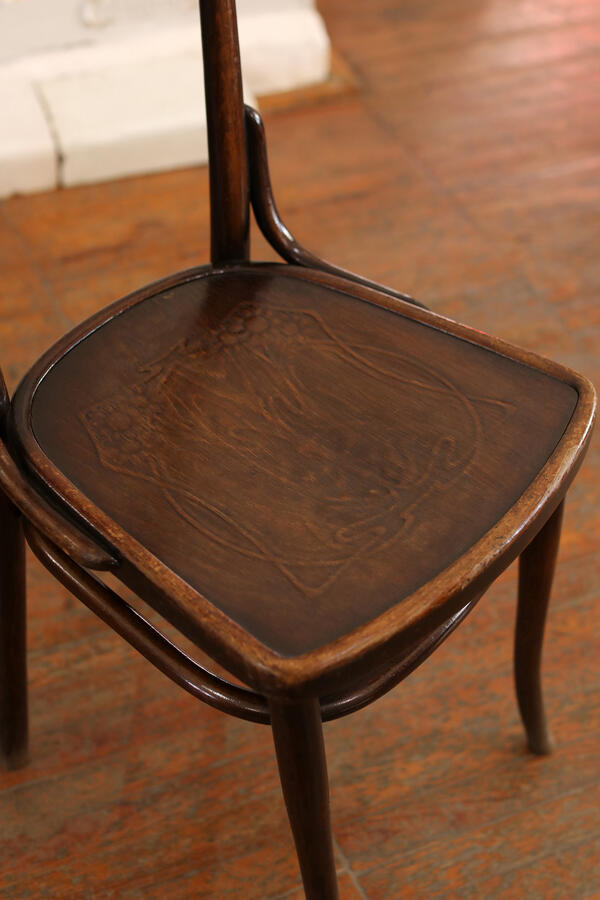
The main structural element of the furniture was a bent, round rod. Beech wood was so elastic that it was possible to create rounded, circular, and spiral shapes. The most popular products were Vienna chairs, which varied in the appearance of their seats and backrests, as well as in color and finish. The seats of these chairs were either round or trapezoidal, and they could have a burned or embossed pattern. Most Vienna chairs had a wicker seat.
The chairs on display at the exhibition “Interior of Orenburg Citizens in the Late 19th — Early 20th Century” have trapezoidal seats and a round element in the backrest.