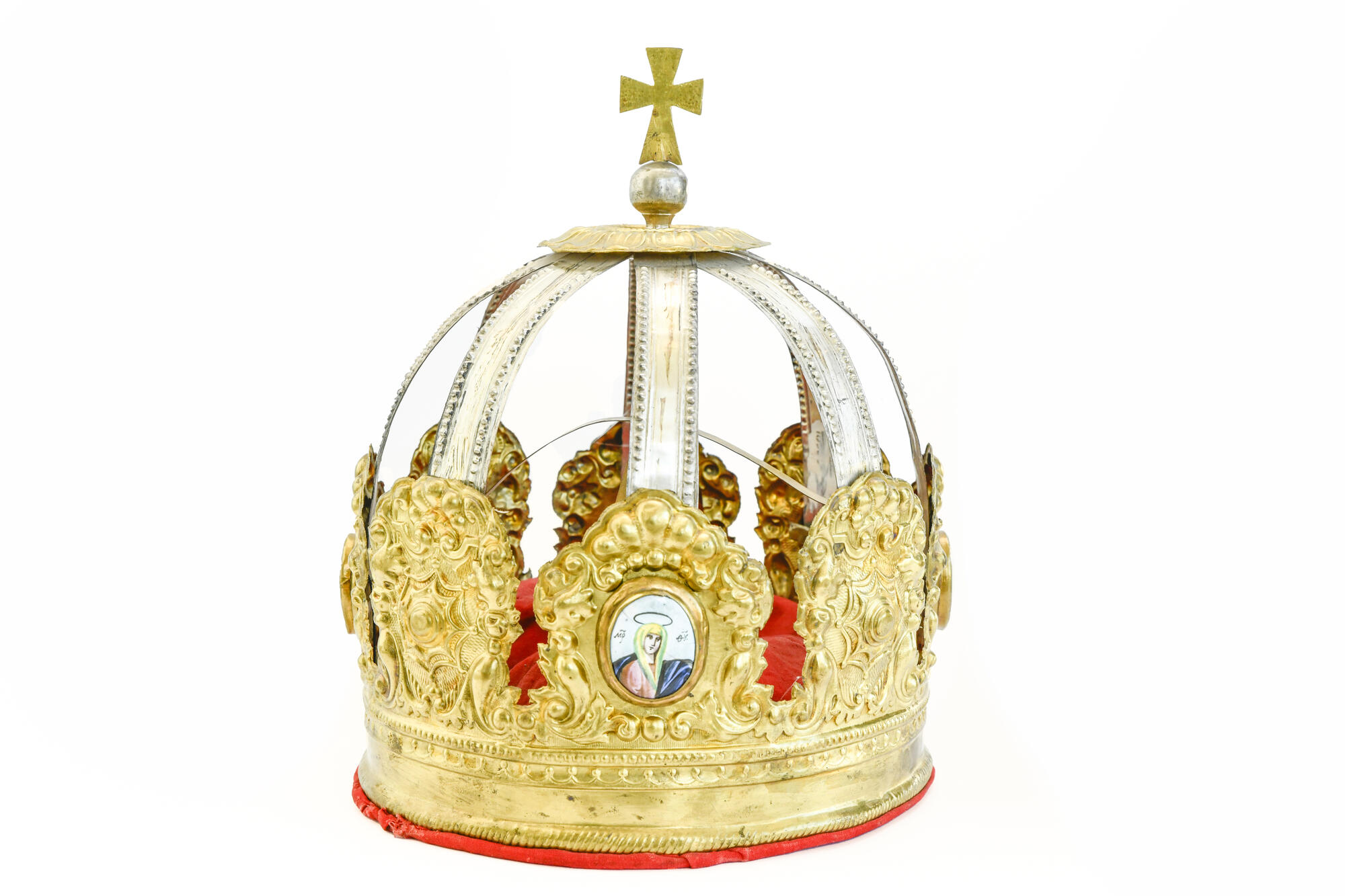


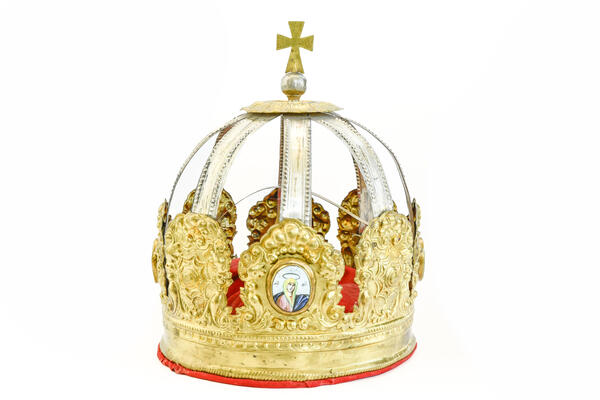
The men’s wedding crown from the collection of the Tobolsk Historical and Architectural Museum-Reserve is designed as a headband-crown made of stamped metal. Horizontal patterned bands surround its lower part. In the middle, there are eight carved blades with floral and geometric relief patterns. Four of them have enamel medallions featuring the cross, St. John, St. Constantine and Elena.
The upper part of the crown — the head — consists of eight arcs that connect in the center. Their edges are covered with small relief rims. A round “apple”, with a four-pointed cross, tops the intersection center. A red fabric lining is attached to the inner surface.
A wedding ceremony is one of the seven great sacraments of the Orthodox Church. It is believed, that it helps spouses find the invisible protection of God and bind their souls together in marriage.
The headdresses of the newlyweds at the wedding are shaped like imperial crowns. In the old days, they were made of wood or splint. Now metal crowns are most often found — for example, from gilded or silvered copper.
The round shape of the crown represented the inseparability of the marriage union, which was blessed by God and sanctified by the church. In addition, such a headdress symbolized victory over the passions before marriage.
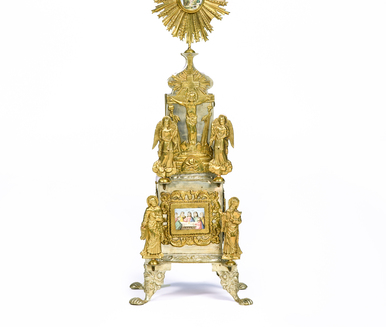
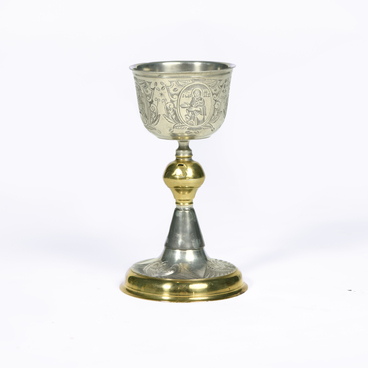
During the sacrament, crowns were put on the newlyweds or held over their heads. The couple was circled three times around the altar stand — a high rectangular table with an inclined surface. Then the newlyweds exchanged wedding rings and drank from the same cup: this ritual meant that now they would share all the joys and troubles. The wedding ceremony was attended by witnesses — either the godparents of the bride and groom or best men. Only in this case, the marriage was considered legally valid. The witnesses, among other things, were instructed to hold crowns over the heads of the newlyweds.
The upper part of the crown — the head — consists of eight arcs that connect in the center. Their edges are covered with small relief rims. A round “apple”, with a four-pointed cross, tops the intersection center. A red fabric lining is attached to the inner surface.
A wedding ceremony is one of the seven great sacraments of the Orthodox Church. It is believed, that it helps spouses find the invisible protection of God and bind their souls together in marriage.
The headdresses of the newlyweds at the wedding are shaped like imperial crowns. In the old days, they were made of wood or splint. Now metal crowns are most often found — for example, from gilded or silvered copper.
Traditionally, since ancient times they were decorated with images of Christ, the Virgin, and saints, crosses, carvings, and relief ornaments. The face of Christ is depicted on the front of the male headdress, and the Mother of God is on the female one.
The round shape of the crown represented the inseparability of the marriage union, which was blessed by God and sanctified by the church. In addition, such a headdress symbolized victory over the passions before marriage.
During the sacrament, crowns were put on the newlyweds or held over their heads. The couple was circled three times around the altar stand — a high rectangular table with an inclined surface. Then the newlyweds exchanged wedding rings and drank from the same cup: this ritual meant that now they would share all the joys and troubles. The wedding ceremony was attended by witnesses — either the godparents of the bride and groom or best men. Only in this case, the marriage was considered legally valid. The witnesses, among other things, were instructed to hold crowns over the heads of the newlyweds.