It has been thousands of years since the first mentions of vessels and vases appeared.
Attempts to create something similar to modern vases began with clay vessels. They had a practical purpose. They were used to store various liquids and food supplies. Over time, such vessels also became elements of interior décor. Vases differed in finish, material, and shape.
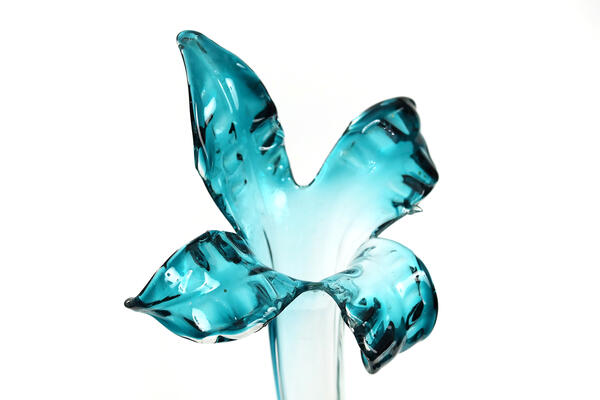
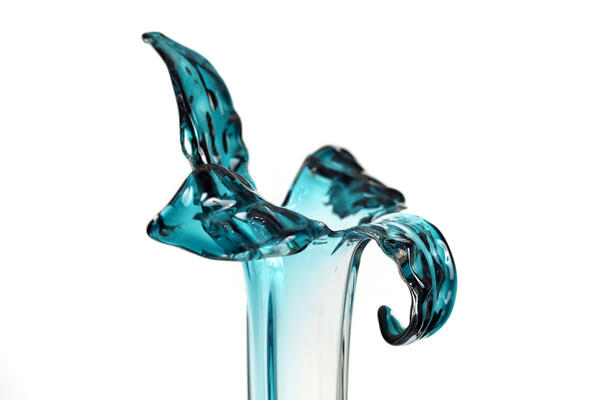
The museum collection features paired “berts” vases. These vases were especially popular during the Art Nouveau and Art Deco eras and were produced throughout the 20th century.
Such interior items were created by numerous manufacturers in different countries without brands. It is believed that the earliest examples have a hand-polished bottom.
The berts vase, also known as the “stretched vase”, was created by glassblowers by stretching the glass, so that the height of the product reached up to 70–80 centimeters. Due to the shape of the vase, it was difficult to place an entire bouquet, and usually only one flower fit inside.
In the USSR, many manufacturers produced berts vases until the 1950s. The most well-known of these was the Maltsovo Glassworks. Most likely, the paired copies in pale green uranium glass and blue vitriol glass were produced at this enterprise. These vases were valued for their rich color, which was achieved by adding metal oxides to the glass composition. For example, copper oxide created a blue color, manganese gave a purple or violet color, nickel created a lilac color, and an iron compound could produce a warm amber color.
“Such paired vases were often placed on drawer chests. The glass could have any color. It could be green, dark blue, white matte, or even transparent. Vases could be used not only for fresh flowers, but also — perhaps, even more often — for artificial ones. Vases, decanters, and jugs made of brownish glass were also popular. Such products were decorated with sprigs of rowanberry and bunches of grapes.” This description was provided in the article “Post-war Residential Interior of Leningrad as a Cultural Phenomenon” by Olga Sergeyevna Sapanzha, Doctor of Cultural Studies, and Natalya Alexandrovna Balandina, Chief Curator of the Museum of Everyday Life in Leningrad: The Two Post-War Decades (1945–1965).