Chinese fine and applied arts have evolved significantly from the primitive and unsophisticated forms of the Neolithic era to a highly developed cultural tradition that has gained global recognition, becoming an integral part of Chinese cultural heritage. The rich and colorful Chinese arts and crafts can be broadly categorized into seven main groups: carving, metalwork, weaving and embroidery, porcelain and pottery production, basket and mat weaving, painting, and varnishing. Each of these categories encompasses a wide range of styles and forms, reflecting the variety of artistic techniques, skills, materials, regional characteristics and national traditions.
Porcelain and ceramics are the most important achievements of ancient China. Since the Ming Dynasty, Jingdezhen, renowned for its fine white porcelain decorated with colored patterns, has been rightfully considered the center of porcelain production in China.
The glaze used in Chinese porcelain can be red, purple-pink, sky blue and the color of the moon, as well as many other colors.
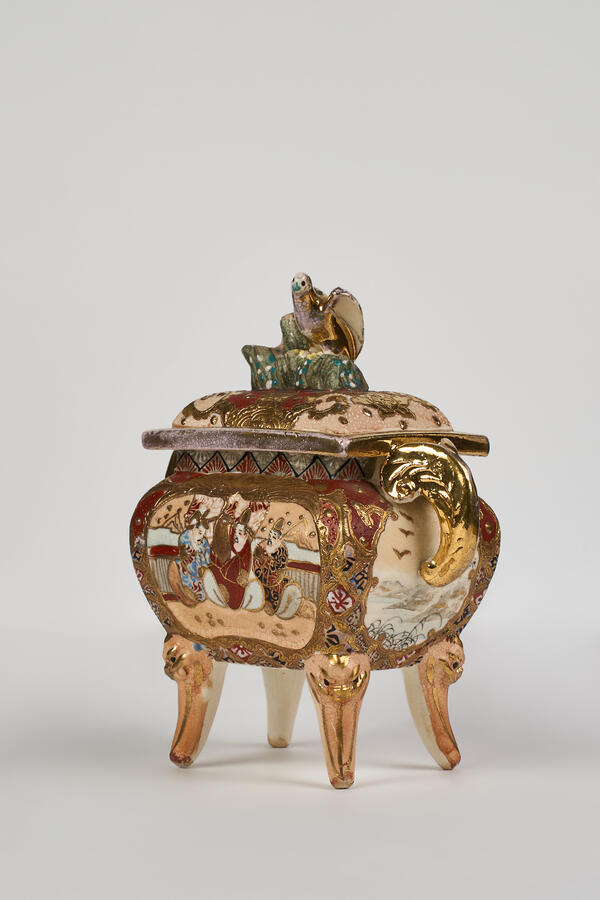
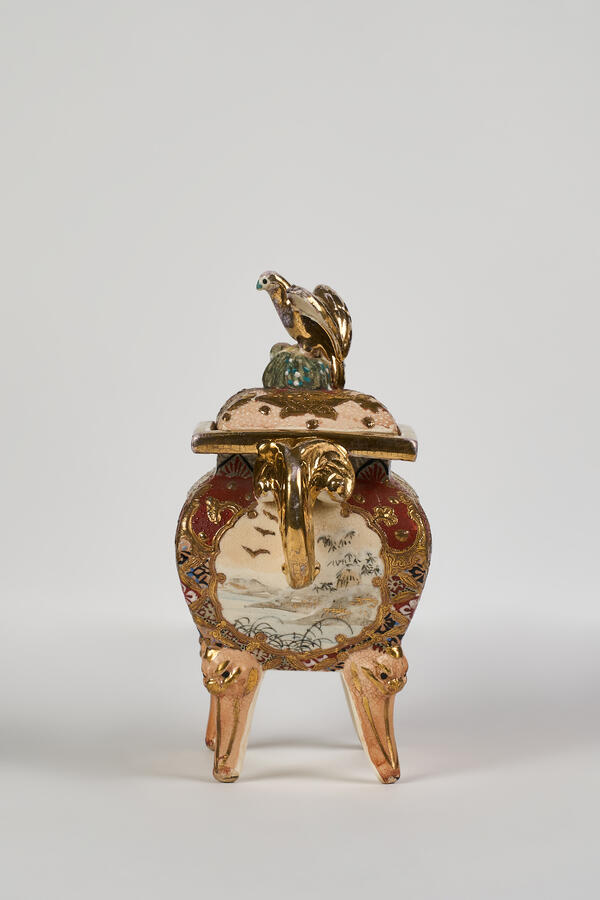
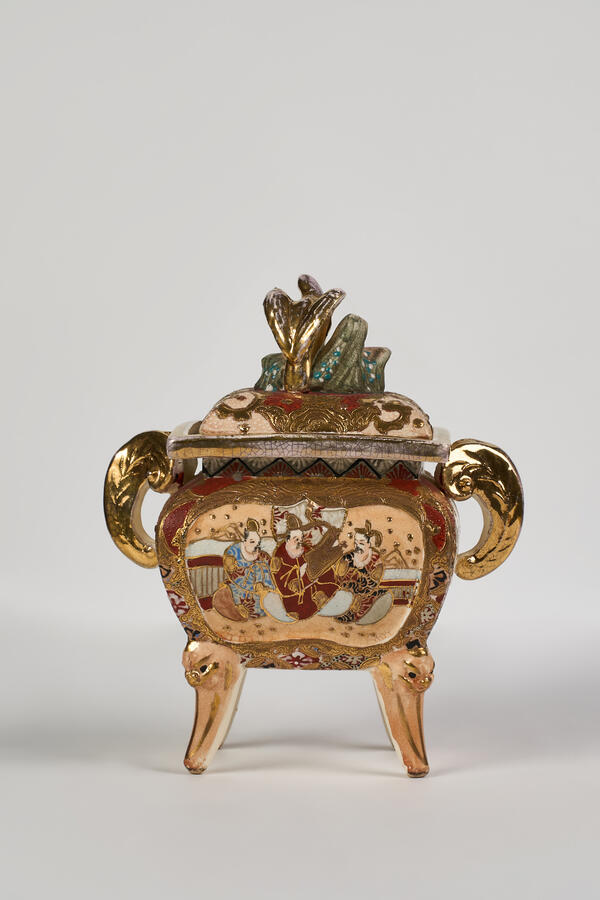
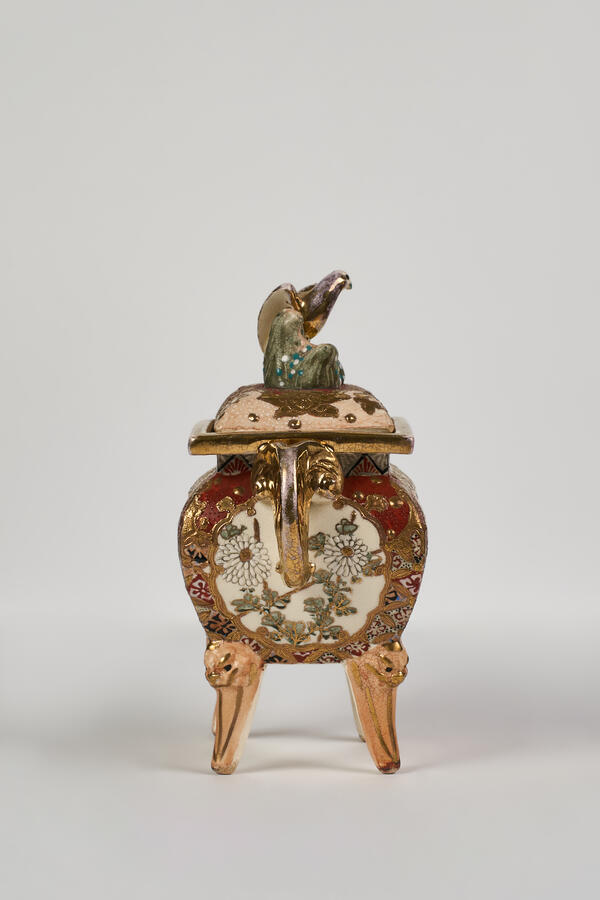
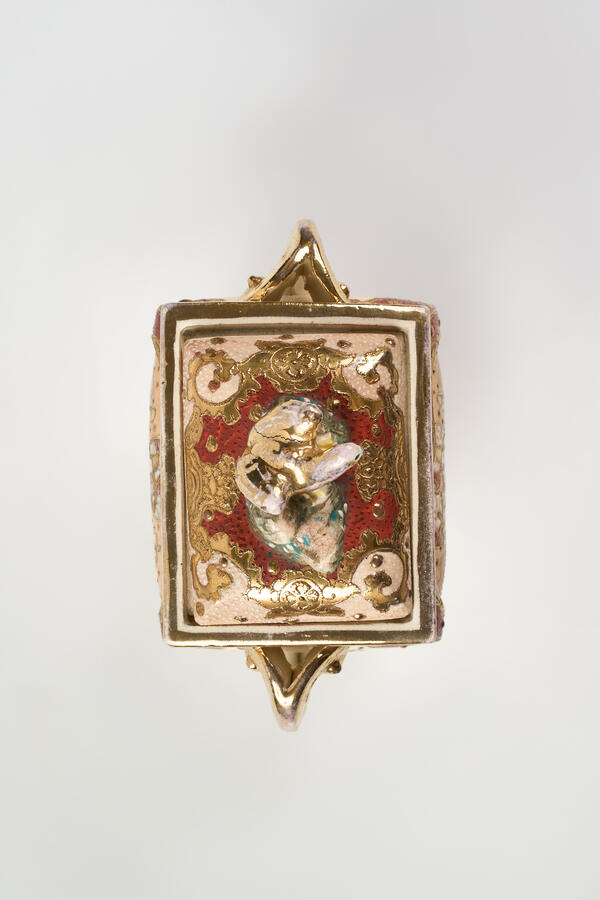
The vase with four faces, housed in the Collection of Foreign Art of the Astrakhan Art Gallery named after Pavel Mikhailovich Dogadin, is decorated with paintings in brown tones with gilding. It also has medallions that feature images of human figures and flowers. A bird sits on a small mount on the lid (presumably, this is Fènghuáng — the Chinese phoenix). The legs at the base are decorated with lion dog masks. There is a red mark on top of the glaze on the edge of the neck.
The medallions located in the center of the vase depict a scene from the life of the Chinese imperial court. The three men are apparently busy studying the scrolls. They are dressed in traditional kimono outfits, richly decorated with embroidery and other elements. On the head of each of them is a cap, characteristic of advisers at the court of the emperor. In the background, one can see wild plum blossoms — in Chinese culture it is a symbol of the continuity of life.