

Vladimir Ivanovich Dahl, the ethnographer and compiler of the “Explanatory Dictionary of the Living Great Russian Language”, defined a vase as “a vessel of ancient or other elegant image, a jug, with a waist… bell-shaped to the top, for decorating chambers and buildings”.
It is not known exactly when and where the first vase appeared. Archaeologists and historians claim that the artisanal production of simple vases began several millennia ago, long before the invention of the potter’s wheel. Since then, vases have gone a long way of evolution by changing in size and shape, varying in materials including clay, porcelain, stone, glass, and metal, as well as by means of different decorative techniques used, such as embossing, painting, and relief.
Vases were used in various rituals and became an element of interior decoration. Pair vases, for example, were used to decorate grand entrances and staircases, fireplaces, window apertures and other interior elements. In architecture, vases turned into flowerpots, which had a decorative function.
In the 19th century, vases filled with fruit were considered an indispensable attribute of any festive reception. They decorated dining rooms and living rooms, their presence on the table was considered a sign of good taste, indicating affluence and hospitality of the hosts.
The classic of culinary literature Elena Ivanovna Molokhovets in her book “A Gift to Young Housewives, or Means to Reduce Expenses in the Household” published in 1901 recommended taking “…three… simple glass or crystal vases… Put them one on top of the other. Cover the foot of the lower vase with artificial or fresh flowers… Lay oranges and tangerines on the lower vase, overlapping them with descending branches of grapes. Put apples, pears, bergamots on the second vase… Put sweets in the third vase… and place a luxurious bouquet of white or purple lilac or lily of the valley in it…”
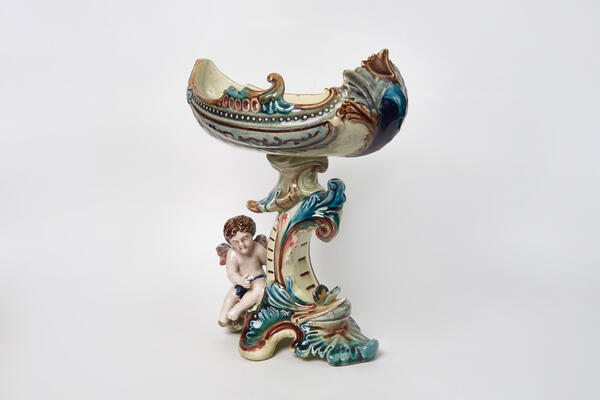
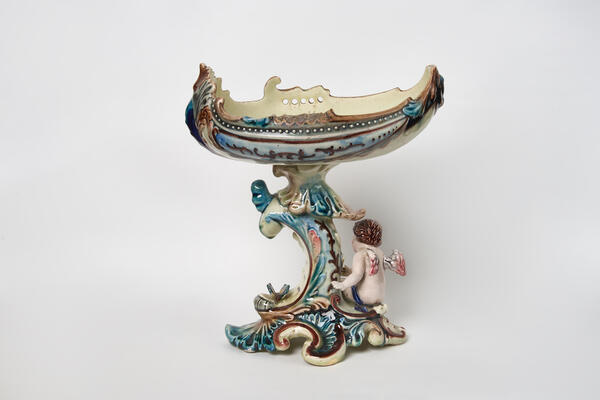
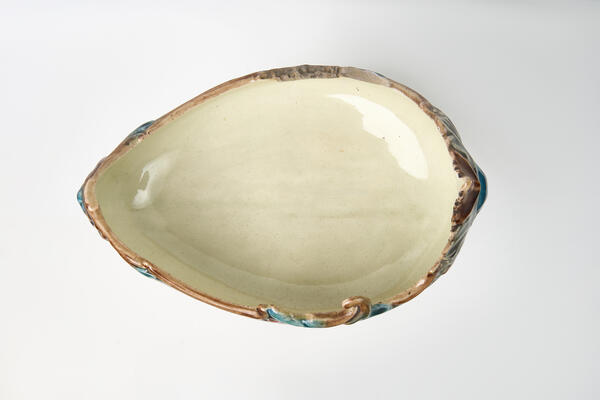
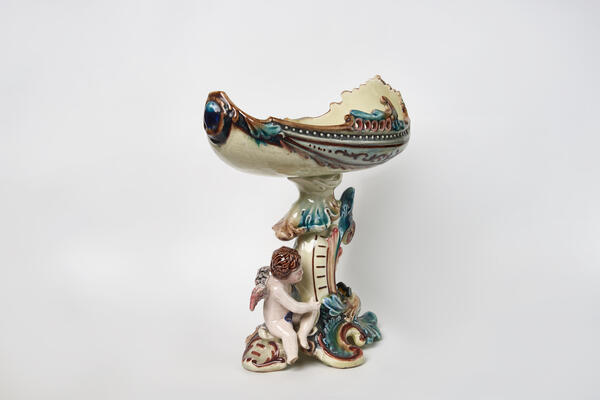
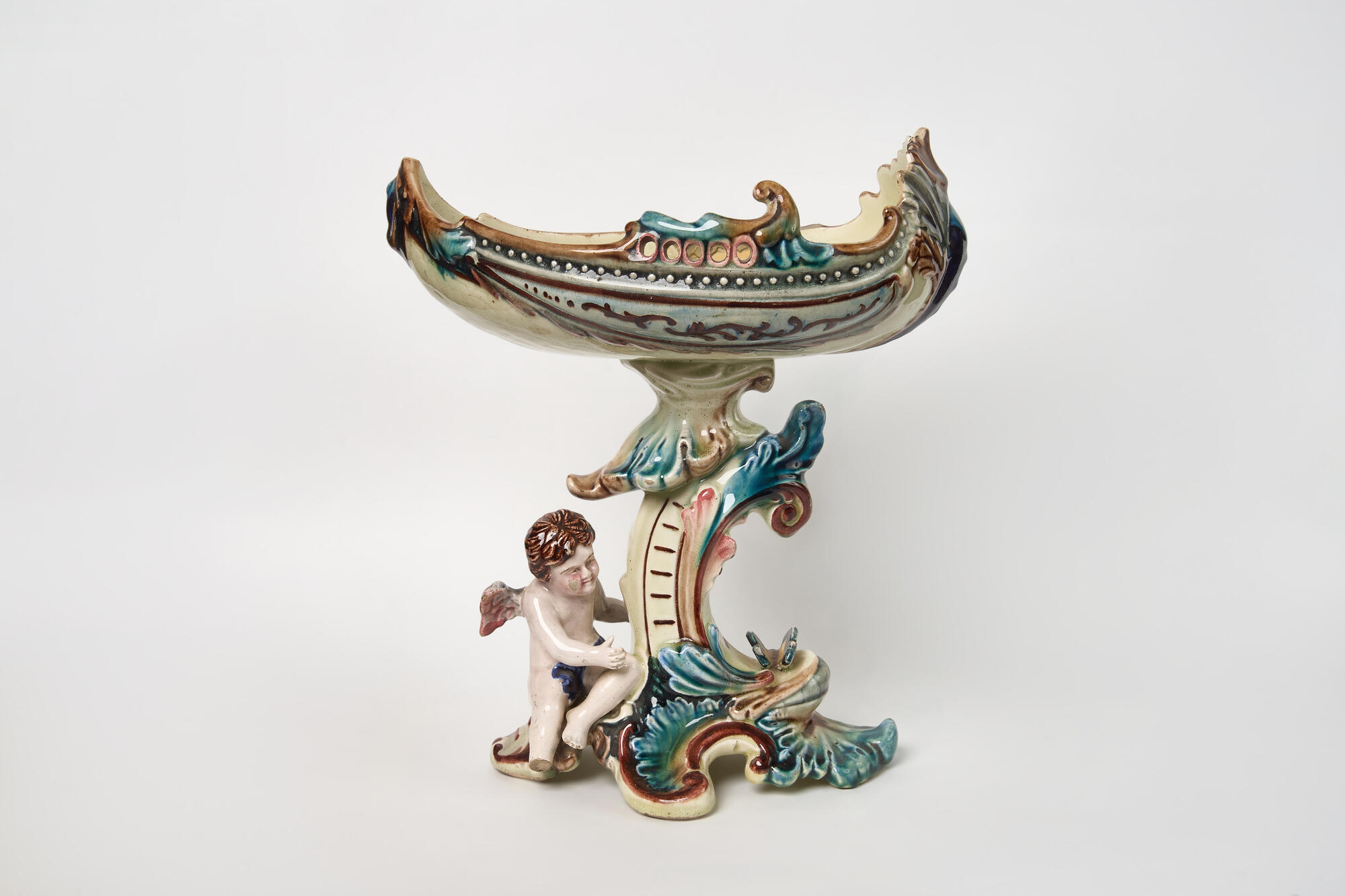
The practical value of the vase is traditionally preserved in the household, where it is mainly used to hold flowers and fruit. One such vase, or “fruktovnitsa”, is presented in the exhibition “Merchant’s Living Room”.
It is abundantly decorated with floral motifs that symbolize fertility, abundance and prosperity. Its upper part is made in the form of a ladja boat, one edge of which is wide and slightly raised, while the other is narrow. The shaped stem and the base of the vase are made in the form of stylized leaves. In the lower part there are sculptural images of a winged Cupid and a butterfly.