

All women of the Amur region liked to wear jewelry, which was an indicator of the material prosperity of the family. The range of jewelry was quite diverse: bracelets, rings, earrings, beads, pectoral and neck ornaments. They served as amulets and talismans for Nanai women.
The jewelry covered all vital openings on the head and body: ears, nose, arteries on the neck and wrists. According to the Nanai beliefs, this was done to prevent evil spirits from entering a person.
There were wrist and ankle bracelets. According to the Nanai beliefs, the latter were a lucky charm for childbearing. Local craftsmen made simple bracelets from thick silver rod or wire. However, the pieces that were brought from Manchuria were especially valued. They were covered with relief images of decorative patterns or a dragon.
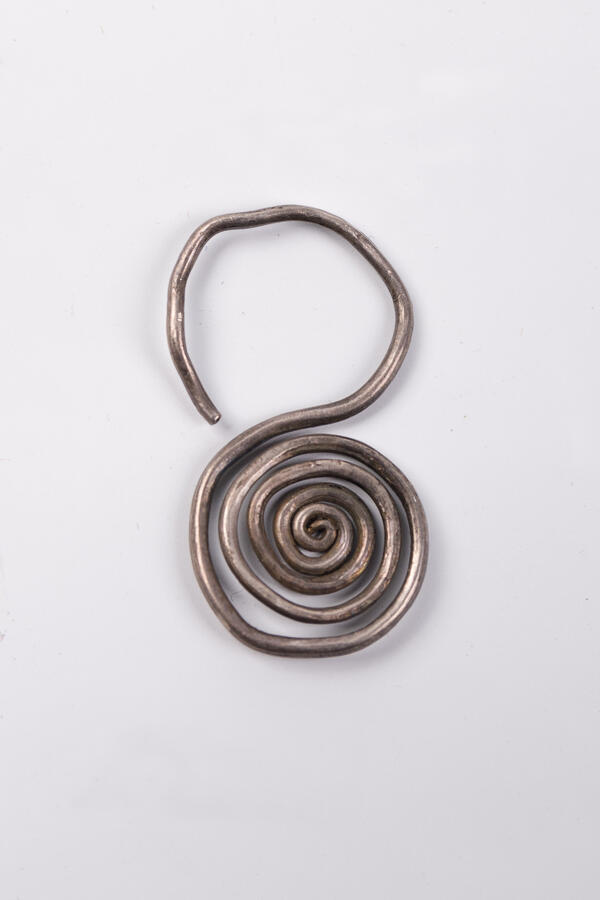
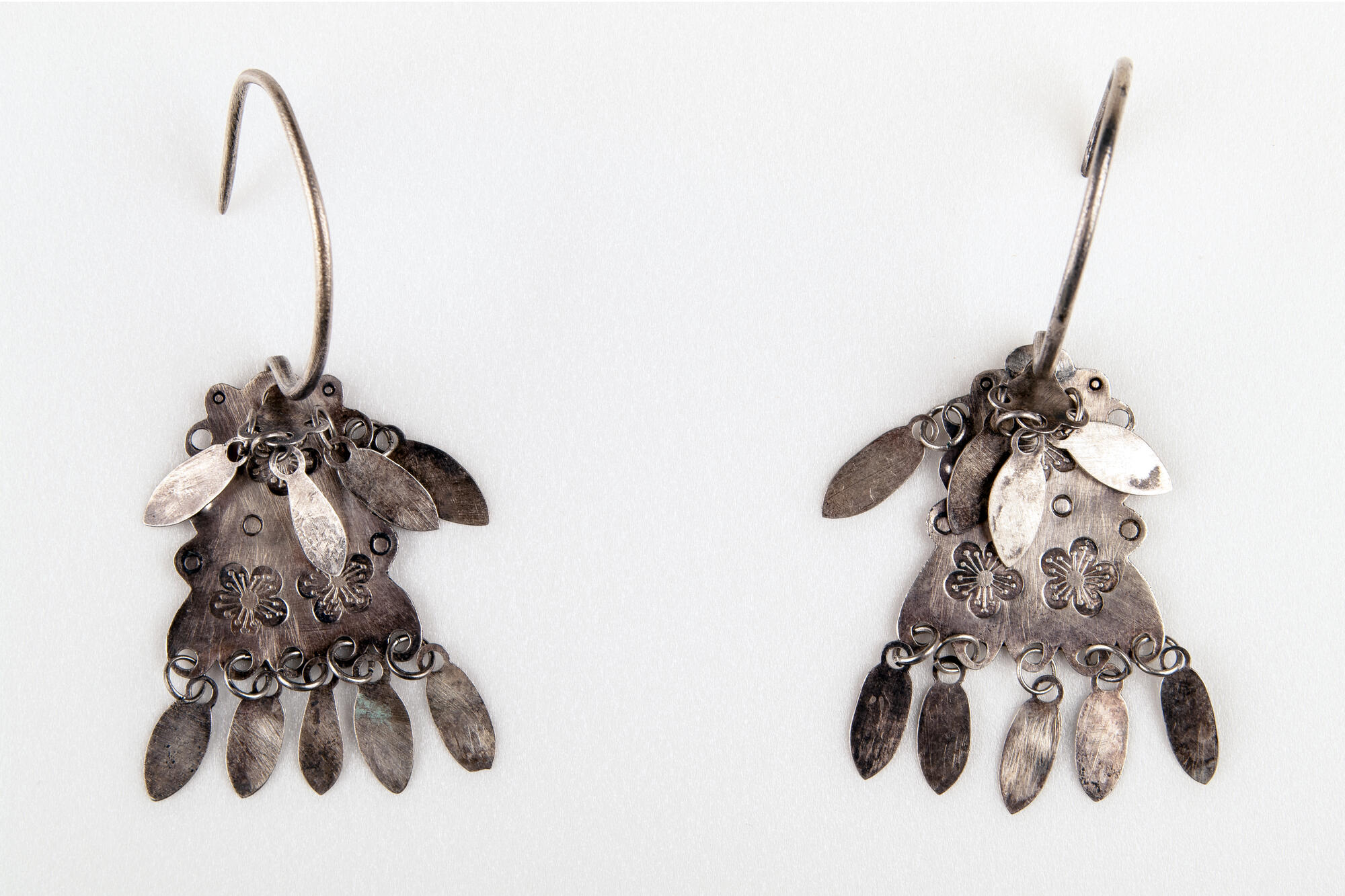
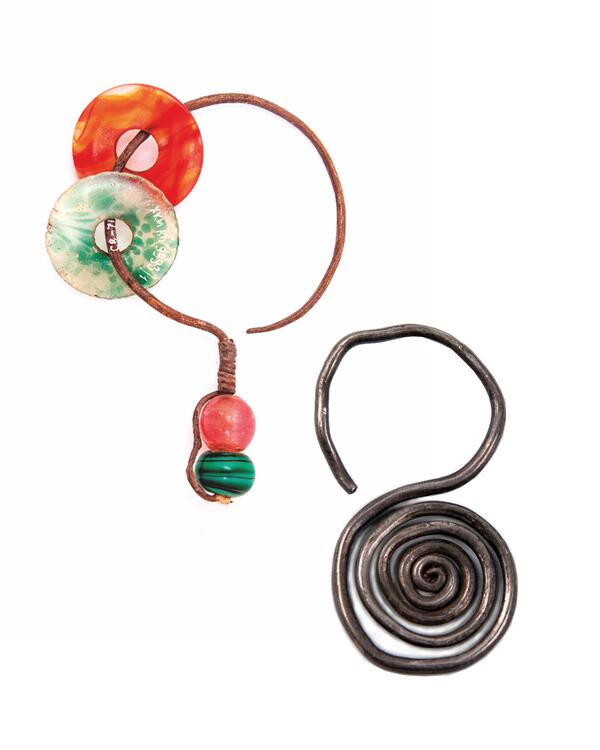
Earrings were of two kinds. Those of the Manchurian type had the form of a shaped plate with numerous pendants in the form of spearheads. Meanwhile, the Amur earrings were made of silver wire on which honey-colored chalcedony beads and a jade disk were strung. Sometimes instead of jade silver coins were attached.
A Nanai woman could have four or even more holes in each ear. Older women’s earlobes became deformed under the weight of earrings and drooped almost to the shoulders. The nose ring was considered a special piece of jewelry, which could be used to determine the clan affiliation of its owner.
Women usually wore a ring in the nasal septum, while young girls had it mostly in the wings of their nose. Jewelry was worn not only by women, but also by men. Of course, men’s ornaments were not as numerous as women’s. The only difference was that women wore paired jewelry, while men wore single pieces: typically a bracelet, a ring and an earring.
Silver was the most
common material for making jewelry in the Amur region. Wealthy families brought
yuanbao silver bars from China, which served as money there, broke off pieces
of the valuable metal and commissioned local craftsmen to make simple pieces of
jewelry from them. Finished jewelry imported from Manchuria and China was also
made of silver only.