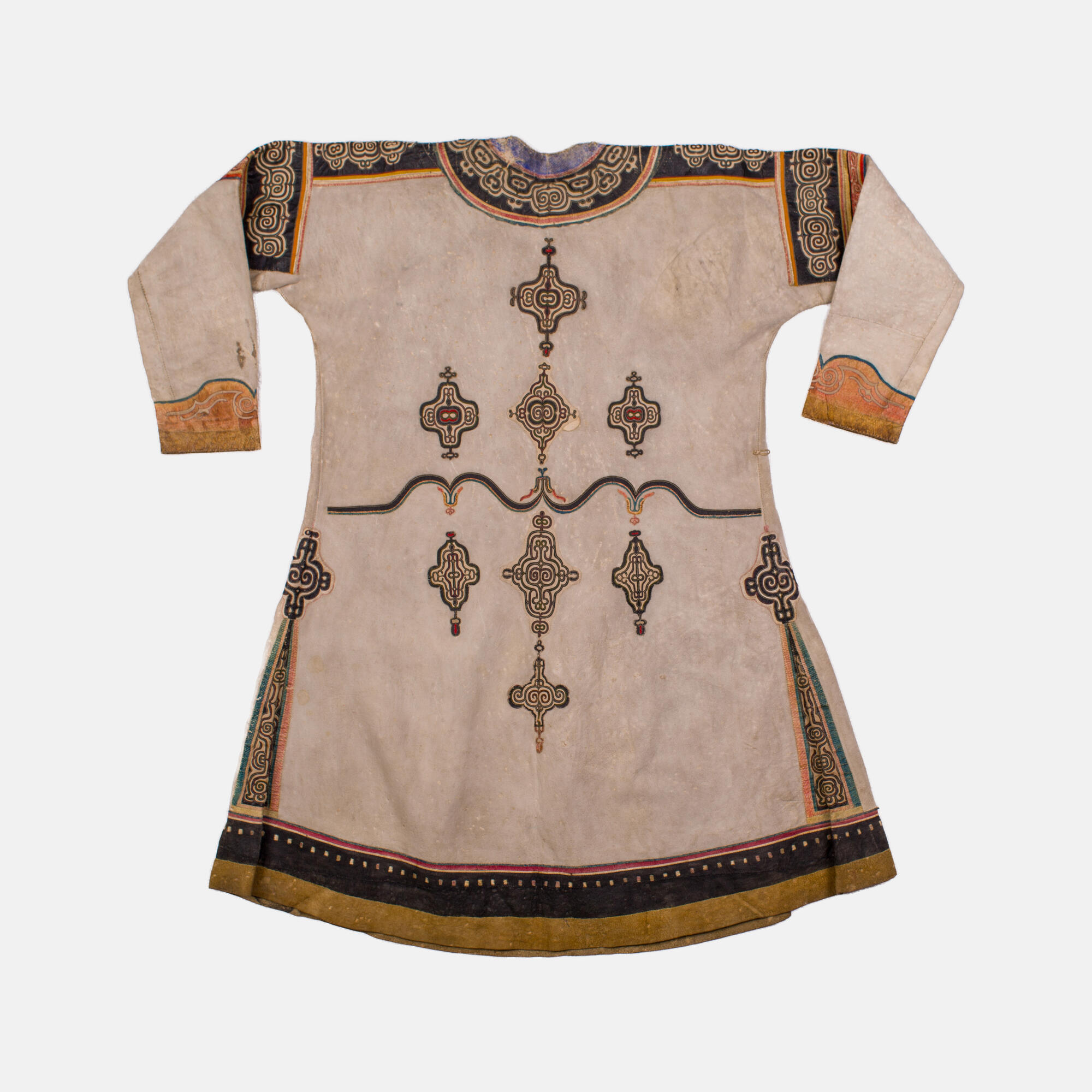


The robe was the main element of the ethnic costume worn by the indigenous peoples of the Amur region. It was the same for women, men and children. The only differences were in length and the amount of decorative elements: men had shorter outfits, while women adorned their robes item of clothing more abundantly.
Robes were made of deerskin, suede, fabric, fish skin and hides of taiga animals. The robe had a kimono-type cut, an enlarged left forepart, and a fastener under the right arm. It is assumed that the Amur peoples borrowed the wrap type of clothing from the Kidans, a nomadic Mongolian tribe, in the period from the 10th to the 13th century, and before that time they wore open clothes with a slit in the middle.
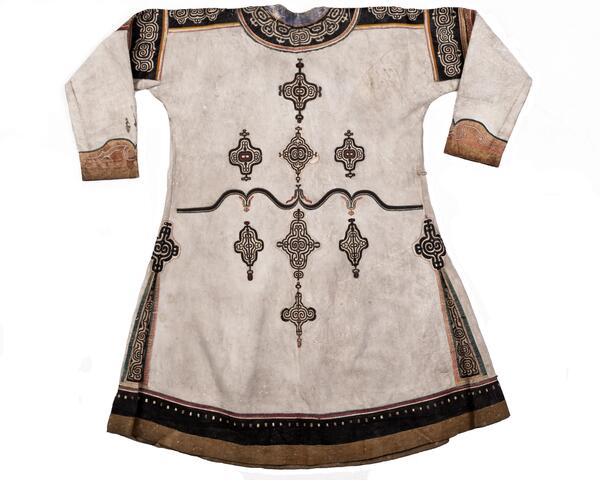
The festive robe differed from the everyday one by its more complex and rich ornamental design and meticulous execution technique. The robe entered the museum’s collection thanks to Vladimir Arsenyev. This item not only introduces the traditional costume of the Nanai people, but also represents a sample of folk arts and crafts, where various materials were used.
The item was made using the skin of Manchurian deer as the base material, which was dressed into soft deerskin. Having a very thick and coarse leather layer, the hide of Manchurian deer was usually used for sewing shoes, bedding in a tent, and household items. It took a great deal of effort, time, and skill to process the hide to make a festive robe.
The decorative trim of the robe is fish skin appliqué, which was tinted into black color. The master used two types of appliqués. It is a slit one on the shoulders and neck. As a result, the pattern forming the background is visible in the slits. And on the back and in the side gussets there is an overlay appliqué.
The robe presented in
the exhibition is distinguished by the subtlety and skill of the ornamental
rosettes on the back. Thin lines of fish skin were sewn in the middle with tiny
stitches of the same leather threads. Inclusions of burgundy threads and
fragments of orange color added dynamism, contrast and brightness to the image.
The quality of leather dressing, thoroughness and refinement of the decorative
design testify to the high material and artistic value of the product.