In earlier centuries, our ancestors practiced log beekeeping with great dedication and enthusiasm. This tradition was especially widespread among the Eastern Slavs — Russians, Belarusians, and Ukrainians.
At the heart of such apiaries was the log beehive — also known by various regional names such as bort (giving rise to the term bortnichestvo, or tree beekeeping), duplyanka, or duplyak. In essence, a log hive was a simple, hollowed-out log, either placed inside a natural tree cavity or crafted as a freestanding structure. This primitive but effective design marked the very beginning of Russian beekeeping; modern movable-frame hives appeared only much later. Notably, even today, in remote parts of Belarusian Polesie, one can still encounter ancient apiaries featuring these traditional logs.
A classic log beehive was a hollowed log with a narrow entrance slit — called a “flyway” — that allowed bees to enter and exit. A wooden lid covered the top to shield the colony from rain and cold. During the honey flow, bees would fully fill the interior with combs, storing rich, fragrant honey throughout the cavity.
Many log beehives were designed to be semi-collapsible or modular: as the bee colony grew, additional log sections could be stacked on top, expanding the hive’s capacity. Originally, these hives were hung high in forest trees — just as ancient wild beekeepers had done for centuries. Over time, beekeepers began placing them closer to their homes, which simplified hive management and laid the groundwork for the development of modern apiaries.
In the Unecha region, beekeeping with log beehives persisted well into the mid-20th century. A distinguished figure in the region’s apicultural history is Alexander Ivanovich Pokorsky-Zhoravko, a 19th-century scientist, beekeeper, and native of the Unechsky District. He played a pivotal role in advancing local beekeeping practices, not only improving hive design but also creating practical guides for peasant beekeepers.
Pokorsky-Zhoravko was the first in Russia to conduct a comparative analysis of different hive types, evaluating their strengths and weaknesses. He authored a history of the hive and traced the evolution of beekeeping in the region. His efforts included publishing folk manuals and making early attempts to compile a specialized beekeeping dictionary.
His first published work, “A Few Words about Standing Hives”, appeared in 1838 in the “Agricultural Gazette”. From then on, his articles became regular features in specialized journals, including the “Proceedings of the Imperial Free Economic Society”.
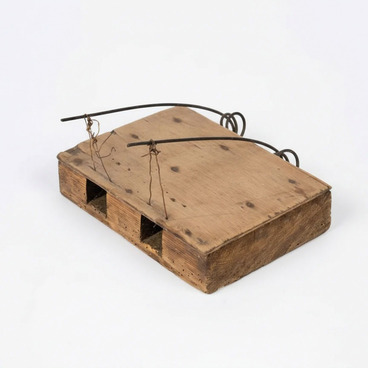
The Unecha Museum of Local Lore preserves a well-maintained example of a traditional log beehive — an artifact that speaks to this enduring rural tradition. It was generously donated by a fellow native of the region: a beekeeper from the village of Shulakovka and a compatriot of Pokorsky-Zhoravko himself.