The iron entered human life more than two thousand years ago and has evolved dramatically — from a simple heated stone to modern-day electric appliances with steam functions. In Rus, people smoothed coarse linen and hemp cloth using a rubel (a ribbed board) and a roller, rather than a heated tool. The first written record of a metal flatiron in Russia dates to 1636, when the blacksmith Ivan Trofimov was paid five altyn for crafting an iron for the royal chambers.
By the time of Peter the Great, irons made of iron, bronze, and cast iron had become firmly established in Russian households. These remained the primary tools for pressing clothes well into the mid-20th century. The earliest versions were solid-cast irons: heavy blocks of metal heated up in a stove or over an open flame. Some weighed as much as 12 kilograms. They took a long time to heat, and because the handle was made of the same metal as the sole, it would become scorching hot.
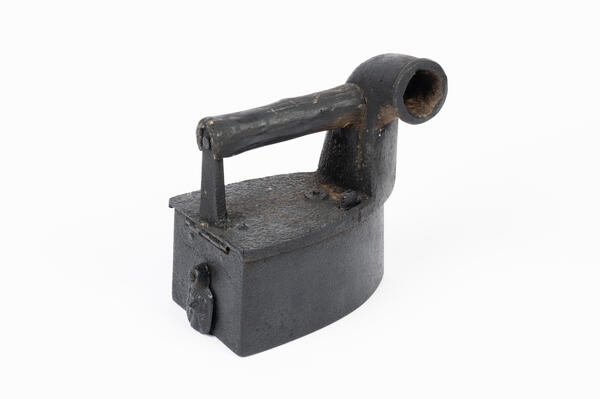
Charcoal irons soon became the most popular alternative. These featured a hollow body with a hinged lid, into which glowing charcoal embers were placed. The handle was mounted on top, and small ventilation holes along the sides allowed airflow. To revive cooling coals, users would blow into the holes or briskly wave the iron from side to side.
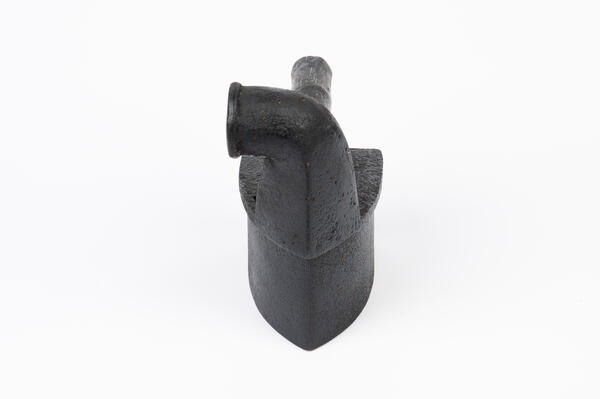
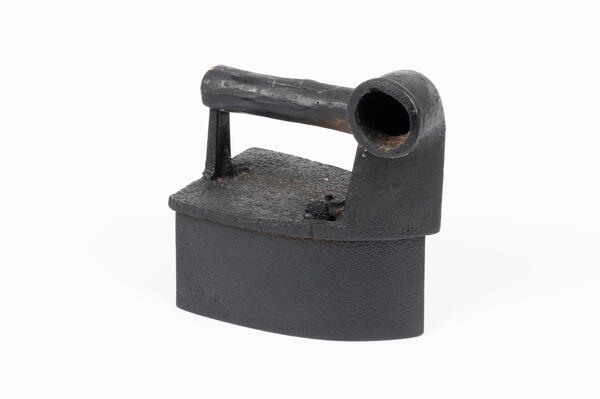
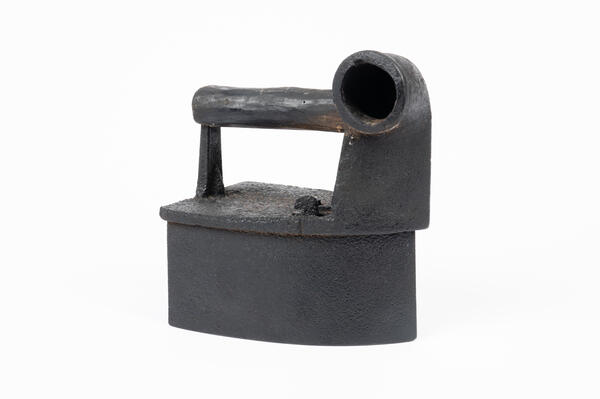
Over time, the design improved: a chimney pipe and an internal grate were added. The pipe enhanced draft, carried heat away from the handle, and reduced the risk of burns, while the grate kept the coals elevated above the sole, preventing direct contact and eliminating uneven “hot spots”.
The iron displayed in the Unecha Museum of Local Lore belongs to this type — a charcoal iron with a pipe. Such irons were costly and highly valued household items. They were often passed down through generations, and owning one was considered a mark of prosperity.
In Russian tradition, the ability to use an iron carried symbolic weight. It was said that a bride-to-be’s readiness for marriage could be judged by how she ironed: if she could manage the heavy iron with one hand, she was strong, capable, and fit to be a good housewife. If she needed both hands, it was thought she was not ready for matrimony.
Though small, the Unecha Museum’s collection includes both solid-cast and charcoal irons — offering a glimpse into the evolution of this essential household object.