In 1933, the formation of units of the Department of Chiefs of Engineers began in the USSR. They were created to provide engineering support for the deployed Northern Military Flotilla and the construction of a coastal defense system. A year later, the department was reorganized into the Department of Engineer Troops.
Four additional construction organizations were established for the construction of the coastal defense system. At first, only volunteer Komsomol members from the people’s militia units of Murmansk and Arkhangelsk, as well as prisoners, were engaged in construction work. Due to the low qualifications of these freelance workers and the seasonality of the work, deadlines for the completion of the facilities were not met. This was unacceptable, as the construction of defensive structures was of vital importance, and therefore, in April 1936, the first construction battalions arrived there.
In 1938, the Department of Engineer Troops was divided into the engineering and construction units of the Northern Fleet. Range marks were being built all along the coast to aid in ship navigation. The construction of workshops, warehouses, berths, battery installations, as well as residential and office buildings began at ship bases and on the coast. The engineers faced great difficulties. They had to work in harsh climatic and environmental conditions. Piers, harbors, barracks, and coastal batteries were constructed on granite hills and marshy soils.
From the outset of the Great Patriotic War, the construction workers were tasked with carrying out operational assignments of the Military Council of the Northern Fleet. In view of the threat of a possible enemy incursion in the area of Kola Bay, by order of the Military Council, construction activities were initiated to build defensive lines covering the main naval base — the town of Polyarny. The naval construction workers erected gun emplacements, as well as shelters for personnel and equipment, and provided logistical support for amphibious assault operations.
Defensive structures on Kildin Island, as well as on the Rybachy and Sredny peninsulas, were erected under the supervision of military engineer Alexander Semenchuk.
In 1945, Semenchuk was awarded the Order of the Red
Star in recognition of his successful completion of tasks to strengthen the
defensive capabilities of the Northern Fleet. In 1944, Semenchuk was appointed
head of the technical department of the Northern Fleet, and in 1965 he became
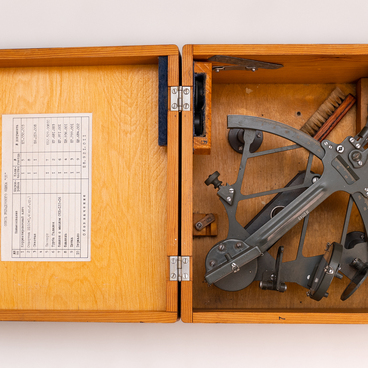
the head of Severovoenmorstroy. The Severomorsk Museum and Exhibition Complex houses
personal items and awards belonging to Alexander Semenchuk, donated by his
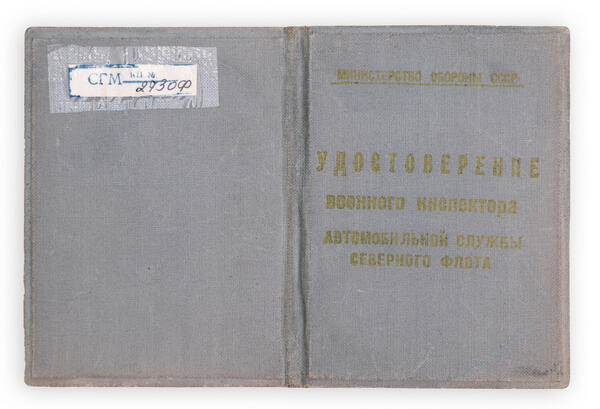
widow. Among them is the certificate of the military inspector of the
automotive service of the Northern Fleet No. 71 in the name of Semenchuk.