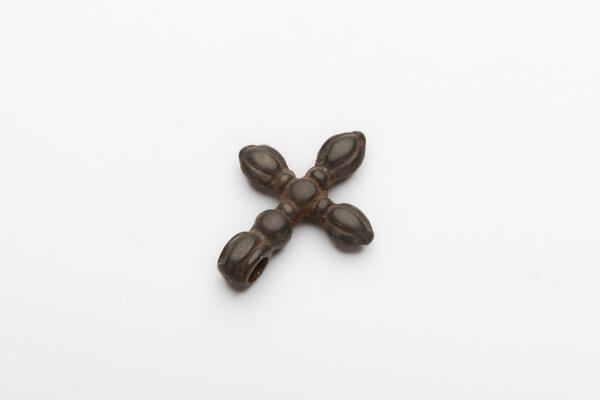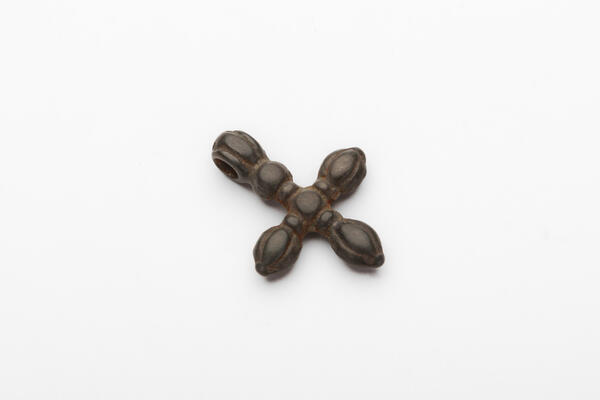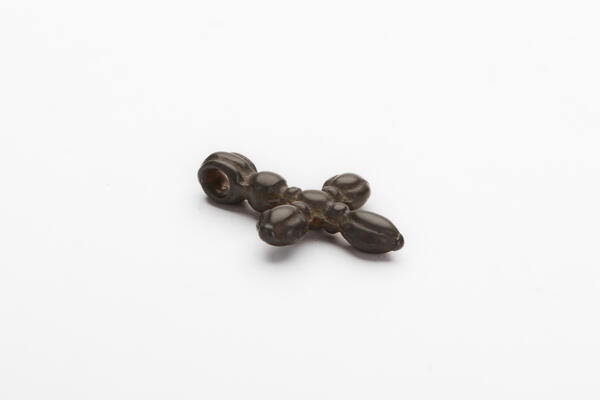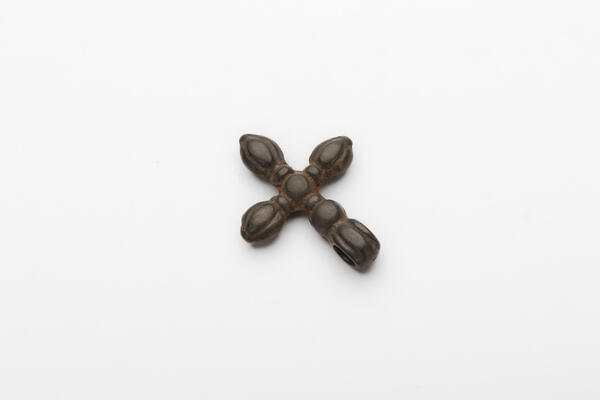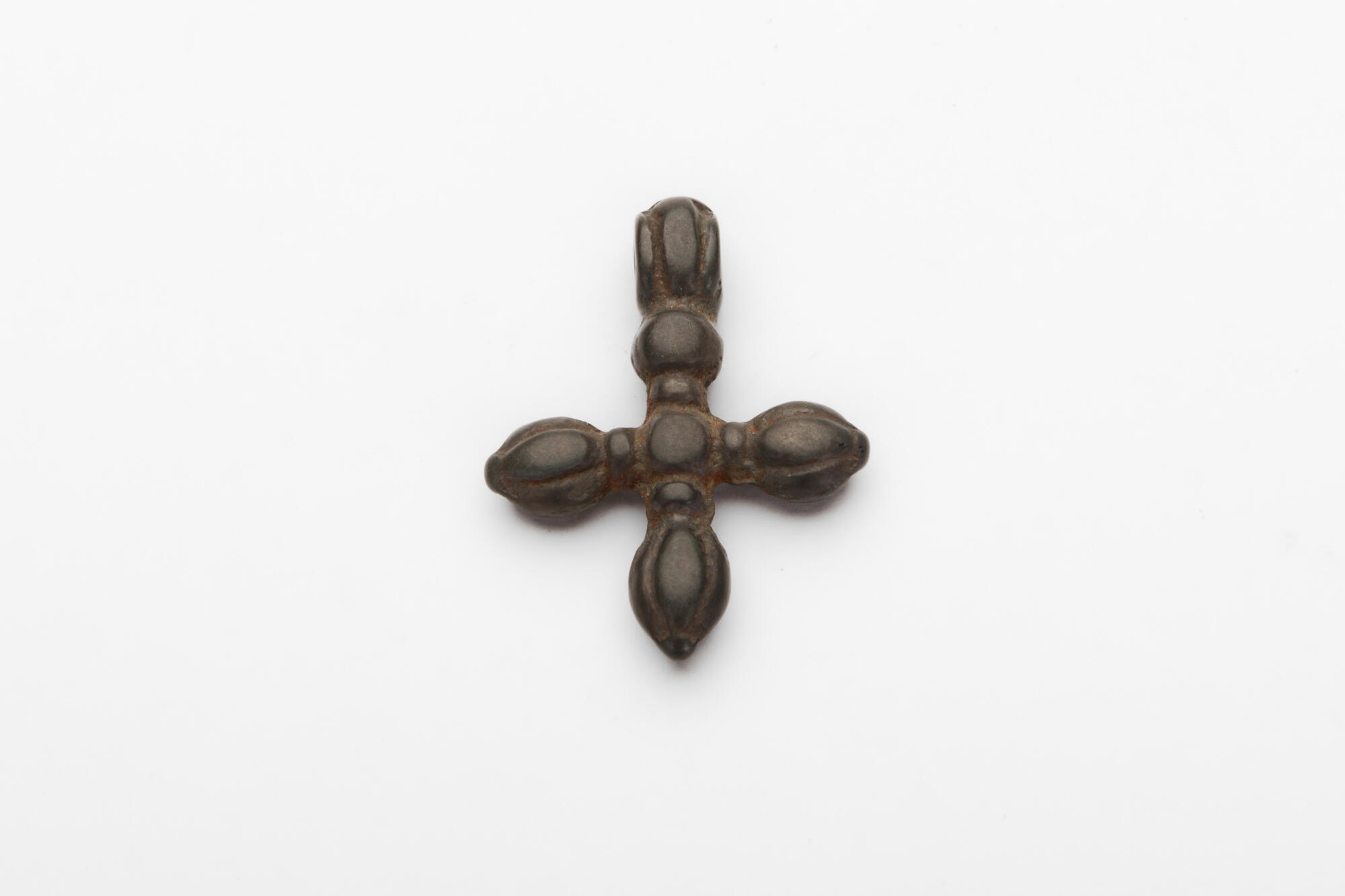


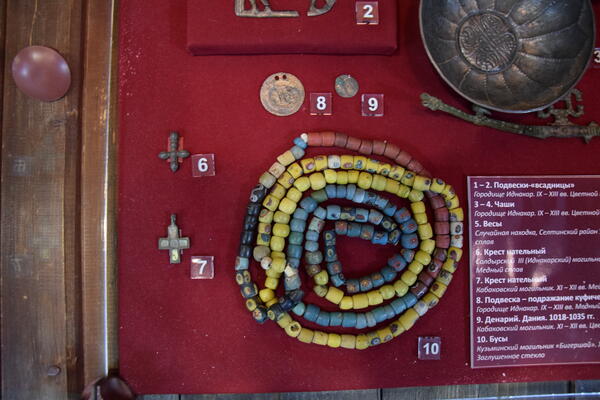
This is a bronze cross pendant found in the Idnakar burial during archaeological excavations in 2000–2003. Throughout its history, the ancient population of the Prikamye region interacted with ethnic groups living in the neighborhood and distant territories. These interactions included hostilities, trade relations and marriage alliances.
Cheptsa, Vyatka and Kama with access to the Volga were the main water arteries that connected the Prikamye region with Finnish- and Turkic-speaking tribes, Slavic people and the countries of the Near and Middle East, as well as southeast Europe. All these relationships affected the objects that came into widespread use among the Udmurts: beads, coins and silver vessels.
The earliest coins include Sasanian drachmas, and later coins include Ispegbed, Umayyad, Abbasid and Tagerid coins. Three jugs, five dishes, a mug and a bucket were part of six treasures found near the Cheptsa River — all of them were made in Byzantium and the eastern regions of Central Asia.
Necklaces containing up to several hundred multi-colored glass and stone beads were the favorite jewelry of Udmurt women. Chemical analysis of the composition of the glass showed that most early medieval beads came from the Mediterranean countries — Syria and Egypt. By the 12th century, their number had noticeably decreased, and they soon completely gave way to Old Russian jewelry.
Silk fabrics were also imported. The fragment of silk found under the bronze decoration belongs to the “samit” type. Such fabrics were made only in Constantinople in the 11th–12th centuries. Polychrome patterned silks — the most precious textile products of their time — were an export item and often brought as gifts by emissaries during diplomatic visits.
The Udmurts also imported some dyes. They began to establish trade relations with Western Europe in the 11th century: the finds of the English penny of King Canute and the Saxon denarius of Ordulf (also known as Otto) date to this time.
Materials found at the Idnakar site in layers of the 10th–12th centuries, such as cases for folding combs, double-sided horn combs of rectangular or trapezoidal shape and spindle whorls made of pink slate, help trace connections with the Russian principalities.