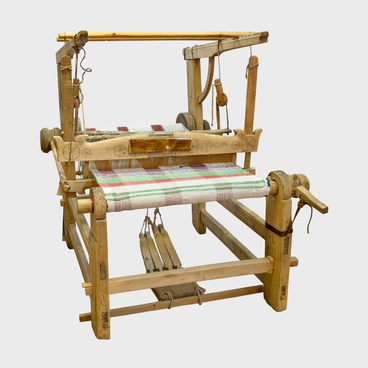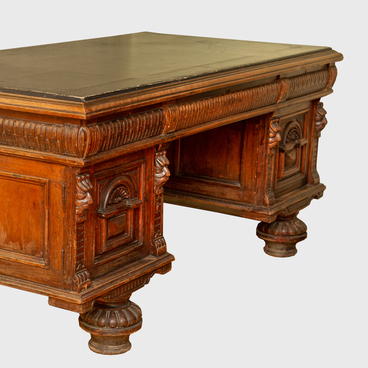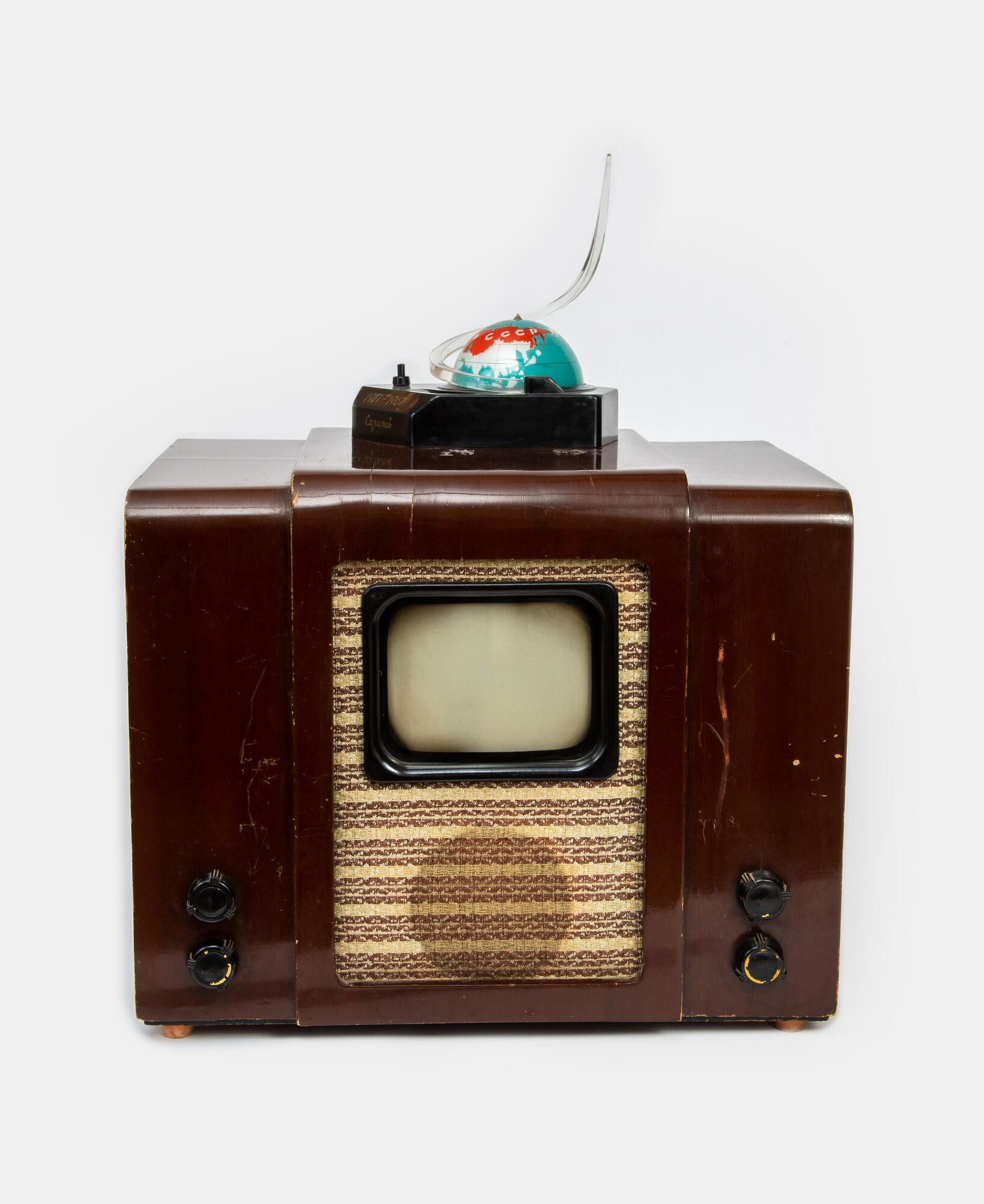


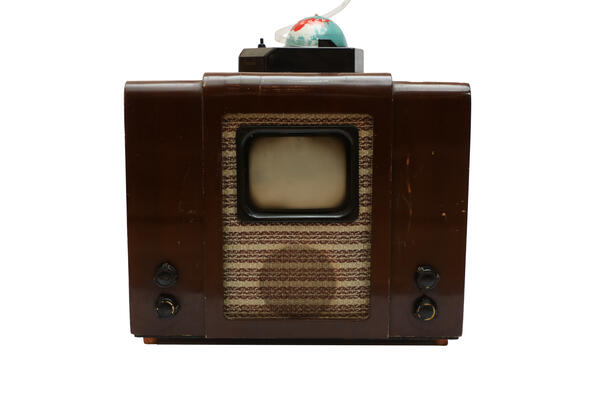
One of the halls in the Verkhnyaya Pyshma museum tells about the life of local residents in the 1930s — 1970s. The employees have collected rare exhibits: a cupboard made in the eclectic style, a Chinese gramophone built into the cabinet and a KVN-49 TV.
The black-and-white TV from the museum’s collection was produced in 1955 at the Aleksandrovsky plant in the Vladimir region. Its name was an abbreviation that used the names of the developers — Vladimir Kenigson, Nathan Varshavsky, and Igor Nikolaevsky. 49 meant the year of the model’s release — 1949.
The development of the TV began after the Great Patriotic War. In 1945, the USSR adopted the world television standard — 625 by 50. This meant that the vertical screen contained 625 lines, and the frame rate was 50 frames per second. Soviet engineers launched a project of the first TV with a suitable screen resolution. The model passed all the tests and was accepted for mass production.
The Aleksandrovsky Radio Plant became the first enterprise that started producing KVN-49 in 1949. Later, this model began to be produced at enterprises in other regions: in Baku, at ‘Electrosignal’ in Voronezh, ‘Mayak’ in Kyiv, ‘Quant’ in Novgorod, ‘Russia’ in Leningrad, at the Moscow radio plant and others.
KVN-49 TV showed three channels. There was a special glass or plastic lens filled with distilled water or glycerol used to enlarge the picture.
However, the TV had several drawbacks: poor sound quality and a fragile structure that often broke. About half of the released TV sets needed repair in the first years of use. Because of this, a joke appeared that the abbreviation ‘KVN’ stands for ‘Bought — Turned on — Doesn’t work’.
KVN-49 was popular among Soviet citizens. Production grew from 12,000 units in 1950 to 1.7 million in 1960.
At the same time, new models appeared. The device cost approximately 900 — 1200 rubles, while the average salary in the USSR was 600–800 rubles per month. Despite the high cost, by 1970, 61% of urban families had a TV.
The black-and-white TV from the museum’s collection was produced in 1955 at the Aleksandrovsky plant in the Vladimir region. Its name was an abbreviation that used the names of the developers — Vladimir Kenigson, Nathan Varshavsky, and Igor Nikolaevsky. 49 meant the year of the model’s release — 1949.
The development of the TV began after the Great Patriotic War. In 1945, the USSR adopted the world television standard — 625 by 50. This meant that the vertical screen contained 625 lines, and the frame rate was 50 frames per second. Soviet engineers launched a project of the first TV with a suitable screen resolution. The model passed all the tests and was accepted for mass production.
The Aleksandrovsky Radio Plant became the first enterprise that started producing KVN-49 in 1949. Later, this model began to be produced at enterprises in other regions: in Baku, at ‘Electrosignal’ in Voronezh, ‘Mayak’ in Kyiv, ‘Quant’ in Novgorod, ‘Russia’ in Leningrad, at the Moscow radio plant and others.
KVN-49 TV showed three channels. There was a special glass or plastic lens filled with distilled water or glycerol used to enlarge the picture.
However, the TV had several drawbacks: poor sound quality and a fragile structure that often broke. About half of the released TV sets needed repair in the first years of use. Because of this, a joke appeared that the abbreviation ‘KVN’ stands for ‘Bought — Turned on — Doesn’t work’.
KVN-49 was popular among Soviet citizens. Production grew from 12,000 units in 1950 to 1.7 million in 1960.
At the same time, new models appeared. The device cost approximately 900 — 1200 rubles, while the average salary in the USSR was 600–800 rubles per month. Despite the high cost, by 1970, 61% of urban families had a TV.