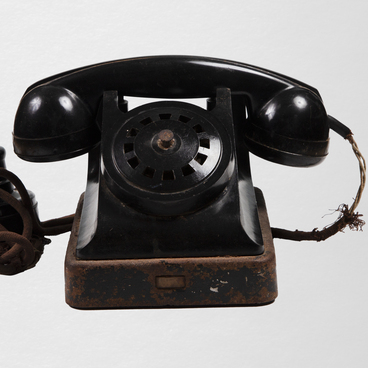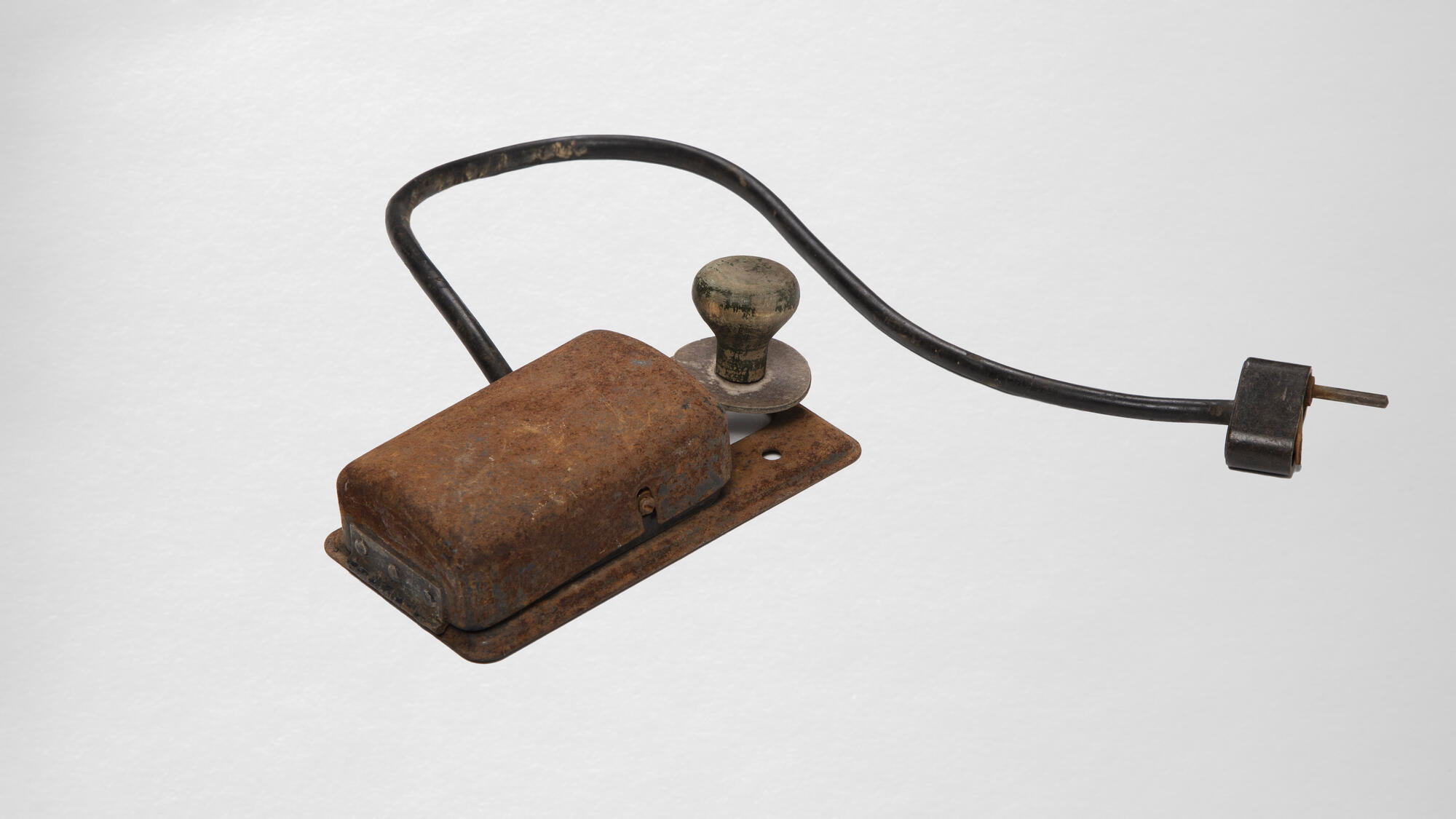


A telegraph key is a device used to transmit messages in Morse code. One of the telegraph keys is housed in the Zimovniki Museum of Local History.
To send a message on such a device, the telegrapher used a lever that closed and opened current circuits. A simple model was capable of transmitting up to 90 characters per minute, while a vibrating key increased that rate to 150 characters per minute. The main skill for a communicator was the ability to operate the lever quickly and correctly, as well as to perceive the received and transmitted signals by ear.
The first telegraph appeared in 1794. It was invented by a French scientist Claude Chappe, who established communication between Paris and Lille. However, the patent for the device belonged to Samuel Morse, who also proposed the use of a sound code of long and short signals to transmit important messages. The code was later called Morse code.
At the same time with the foreign inventors, Ivan Kulibin, a mechanic from Russia, built his own version of the telegraph. He attached special planks to a wooden axle, which were fixed with blocks and cords, and could freely change their position.
Telegraphic communications became especially important during the war. Often the success of a combat operation depended on how quickly a military unit received information about an attack and had time to request reinforcements or regroup troops. Telephone and telegraph lines were laid by signalers. This profession was hard: soldiers fought with weapons in their hands, defended and maintained uninterrupted communications in such harsh conditions, ran new lines and repaired old ones. Sometimes the fate of the entire unit depended on the precise and coordinated work of the signalers.
There were several types of telegraph keys: mechanical, semi-automatic and electronic. They differed depending on how automated the process of information transfer was.
Such a telegraph key was one of the most common means of communication at the war front. It and Morse code could be used to quickly and clearly transmit the necessary information to a neighboring unit.
To send a message on such a device, the telegrapher used a lever that closed and opened current circuits. A simple model was capable of transmitting up to 90 characters per minute, while a vibrating key increased that rate to 150 characters per minute. The main skill for a communicator was the ability to operate the lever quickly and correctly, as well as to perceive the received and transmitted signals by ear.
The first telegraph appeared in 1794. It was invented by a French scientist Claude Chappe, who established communication between Paris and Lille. However, the patent for the device belonged to Samuel Morse, who also proposed the use of a sound code of long and short signals to transmit important messages. The code was later called Morse code.
At the same time with the foreign inventors, Ivan Kulibin, a mechanic from Russia, built his own version of the telegraph. He attached special planks to a wooden axle, which were fixed with blocks and cords, and could freely change their position.
Telegraphic communications became especially important during the war. Often the success of a combat operation depended on how quickly a military unit received information about an attack and had time to request reinforcements or regroup troops. Telephone and telegraph lines were laid by signalers. This profession was hard: soldiers fought with weapons in their hands, defended and maintained uninterrupted communications in such harsh conditions, ran new lines and repaired old ones. Sometimes the fate of the entire unit depended on the precise and coordinated work of the signalers.
There were several types of telegraph keys: mechanical, semi-automatic and electronic. They differed depending on how automated the process of information transfer was.
Such a telegraph key was one of the most common means of communication at the war front. It and Morse code could be used to quickly and clearly transmit the necessary information to a neighboring unit.