

One of the most ancient ways of fishing is fishing with a katsa, a trap made out of twigs. This is how the inhabitants of the Novye Bulgary village in the Ikryaninsky district of the Astrakhan region fished back in the 1970s. Today, this technique is outdated and no longer used in everyday life. But in the past, many village residents could use a katsa. This fishing method did not require much effort or expense.
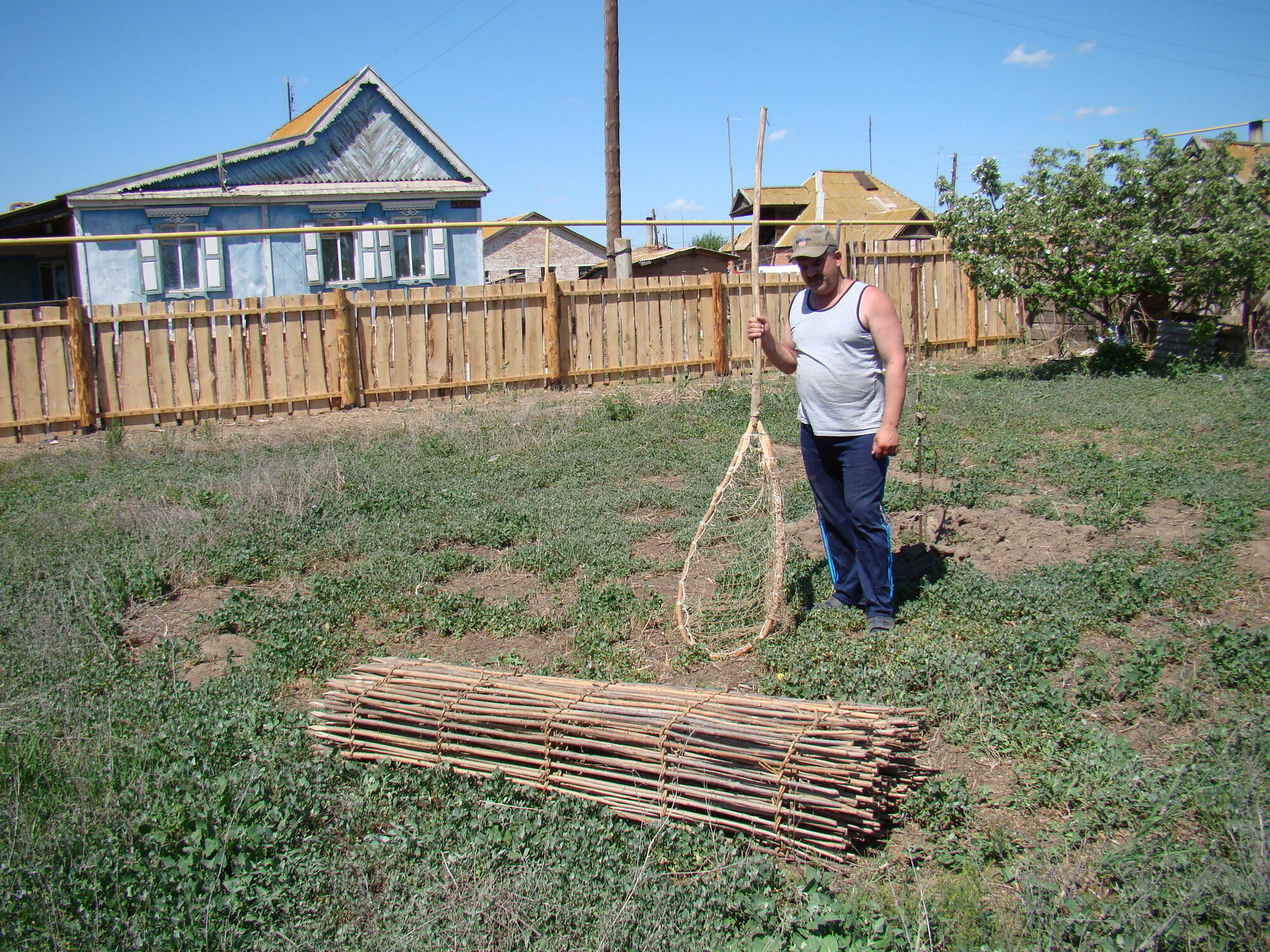
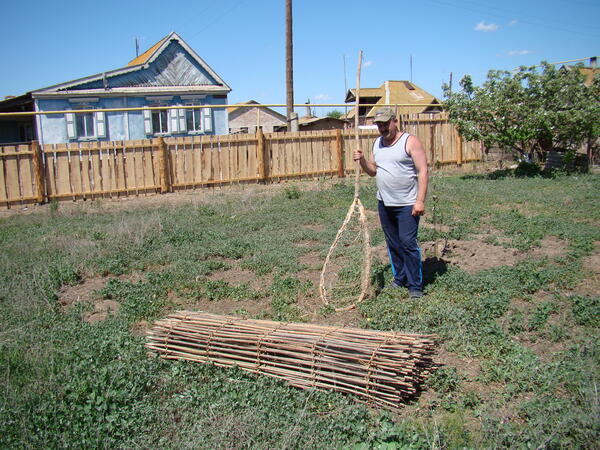
It was possible to catch fish with a katsa all year round. A Katsa, or kates, was a fishing trap skillfully made from the shoots of white willow. The thick ends of the poles were sharpened and thinner vines were arranged in six rows into a kind of a wall that was more than ten meters long. The beginning and end of the wall was to be the entrance to the trap — it was made out of straight and strong twigs. Weaving was done by both men and women. It took a lot of time and required special skills.
The katsa trap setting was a two-man job. Having rolled out the wall of the trap, the fishermen put it into the shape of a figure eight. On the inside, at its narrowest point, there was a gap equal to the width of a rubber boot. Then, the twigs were driven into the ground with a small wooden spatula. Sometimes, when making a katsa wall, longer twigs were inserted every other meter. They were stuck into the ground without driving the entire wall of the trap underground.
For the villagers, who were not constantly engaged in fishing, this technique was irreplaceable. During the Bolshevik revolution and wartime, it saved many villagers of Novye Bulgary from starvation.
It was possible to catch fish with a katsa all year round. A Katsa, or kates, was a fishing trap skillfully made from the shoots of white willow. The thick ends of the poles were sharpened and thinner vines were arranged in six rows into a kind of a wall that was more than ten meters long. The beginning and end of the wall was to be the entrance to the trap — it was made out of straight and strong twigs. Weaving was done by both men and women. It took a lot of time and required special skills.
The katsa trap setting was a two-man job. Having rolled out the wall of the trap, the fishermen put it into the shape of a figure eight. On the inside, at its narrowest point, there was a gap equal to the width of a rubber boot. Then, the twigs were driven into the ground with a small wooden spatula. Sometimes, when making a katsa wall, longer twigs were inserted every other meter. They were stuck into the ground without driving the entire wall of the trap underground.
For the villagers, who were not constantly engaged in fishing, this technique was irreplaceable. During the Bolshevik revolution and wartime, it saved many villagers of Novye Bulgary from starvation.