Font
Color
Graphics
Изображение точки

To see AR mode in action:

1. Install ARTEFACT app for iOS or Android;

2. Find the exhibition «The Kurgan Regional Art Museum»

3. Push the «Augmented reality» button and point your phone's camera at the exhibit;

Скрыть точки интересаПоказать точки интереса

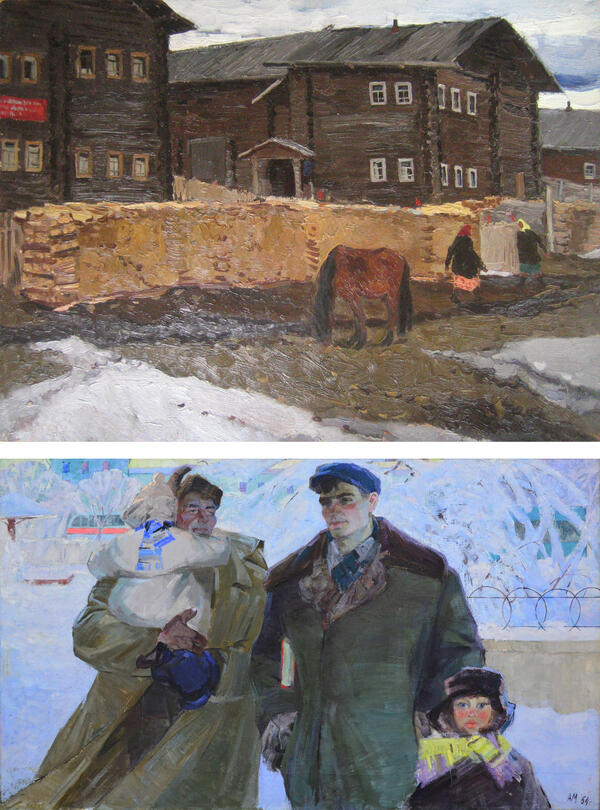
Fathers, Bolshaya Pyssa in May

Creation period
1964 год
Technique
Холст, масло
0
Open in app
#5
Fathers, Bolshaya Pyssa in May
#7
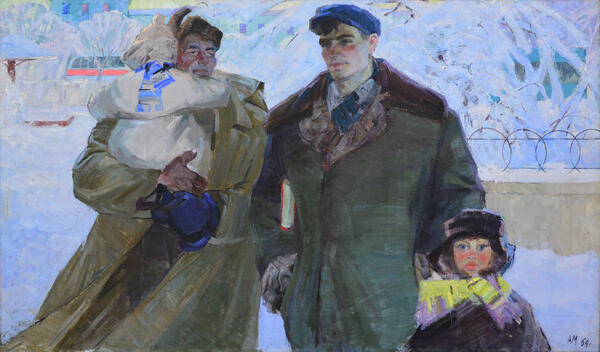
Fathers
#2
Anatoly Morozov is one of the prominent representatives of Kurgan painters of the mid-to-late 20th century. The painter was born in 1938 and was one of the students at V. F. Ilyushin’s studio. He got a professional education at the Sverdlovsk Art College.
He is famous as a landscape painter, a portraitist, a professional in genre painting, and a muralist. Morozov became an author of mural paintings, mosaics and stained-glass panels created on the edge of the 1960s and the 1970s, which still decorate the public buildings of Kurgan.

As a painter Morozov was attracted to the portrait genre, especially the children’s portrait. He created distinctive and memorable portraits of his contemporaries. The period in Soviet art when the author started his creative activity was influenced by the Severe Style. The painter’s works also reflected the principles of this style, such as generalized character’s features, minimalist composition, monumental figure, laconism of palette.

The painting with a laconic title Fathers is one of such works. According to the painter’s memoirs the subject was taken from the real life. One day, when he was hurrying to his lectures at the Sverdlovsk Art College in the morning, he met two men taking their children to the kindergarten. Sanguine faces, town covered in snow, lively men’s conversation stuck in the young artist’s memory with the feeling of vivacity, cheerfulness, and simple everyday happiness. This moment was remembered by the artist so well that he laid it in the basis of his graduation project.

The painting is unusual with its combination of monumentalism present in the Severe Style and the lyrical content nonrelevant to it. The artist painted with wide paint brush without detailed elaboration of characters and landscape. The frontal figures of men are painted sweepingly, extensively, occupying the whole general space of the canvas.

Minimalistic palette of the painting based on a few colours nonetheless completed the painter’s task to show the colours and mood of the freezing morning. The only coloured accent standing out of the palette is a bright boy’s scarf.
#6
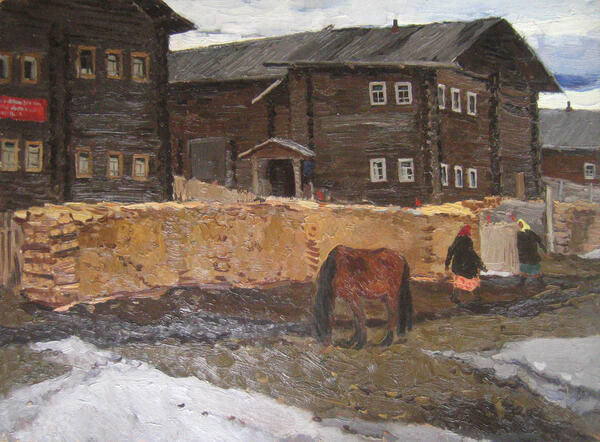
Bolshaya Pyssa in May
#4
Bolshaya Pyssa is a village in the Komi Republic situated by the side of the Mezen river. This unpretentious, unremarkable place appeared in Vladimir Stozharov’s paintings a number of times.

The postwar time and the following two decades in the Soviet culture were characterized by a high demand for the variety of the country’s artistic images. The special attention was paid to the themes of the Russian village, landscape painting, old Russian architecture. After all the war struggles and hardships, the common images of everyday life were especially appreciated.

It was the time when the Russian North experienced its revival in the art world. Previously it was a subject of interest between the 1880s and the 1890s, the period of “national” or “Russian” style in painting. However, in the 19th century it was reinterpretation of the originals in a decorative way. Art of the 20th century foregrounded the realistic beauty of this severe and mysterious land.

Vladimir Stozharov travelled a lot around the country in the 1960s. He used to bring a lot of sketches and completed works from the trips that sometimes lasted half a year. The Russian North took a special place in his art. He travelled around Vologodsk district, Archangelsk district, the Komi Republic, where he depicted a lot of small northern towns. It’s no accidence that he’s called a poet of a northern village as it became one of the main characters of his works.

“When I work on my paintings or draw at home, I”m trying to not just depict the right house, as I know, for instance, that it’s a house where from two sons had gone to the war and didn’t return. And in that one a wife has been waiting for her man for twenty years. I want to show the beauty of those people’s souls through other images, with a picture of the houses they live in, with an image of the ground they walk, ” Vladimir Stozharov used to tell about his attitude to art.

In this painting from the museum collection the painter showed us an image of a small village Pyssa with its severe thick-walled log houses with small windows. In front of us is a stack of wood. The solid hasteless northerners’ way of living is seen through everything. Stozharov loved genre scenes that exhilarated the landscape. In this work we see two female figures in bright headcloth walking towards each other. His works don’t have any excessive details, elaborated painting or decorativeness, his style is closer to impressionistic approach. Stozharov is a recognized colourist. Colour is an identifying participant setting an image and a mood of the painting.
read morehide
00:00
00:00
1x

Fathers, Bolshaya Pyssa in May

Creation period
1964 год
Technique
Холст, масло
0
Point your smartphone camera to open in the app
Share
VkontakteOdnoklassnikiTelegram
Share on my website
Copy linkCopied
Copy
Open in app
To see AR mode in action:
  1. Install ARTEFACT app for 
  2. iOS or Android;
  3. Find and download the «Paintings in Details» exhibition
  4. Push the «Augmented reality» button and point your phone's camera at the painting;
  5. Watch what happens on your phone screen whilst you flip through the pictures.
 
We use Cookies
Cookies on the Artefact Website. We use cookies to ensure that we give you the best experience on our website. If you continue without changing your settings, we'll assume that you are happy to receive all cookies on the Artefact website. However, if you would like to, you can change your cookie settings at any time.
Learn more about cookie useHide
Content is available only in Russian

X

Нашли опечатку?...

%title%%type%