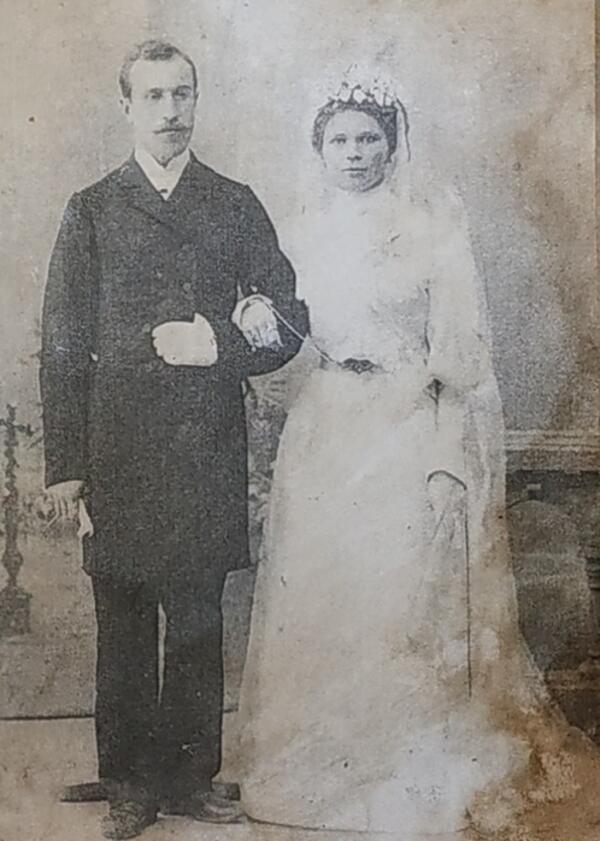
For a long time, the Cossack wedding ceremony was simple and took place at the Cossack “Krug”, that is, at the host council. However, in the first half of the 18th century, Peter the Great banned marriages and divorces at such an assembly. As a result, the Don Cossacks began to get married in church.
In the 19th century, the wedding ritual evolved into a structured system, incorporating both Slavic wedding elements and local rituals. The first part of the wedding ritual was the “smotrini” — unofficial matchmaking, a formal introduction, and viewing of the girl by the future fiancé and his parents in the bride’s home.
A few days later, the girl was officially betrothed. The ceremony ended with an engagement, which was a solemn agreement on the terms of the marriage. On the same evening, the bride and groom were brought together in the middle of the room. It meant the successful end of the negotiations. The betrothal was thus completed.
After the matchmaking and engagement, parties were organized for friends and girlfriends of the bride and the groom. These ended a week before the wedding. Throughout the pre-wedding period, bridesmaids would gather at the bride’s house to prepare a dowry, which would be taken to the bridegroom’s house a few days before the wedding. The cushion, featherbed and large items were decorated with artificial flowers and red ribbons.
The tradition was to pick up individual items of the dowry and carry them with songs along the streets of the village so that as many people as possible would see them, even if the groom’s house was next door. After moving the dowry, the lad and the girl would receive a formal, ceremonial consent to start a family in the bride’s home. The same evening, a “vechora” party was held there, where young people praised the future husband and wife.
On the day of the wedding, the bridegroom would jokingly and solemnly “purchase” the bride’s plait from her younger sister or brother in the red corner of the house, near the icon, and would take his bride to church. Afterward, in the house of the young husband, the wedded wife was traditionally dressed in a woman’s headdress: plaits were braided at the back of her head and a cap — a gift from her mother-in-law — was put on. Later the feast began.
In the 19th century, the wedding ritual evolved into a structured system, incorporating both Slavic wedding elements and local rituals. The first part of the wedding ritual was the “smotrini” — unofficial matchmaking, a formal introduction, and viewing of the girl by the future fiancé and his parents in the bride’s home.
A few days later, the girl was officially betrothed. The ceremony ended with an engagement, which was a solemn agreement on the terms of the marriage. On the same evening, the bride and groom were brought together in the middle of the room. It meant the successful end of the negotiations. The betrothal was thus completed.
After the matchmaking and engagement, parties were organized for friends and girlfriends of the bride and the groom. These ended a week before the wedding. Throughout the pre-wedding period, bridesmaids would gather at the bride’s house to prepare a dowry, which would be taken to the bridegroom’s house a few days before the wedding. The cushion, featherbed and large items were decorated with artificial flowers and red ribbons.
The tradition was to pick up individual items of the dowry and carry them with songs along the streets of the village so that as many people as possible would see them, even if the groom’s house was next door. After moving the dowry, the lad and the girl would receive a formal, ceremonial consent to start a family in the bride’s home. The same evening, a “vechora” party was held there, where young people praised the future husband and wife.
On the day of the wedding, the bridegroom would jokingly and solemnly “purchase” the bride’s plait from her younger sister or brother in the red corner of the house, near the icon, and would take his bride to church. Afterward, in the house of the young husband, the wedded wife was traditionally dressed in a woman’s headdress: plaits were braided at the back of her head and a cap — a gift from her mother-in-law — was put on. Later the feast began.