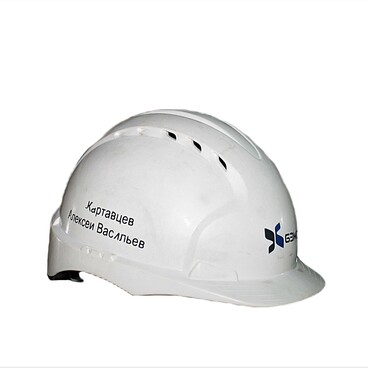
A souvenir model “OPENING OF a PELLET PLANT” with a plastic emblem with the inscription in black “KRASLESINVEST” timber industry complex. The decision is in favor of Nature! December 2019”.
The timber industry complex of Kraslesinvest JSC was founded by the state corporation “Bank for Development and Foreign Economic Activity (Vnesheconombank)” in 2007 for the development of the Boguchansky district and adjacent territories within the framework of the state program “Integrated Development of the Lower Angara Region”.
In 2019, as part of the implementation of the second stage of the project “Boguchany. Timber industry complex. Sawmill production” a plant for the production of fuel pellets with a capacity of 110 thousand tons of products per year has been put into operation.
Fuel pellets are a relatively new type of fuel and have a lot of advantages compared to other types of fuel. They do not contain substances in their composition that could negatively affect human health and the environment.
The raw materials for the manufacture of pellets are high-quality wood waste obtained during the sawmilling process. These by—products are pressed under high pressure and under the influence of high temperature and natural adhesive elements that make up the wood, dense cylindrical pellets are obtained.
Wood chips and sawdust are delivered from the warehouse to the bunkers, where the raw materials are dosed according to the composition and fed to a conveyor that transports them to a disk sieve and a magnetic drum separator. On the sieve, the non-standard fraction is screened out of the total mass. Then the crushed biomass is transported to the dryer.
Drying of biomass is carried out in a drying plant, the heat source for which is air heated by water heat exchangers. Drying of raw materials is carried out to a humidity of 10-12%. Steam is removed from the dryer into the atmosphere through the ducts by centrifugal fans.
Dry sawdust is unloaded from the drying plant by a screw conveyor and then by a conveyor into a dry raw material hopper. The granules are pressed in presses with a flat matrix. The finished product is unloaded onto a special conveyor that unloads pellets into a countercurrent cooler. The air flow together with wood dust enters the aspiration route into the cyclone, where the dust is deposited and returned to the production process.
After cooling, as a result of solidification of lignin, pellets acquire the necessary mechanical strength for further transportation.
The cooled granules are poured into a sieve, where the substandard mass is separated, which is 5% of the initial mass of the raw material. The return of substandard mass is carried out along the aspiration route to the dry sawdust warehouse.
Conditioned pellets are poured onto a conveyor belt, where they are weighed and transported to the finished product warehouse.
The timber industry complex of Kraslesinvest JSC was founded by the state corporation “Bank for Development and Foreign Economic Activity (Vnesheconombank)” in 2007 for the development of the Boguchansky district and adjacent territories within the framework of the state program “Integrated Development of the Lower Angara Region”.
In 2019, as part of the implementation of the second stage of the project “Boguchany. Timber industry complex. Sawmill production” a plant for the production of fuel pellets with a capacity of 110 thousand tons of products per year has been put into operation.
Fuel pellets are a relatively new type of fuel and have a lot of advantages compared to other types of fuel. They do not contain substances in their composition that could negatively affect human health and the environment.
The raw materials for the manufacture of pellets are high-quality wood waste obtained during the sawmilling process. These by—products are pressed under high pressure and under the influence of high temperature and natural adhesive elements that make up the wood, dense cylindrical pellets are obtained.
Wood chips and sawdust are delivered from the warehouse to the bunkers, where the raw materials are dosed according to the composition and fed to a conveyor that transports them to a disk sieve and a magnetic drum separator. On the sieve, the non-standard fraction is screened out of the total mass. Then the crushed biomass is transported to the dryer.
Drying of biomass is carried out in a drying plant, the heat source for which is air heated by water heat exchangers. Drying of raw materials is carried out to a humidity of 10-12%. Steam is removed from the dryer into the atmosphere through the ducts by centrifugal fans.
Dry sawdust is unloaded from the drying plant by a screw conveyor and then by a conveyor into a dry raw material hopper. The granules are pressed in presses with a flat matrix. The finished product is unloaded onto a special conveyor that unloads pellets into a countercurrent cooler. The air flow together with wood dust enters the aspiration route into the cyclone, where the dust is deposited and returned to the production process.
After cooling, as a result of solidification of lignin, pellets acquire the necessary mechanical strength for further transportation.
The cooled granules are poured into a sieve, where the substandard mass is separated, which is 5% of the initial mass of the raw material. The return of substandard mass is carried out along the aspiration route to the dry sawdust warehouse.
Conditioned pellets are poured onto a conveyor belt, where they are weighed and transported to the finished product warehouse.