Font
Color
Graphics
Изображение точки

To see AR mode in action:

1. Install ARTEFACT app for iOS or Android;

2. Find the exhibition «Rybinsk in the 19th and Early 20th Centuries»

3. Push the «Augmented reality» button and point your phone's camera at the exhibit;

Скрыть точки интересаПоказать точки интереса
Показать в высоком качестве

Viennese chair

Creation period
1880–1915
Place of сreation
the Russian Empire
Dimensions
height — 97 cm, diameter — 42 cm
Technique
beech, plywood; bending, embossing
1
Open in app
#2
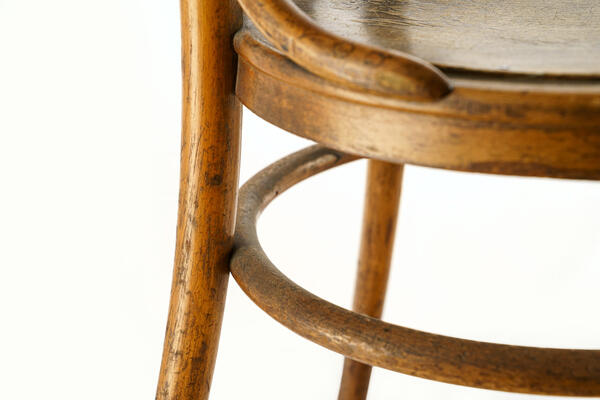
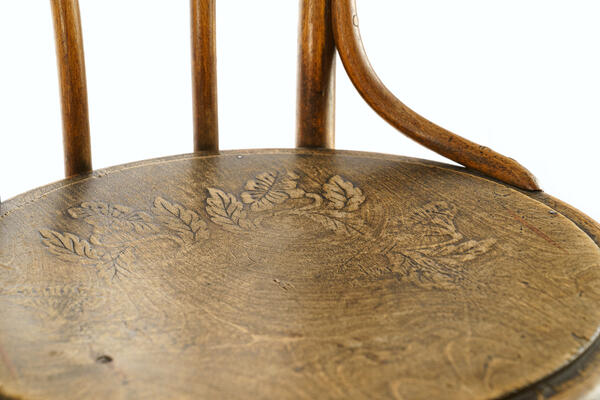
Light and durable Viennese furniture became widely popular around the world in the 19th century. The German and Austrian cabinetmaker Michael Thonet developed the technique for its mass production. The process involved cutting beechwood into bars, soaking them in boiling water or steaming, and then stretching them on metal forms to create a round or rectangular shape.


By the early 20th century, this type of furniture was produced at over 60 facilities worldwide, with 16 of these companies located in Russia. At that time, there were over 20,000 different styles available, each with its own unique finish. For example, a seat for a chair could be made of plywood, covered with leather for comfort, or woven from reeds. Furniture ranged in color from the natural hue of beechwood to tinted shades of walnut, rosewood, and ebony.


The simplicity and low cost of chair and armchair production contributed to their widespread popularity, first in Europe and later around the world. Viennese furniture was sold in shops and warehouses located in major cities. Orders from smaller settlements could be placed through regularly published catalogs and pricing lists.


In fiction of the 19th and early 20th centuries, references to Viennese chairs can be frequently found. For instance, Alexander Ivanovich Kuprin in his novel “The Duel” writes,
#4

The bright illumination on the scanty furniture, consisting only of Viennese chairs, the bare walls, and the common white muslin window-curtains, gave the somewhat spacious room a very empty and deserted air.

#5

Ilya Efimovich Repin’s memoir — “Far Away, Close By” — also mentions “Viennese chairs”,

#6

There were many guests when we entered the spacious suite of rooms furnished exclusively with Viennese chairs.

#7

Yet another mention can be found in Alexander Grin’s short story — “The Adventures of Ginch”:

#8

The office is cluttered with a plethora of papers, folders, cardboard boxes, and sets of old humor magazines. There is also a large unpainted desk, several Viennese chairs, a small cabinet, and a mandolin on a couch. There is a broken whip lying on the floor and newspapers, — all this is giving the impression of a messy room for conducting business.

#9

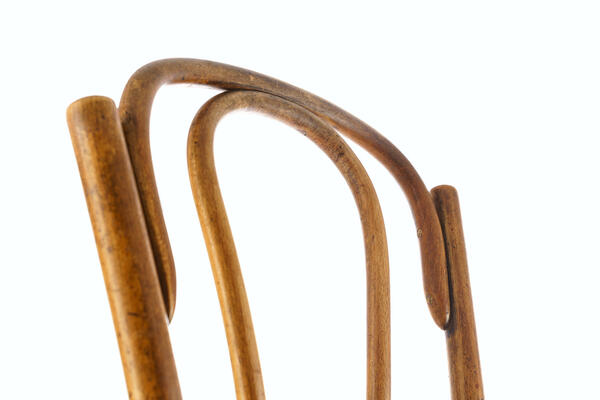
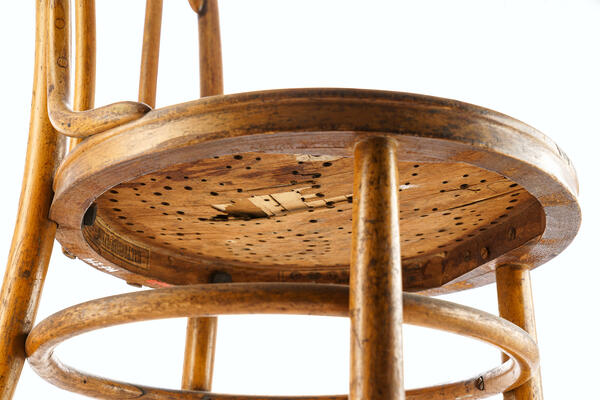
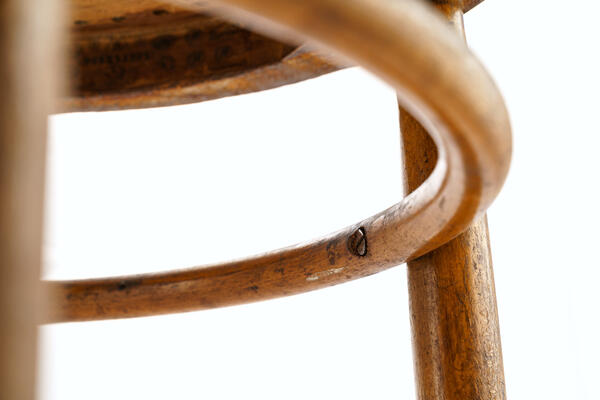
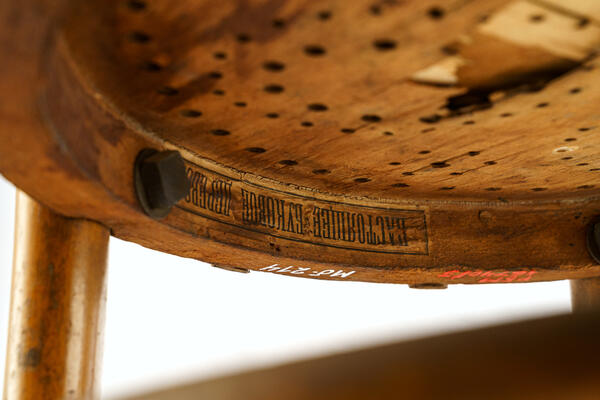
This chair entered the collection of the Rybinsk Museum in 1992. Previously, it belonged to Anna Nikolayevna Annikovskaya, who was a distant relative of Aleksey Alekseyevich Zolotarev, a priest of the Transfiguration Cathedral. The chair is made of beechwood and plywood. It is assembled using square head bolts and screws, with the heads of these screws hidden by wooden inlays in prominent areas.

#10
Viennese chair
#3
View in the State Catalogue
read morehide
00:00
00:00
1x

Viennese chair

Creation period
1880–1915
Place of сreation
the Russian Empire
Dimensions
height — 97 cm, diameter — 42 cm
Technique
beech, plywood; bending, embossing
1
Point your smartphone camera to open in the app
Share
VkontakteOdnoklassnikiTelegram
Share on my website
Copy linkCopied
Copy
Open in app
To see AR mode in action:
  1. Install ARTEFACT app for 
  2. iOS or Android;
  3. Find and download the «Paintings in Details» exhibition
  4. Push the «Augmented reality» button and point your phone's camera at the painting;
  5. Watch what happens on your phone screen whilst you flip through the pictures.
 
We use Cookies
Cookies on the Artefact Website. We use cookies to ensure that we give you the best experience on our website. If you continue without changing your settings, we'll assume that you are happy to receive all cookies on the Artefact website. However, if you would like to, you can change your cookie settings at any time.
Learn more about useHide
Content is available only in Russian

X

Нашли опечатку?...

%title%%type%