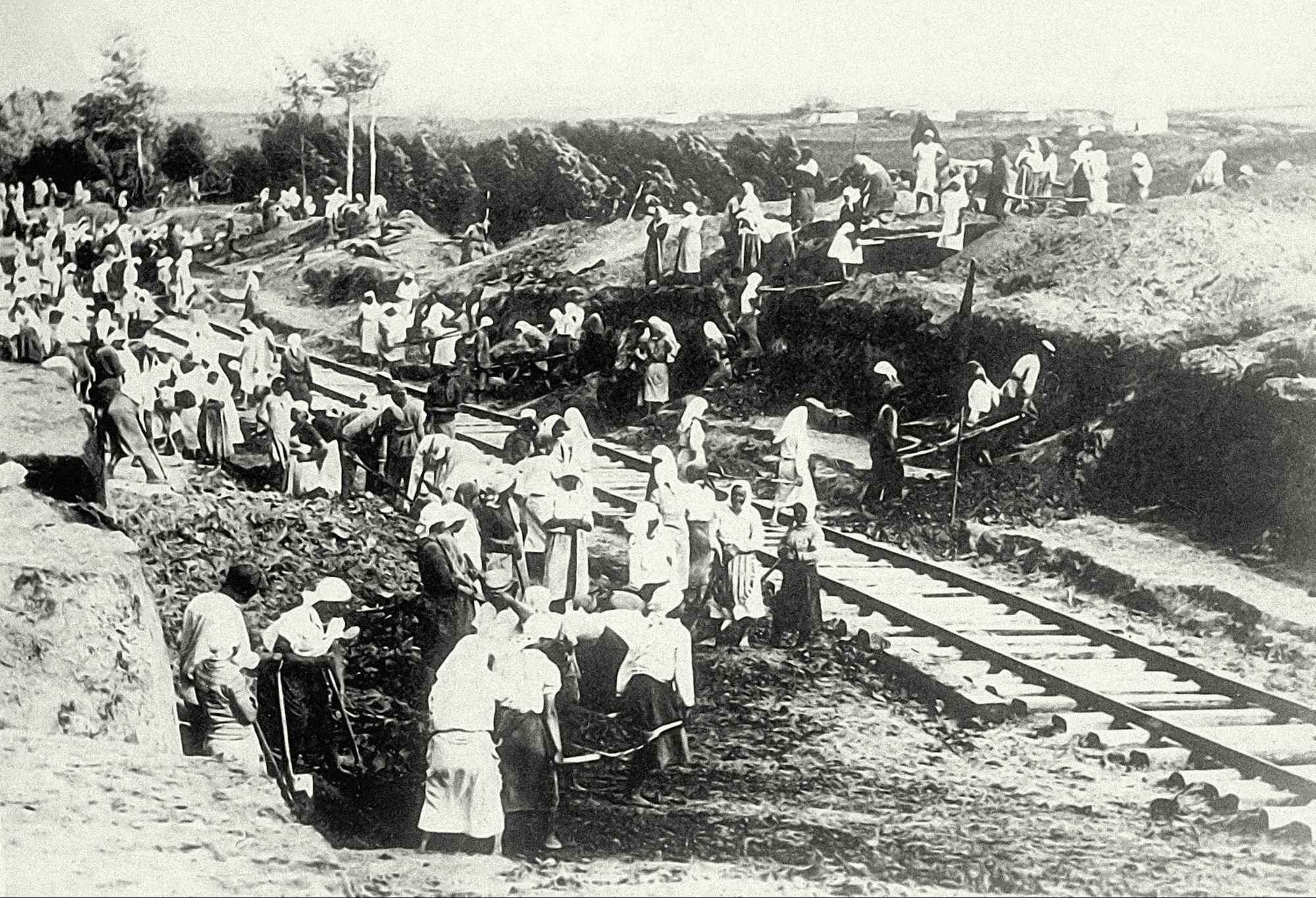


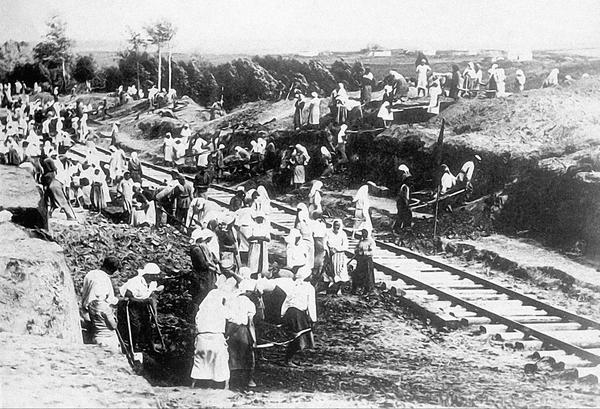
The road of courage, Oskolyanochka — this is how Stary Oskol — Rzhava railroad was called. Its construction was of vital importance for the preparation for the Battle of Kursk. This important 95 kilometers long object of construction was given number 217. After the commissioning of the road, the time for the delivery of cargoes to the front line was reduced practically by two days.
The decree on the construction of the road was issued by the State Defence Committee on 8 June 1943, and on June 15 the first construction teams started the laying of railroad tracks. Two thirds of the line (68 km) was supposed to be built from scratch, and 27 kilometers were to be restored out of an old one-track railroad, located in the area of the Kursk Magnetic Anomaly. Two months were given for the works, but in reality, the road was constructed only in 32 days.
As many as 25 000 people took part in the construction. Behind these dry figures, there are real people, who worked 20 hours a day, sparing no efforts. The majority of them were women and teenagers. There were 20 000 of them. Their task was to erect embankments. With the norm of 3.5 cubic meters, they laid 4, 5 and even 6 cubic meters. And all this took place in conditions of a lack of food and even the most simple tools. Sometimes they had to carry earth even in aprons.
The most dangerous thing was bombing. German regularly bombed the area of construction, but, there was an impression that by doing so they only gave extra forces and added to the hatred of enemy. The construction proceeded in high speed, the works were organized in two shifts.
Apart from civilians, the construction process was joined by special formations of the People’s Commissariat of Railroads, three railroad brigades, two motor battalions, two thousand Red Army servicemen from reserve units. But still non-combatants were the main participants of the construction. Children of 13-14 years of age said they were two to three years older to be able to contribute to the victory. They just knew that their help was needed by their fathers, brothers and everyone who was on the frontline.
On 17 July 1943, the bulk of the works was completed, and on the 19th the first train made its voyage on the railroad. As many as 168 kilometers of railroads were laid, 48 installations built, 8 stopping points were erected over the period of just one month and several days. Manpower, equipment, weapons, ammunition, fuels, food and green fodder were delivered to the front, and wounded soldiers were sent back.
The paved railroad tracks turned out to be almost 150 km shorter than the existing automobile road, which made it possible to significantly reduce the time of delivery. The Voronezh front received an independent line of communications, an access to the Rzhava — Oboyan railroad section and the Belgorod-Kursk road.
306 people were awarded government’s medals.
The decree on the construction of the road was issued by the State Defence Committee on 8 June 1943, and on June 15 the first construction teams started the laying of railroad tracks. Two thirds of the line (68 km) was supposed to be built from scratch, and 27 kilometers were to be restored out of an old one-track railroad, located in the area of the Kursk Magnetic Anomaly. Two months were given for the works, but in reality, the road was constructed only in 32 days.
As many as 25 000 people took part in the construction. Behind these dry figures, there are real people, who worked 20 hours a day, sparing no efforts. The majority of them were women and teenagers. There were 20 000 of them. Their task was to erect embankments. With the norm of 3.5 cubic meters, they laid 4, 5 and even 6 cubic meters. And all this took place in conditions of a lack of food and even the most simple tools. Sometimes they had to carry earth even in aprons.
The most dangerous thing was bombing. German regularly bombed the area of construction, but, there was an impression that by doing so they only gave extra forces and added to the hatred of enemy. The construction proceeded in high speed, the works were organized in two shifts.
Apart from civilians, the construction process was joined by special formations of the People’s Commissariat of Railroads, three railroad brigades, two motor battalions, two thousand Red Army servicemen from reserve units. But still non-combatants were the main participants of the construction. Children of 13-14 years of age said they were two to three years older to be able to contribute to the victory. They just knew that their help was needed by their fathers, brothers and everyone who was on the frontline.
On 17 July 1943, the bulk of the works was completed, and on the 19th the first train made its voyage on the railroad. As many as 168 kilometers of railroads were laid, 48 installations built, 8 stopping points were erected over the period of just one month and several days. Manpower, equipment, weapons, ammunition, fuels, food and green fodder were delivered to the front, and wounded soldiers were sent back.
The paved railroad tracks turned out to be almost 150 km shorter than the existing automobile road, which made it possible to significantly reduce the time of delivery. The Voronezh front received an independent line of communications, an access to the Rzhava — Oboyan railroad section and the Belgorod-Kursk road.
306 people were awarded government’s medals.


