#1
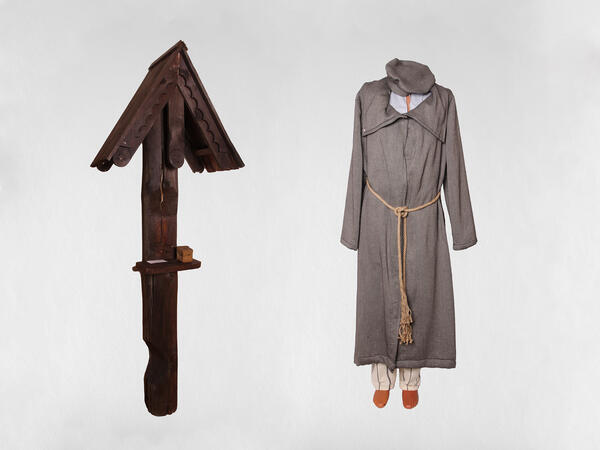
Gifting post, Convict clothing
#6
#7

Gifting post
#2
The Siberian Route was an overland route from European Russia to Chinese borders through Siberia. Its construction began in 1730 and ended only in the middle of the 19th century. The route greatly influenced the development of the settlements around it, including the town of Mariinsk.
At first, travelers, who were attracted by new lands, and workmen, looking for a living, moved along the route to Siberia. And then it was used to send convicts into exile in remote areas of Siberia. The entire route was divided into equal segments. Prisons intended for the temporary custody of convicts were built at a distance of about 20–30 km from each other. Each stockade had a special team of an officer and soldiers. After escorting exiles to the next stockade, they would go back.
The journey to detention facilities was long and hard. For example, the transit from Saint Petersburg to Irkutsk could last about two years. Convicts went to their prisons shackled. Several people were attached to one iron rope. Blacksmiths worked at prisons: they removed the shackles or shackled people if needed.
The convicts often died on their way. To help the deported people in any way possible, the locals started to install wooden posts with a small gable roof and a shelf on the roadside. There, they left food for the convicts. The museum houses such a post made in the 19th century.
By the early 18th century, there were around 25 thousand convicts, and a hundred years later, their number rose to 300 thousand. People started to call the route ‘a Siberian Calvary.’ In the 19th century, Mariinsk became one of the places of exile in Siberia, and from 1929 to 1960 — the capital of Siberian camps. Many political prisoners served their sentences in the Siberian camp, including a famous singer Lidia Ruslanova.
More than 10 years ago, seven gifting posts with a height of about 2 meters were made in Mariinsk. They were installed in the historic sites of the town and accompanied by signs which reminded about the mercy of residents towards prisoners.
At first, travelers, who were attracted by new lands, and workmen, looking for a living, moved along the route to Siberia. And then it was used to send convicts into exile in remote areas of Siberia. The entire route was divided into equal segments. Prisons intended for the temporary custody of convicts were built at a distance of about 20–30 km from each other. Each stockade had a special team of an officer and soldiers. After escorting exiles to the next stockade, they would go back.
The journey to detention facilities was long and hard. For example, the transit from Saint Petersburg to Irkutsk could last about two years. Convicts went to their prisons shackled. Several people were attached to one iron rope. Blacksmiths worked at prisons: they removed the shackles or shackled people if needed.
The convicts often died on their way. To help the deported people in any way possible, the locals started to install wooden posts with a small gable roof and a shelf on the roadside. There, they left food for the convicts. The museum houses such a post made in the 19th century.
By the early 18th century, there were around 25 thousand convicts, and a hundred years later, their number rose to 300 thousand. People started to call the route ‘a Siberian Calvary.’ In the 19th century, Mariinsk became one of the places of exile in Siberia, and from 1929 to 1960 — the capital of Siberian camps. Many political prisoners served their sentences in the Siberian camp, including a famous singer Lidia Ruslanova.
More than 10 years ago, seven gifting posts with a height of about 2 meters were made in Mariinsk. They were installed in the historic sites of the town and accompanied by signs which reminded about the mercy of residents towards prisoners.
#4
Полное наименование предмета: Gifting post
Дата создания: the 19th century
Техника: wood
Дата создания: the 19th century
Техника: wood
Место создания: Mariinsk
Владелец коллекции: Mariinsk History Museum
Размеры: 230×82 cm
Владелец коллекции: Mariinsk History Museum
Размеры: 230×82 cm
#8
Convict clothing
#9
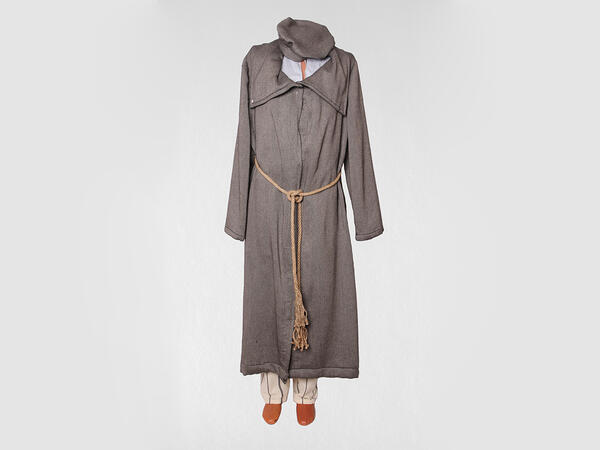
Convict clothing
#10
The voluntary settlers, craftsmen, explorers were the first to travel along the Siberian Route. Later, Siberia, as the most remote part of the Russian Empire, was used for exile and hard-labor penalty. The exhibition of the museum contains the convict’s clothing of the middle of the 20th century.
Convicts went to their prisons shackled. They wore footwraps, bast shoes or old shoes. Clothing for convicts was made from coarse fabric. They could not legally wear civilian clothes. Usually, they were given quilted jackets and pants, ear-flapped hats, boots with galoshes. The prisoner’s number was sewn on the outwear.
The Siberian Route was divided into equal parts of 20–30 verst (1 verst = 1.067 km or 0.6629 miles) where transit prisons were situated. There was a special order of the prisoner’s transit on the Siberian Route: after every two days of moving, there was one day of rest. Also, there were transit huts — places for temporary housing of convicts. In temporary transit prisons, the convicts rested from four to eight hours and then went to the next stop.
A transit prison was a large territory enclosed with a wooden fence. Usually, there were two or three barracks, a laundry, a security building, where the head of transit was, a kitchen, a chapel, and a cemetery. The transit huts were on every post station.
Despite the bad weather, the convicts had to cover the required distance within the time limit. On the way to Eastern Siberia, the Cossacks on horses convoyed every group of convicts (from 50 to 100 people). Their main task was to accompany all prisoners to the correctional facility.
It was a long and hard journey, and often, convicts died on the road. However, the convoy had to have strict reporting. In some papers of the early 18th century, the rules for convoy were as follows:
Convicts went to their prisons shackled. They wore footwraps, bast shoes or old shoes. Clothing for convicts was made from coarse fabric. They could not legally wear civilian clothes. Usually, they were given quilted jackets and pants, ear-flapped hats, boots with galoshes. The prisoner’s number was sewn on the outwear.
The Siberian Route was divided into equal parts of 20–30 verst (1 verst = 1.067 km or 0.6629 miles) where transit prisons were situated. There was a special order of the prisoner’s transit on the Siberian Route: after every two days of moving, there was one day of rest. Also, there were transit huts — places for temporary housing of convicts. In temporary transit prisons, the convicts rested from four to eight hours and then went to the next stop.
A transit prison was a large territory enclosed with a wooden fence. Usually, there were two or three barracks, a laundry, a security building, where the head of transit was, a kitchen, a chapel, and a cemetery. The transit huts were on every post station.
Despite the bad weather, the convicts had to cover the required distance within the time limit. On the way to Eastern Siberia, the Cossacks on horses convoyed every group of convicts (from 50 to 100 people). Their main task was to accompany all prisoners to the correctional facility.
It was a long and hard journey, and often, convicts died on the road. However, the convoy had to have strict reporting. In some papers of the early 18th century, the rules for convoy were as follows:
#12
…If a convict runs away or you let him go for bribes, then the commanders will knout you, and you will take the place of this prisoner.
#13
That is why the bodies of the dead prisoners were taken to transit prisons and buried there.
The famous Old Believer, a protopope (a Russian archpriest), Avvakum was the first in Russian literature who described the transit prisons in Siberia. In 1654, he was exiled with his family to Tobolsk. There were about 25 thousand prisoners and exiled people in Siberia by the beginning of the 18th century, and a hundred years later, there were more than 300 thousand prisoners.
The famous Old Believer, a protopope (a Russian archpriest), Avvakum was the first in Russian literature who described the transit prisons in Siberia. In 1654, he was exiled with his family to Tobolsk. There were about 25 thousand prisoners and exiled people in Siberia by the beginning of the 18th century, and a hundred years later, there were more than 300 thousand prisoners.
#11
Полное наименование предмета: Convict clothing
Дата создания: the mid-20th century
Дата создания: the mid-20th century
Техника: textile manufacturing
Место создания: Mariinsk
Место создания: Mariinsk
Владелец коллекции: Mariinsk History Museum
Размеры: 138×55×0.2 cm
Размеры: 138×55×0.2 cm
#5
Ministry of Culture of the Russian Federation
read morehide
00:00
00:00
1x
0
 Point your smartphone camera to open in the app
Open in app
Share