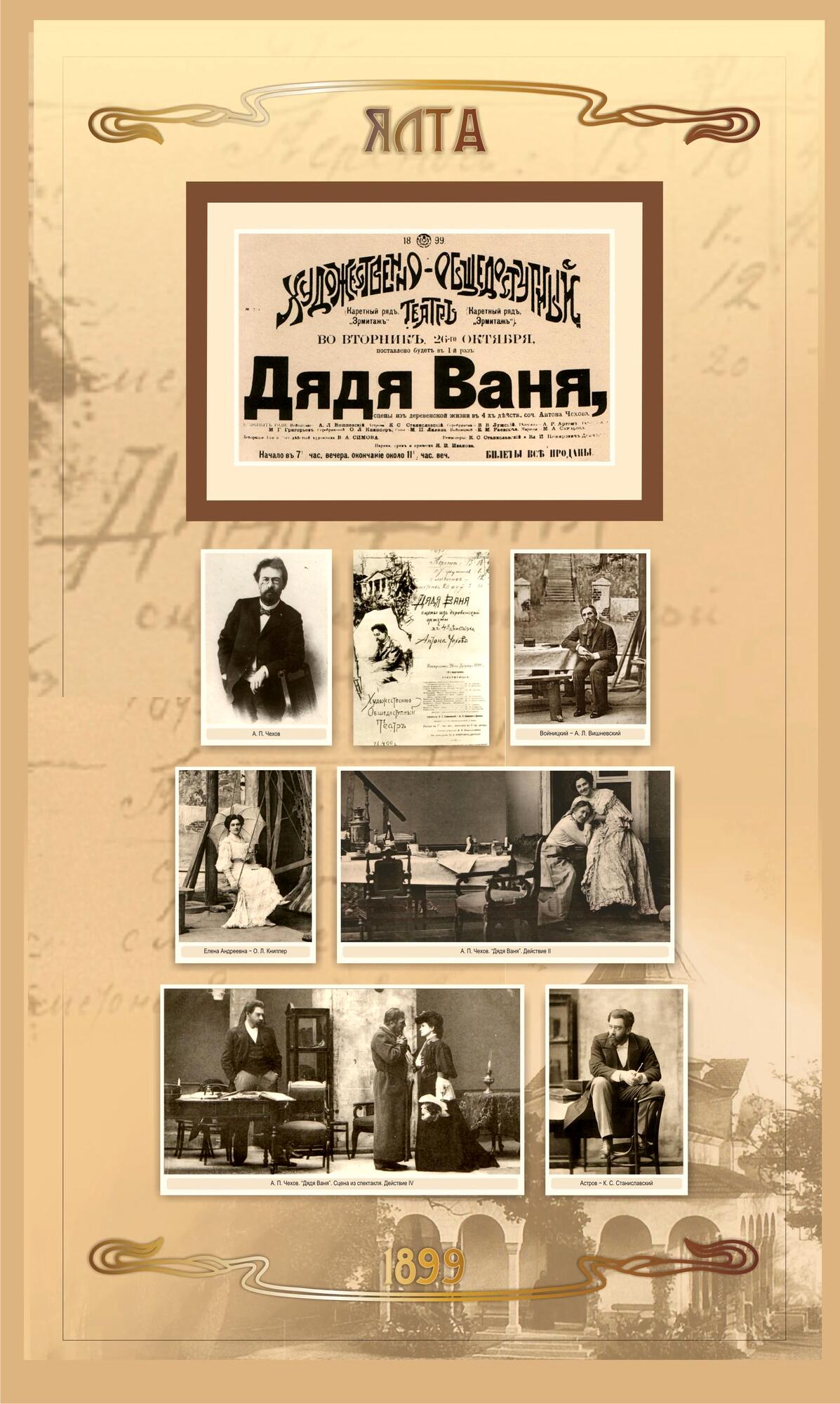


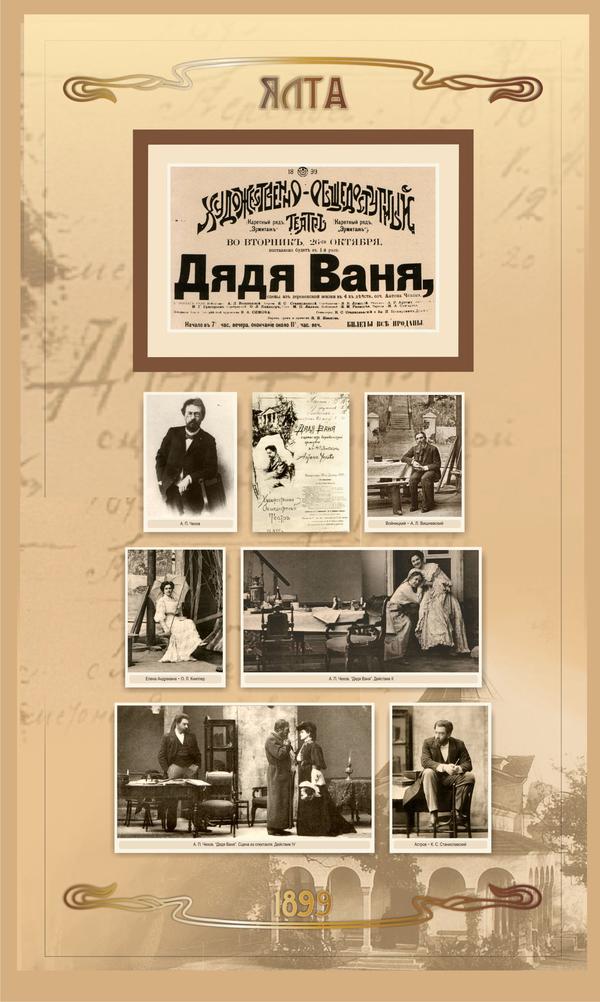
‘Uncle VAnya’, the second play by Chekhov staged in the Moscow Art Theatre was produced earlier than within a year after ‘The Seagull’. By that time, certain general principles of approach to Chekhov’s plays had been already established, and a unique identity of creative methods of stage directors – KonstantIn StanislAvsky and VladImir NemirOvich-DAnchenko- understood.
Initially, Chekhov planned to have “Uncle Vanya” staged in the Moscow Maly theatre. And Nemirovich-Danchenko asked Chekhov to allow staging the play in the Moscow Art Theatre later, after the success of “The Seagull”. Chekhov answered that he “gave an oral promise to the Maly Theatre regarding that play” and asked “to find out” “whether the Maly Theatre was going to stage the “Uncle Vanya” in the next season. But finally, the Maly Theatre failed to have the play agreed by the Theatre and Literary Committee, and Chekhov he gave control over “Uncle Vanya” to the Moscow Art Theatre, the more so as Stanislavsky liked it better than “The Seagull”.
“Uncle Vanya” is a very repertoire play of Chekhov, one of the most popular plays among the Russian classical ones. Chekhov worked at it for a long time. The first version of the play called “The LEshy” (Wood Demon), was written in 1889–1890. Chekhov sat down to revise it several times but it was only after he wrote “The Seagull” that he understood how to do that. Though Chekhov actually wrote a new play, the main characters were taken from “The Leshy” (VoinItsky, SerebryakOv, Sonya, Elena AndrEevna, Maria VasIlyevna), as well as many story lines, and finally, large portions of the initial text.
The premiere took place on 26 October in the Moscow Art Theatre. Chekhov wrote to Olga Knipper: “Telegrams started coming the night of 27 when I was already in bed. They read those telegrams to me by telephone. I woke up every time and went to the telephone in the dark, barefoot and got very cold; as soon as I went to sleep after that, the telephone ran again. It was the first time that my fame kept me from sleeping “.
Critic Nikolay Efros remembered that as compared to the delight of the public regarding “The Seagull”, “Uncle Vanya” was not initially encountered with such enthusiasm: the public was “either cold or reserved” and Chekhov himself wrote to Nemirovich-Danchenko: “…we raised our expectations of a sensation, and our requirements to ourselves too high, and that infeasibility spoils our mood.” But the success of “Uncle Vanya” kept growing with each performance. After the second performance Nemirovich-Dancenko sent a telegram:
Initially, Chekhov planned to have “Uncle Vanya” staged in the Moscow Maly theatre. And Nemirovich-Danchenko asked Chekhov to allow staging the play in the Moscow Art Theatre later, after the success of “The Seagull”. Chekhov answered that he “gave an oral promise to the Maly Theatre regarding that play” and asked “to find out” “whether the Maly Theatre was going to stage the “Uncle Vanya” in the next season. But finally, the Maly Theatre failed to have the play agreed by the Theatre and Literary Committee, and Chekhov he gave control over “Uncle Vanya” to the Moscow Art Theatre, the more so as Stanislavsky liked it better than “The Seagull”.
“Uncle Vanya” is a very repertoire play of Chekhov, one of the most popular plays among the Russian classical ones. Chekhov worked at it for a long time. The first version of the play called “The LEshy” (Wood Demon), was written in 1889–1890. Chekhov sat down to revise it several times but it was only after he wrote “The Seagull” that he understood how to do that. Though Chekhov actually wrote a new play, the main characters were taken from “The Leshy” (VoinItsky, SerebryakOv, Sonya, Elena AndrEevna, Maria VasIlyevna), as well as many story lines, and finally, large portions of the initial text.
The premiere took place on 26 October in the Moscow Art Theatre. Chekhov wrote to Olga Knipper: “Telegrams started coming the night of 27 when I was already in bed. They read those telegrams to me by telephone. I woke up every time and went to the telephone in the dark, barefoot and got very cold; as soon as I went to sleep after that, the telephone ran again. It was the first time that my fame kept me from sleeping “.
Critic Nikolay Efros remembered that as compared to the delight of the public regarding “The Seagull”, “Uncle Vanya” was not initially encountered with such enthusiasm: the public was “either cold or reserved” and Chekhov himself wrote to Nemirovich-Danchenko: “…we raised our expectations of a sensation, and our requirements to ourselves too high, and that infeasibility spoils our mood.” But the success of “Uncle Vanya” kept growing with each performance. After the second performance Nemirovich-Dancenko sent a telegram: