#1
Glass glass, Serving dish
#2
#3
#4
In 1913, a solemn public and state celebration of the 300th anniversary of the reign of the Romonov dynasty was held. The celebration was timed to coincide with the date of the ‘unanimous election’ of the boyar MikhaIl Romanov to the Moscow throne as ‘the closest blood relative to the dying royal family of Rurik and Saint Vladimir.’ The crowning ceremony took place in Moscow’s Assumption Cathedral on June 11, 1613.
The ascension of Mikhail Fyodorovich to the Russian throne in the early 17th century marked the beginning of a new ruling dynasty. The 300th anniversary of the reigning house of the Romanovs celebrated throughout 1913, is described as a holiday that was celebrated “solemnly by all people, ” and 1913 itself was described as “the heyday of the Empire”s prosperity and the year of the great jubilee.” In all the cities of Russia, grateful prayers were served in churches; military parades of local military garrisons were held; solemn balls, dinners, and receptions were given by governors and mayors. Historical exhibitions and festivities were organized. House windows and shop displays were decorated with flags and portraits of Tsar Mikhail Romanov and the reigning Emperor Nicholas II.
On February 21, 1913, the Russian emperor signed an imperial decree in order to “adequately commemorate this solemn day and perpetuate it in the memory of the people, ” as well as grant “mercy to his subjects.” The decree comprised an extensive list of charitable actions, announced benefits for the poor and amnesty for certain categories of convicts.
Nicholas II forgave tax debts of all his subjects; debts were also cleared from minor entrepreneurs and landowners.
Preparations for the celebration of the anniversary sparked multiple charity events throughout the Russian Empire. Financial resources were allocated for the child care and assistance to advanced farmers.
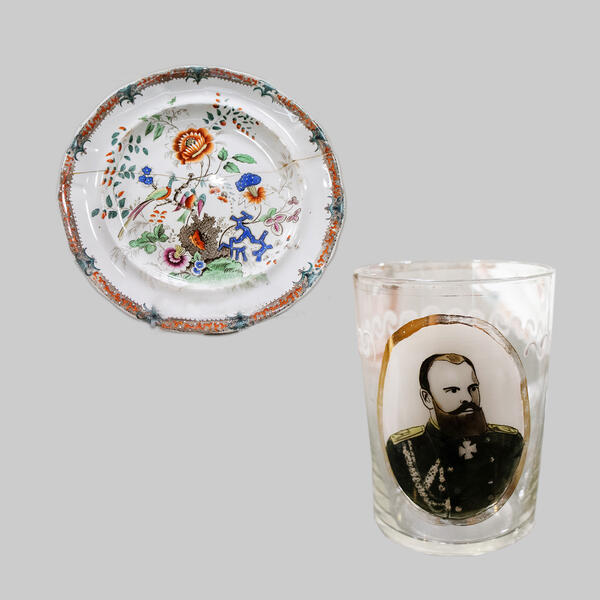
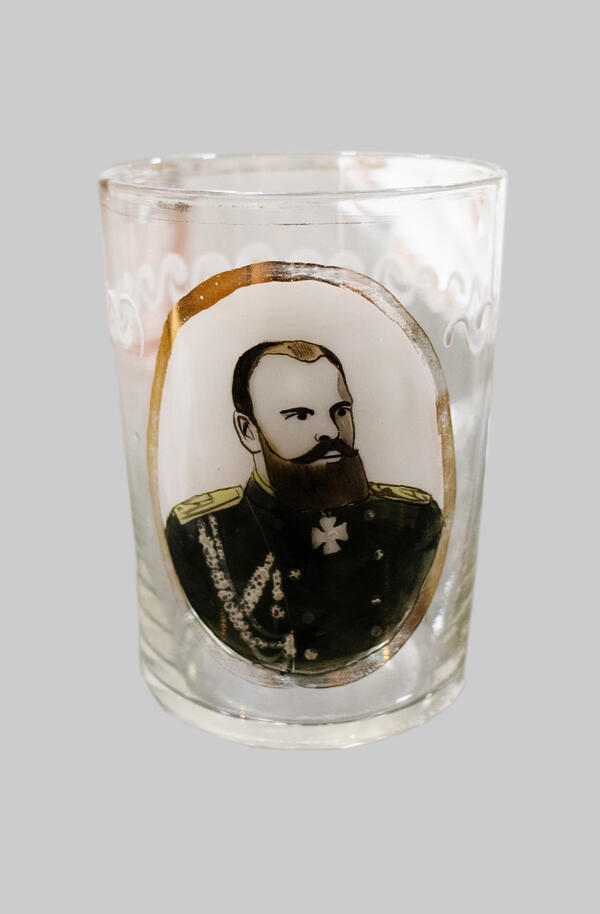
A lot of souvenirs with portraits of the royal family were produced for the solemn date. A glass with a portrait of Alexander the Third was one of these souvenirs. The glazed medallion had a gilded rim.
The program of the anniversary celebrations was extensive; the celebration began in February and lasted until the fall of 1913. Closing celebrations were held in Moscow.
The ascension of Mikhail Fyodorovich to the Russian throne in the early 17th century marked the beginning of a new ruling dynasty. The 300th anniversary of the reigning house of the Romanovs celebrated throughout 1913, is described as a holiday that was celebrated “solemnly by all people, ” and 1913 itself was described as “the heyday of the Empire”s prosperity and the year of the great jubilee.” In all the cities of Russia, grateful prayers were served in churches; military parades of local military garrisons were held; solemn balls, dinners, and receptions were given by governors and mayors. Historical exhibitions and festivities were organized. House windows and shop displays were decorated with flags and portraits of Tsar Mikhail Romanov and the reigning Emperor Nicholas II.
On February 21, 1913, the Russian emperor signed an imperial decree in order to “adequately commemorate this solemn day and perpetuate it in the memory of the people, ” as well as grant “mercy to his subjects.” The decree comprised an extensive list of charitable actions, announced benefits for the poor and amnesty for certain categories of convicts.
Nicholas II forgave tax debts of all his subjects; debts were also cleared from minor entrepreneurs and landowners.
Preparations for the celebration of the anniversary sparked multiple charity events throughout the Russian Empire. Financial resources were allocated for the child care and assistance to advanced farmers.
A lot of souvenirs with portraits of the royal family were produced for the solemn date. A glass with a portrait of Alexander the Third was one of these souvenirs. The glazed medallion had a gilded rim.
The program of the anniversary celebrations was extensive; the celebration began in February and lasted until the fall of 1913. Closing celebrations were held in Moscow.
#5
Date: 1913
Technique: glass, gilding, glaze
Dimensions: 9,5×7×7 cm
Collection: Porcelain, ceramics
Copyright: Ramenskoye History and Art Museum
Technique: glass, gilding, glaze
Dimensions: 9,5×7×7 cm
Collection: Porcelain, ceramics
Copyright: Ramenskoye History and Art Museum
#6
Serving dish
#7
#8
Dmitrovsky was the first private porcelain factory in Russia. The factory was founded by the Russified Englishman Francis (Franz) Gardner in the village of Verbilki in 1766.
For seven years, Gardner’s factory was solely managed by Pavel Petrovich Gardner (1828–1869), a descendant of the original owners. He was a tough manager, but thanks to his good artistic taste, he was able to identify and skillfully use development trends in the culture and the democratic movement, which saw a revival in the 1860s.
At an 1870 exhibition, products of the factory received a well-deserved award. In 1872, the plant was awarded another honorary badge of the Russian Empire. In those days, there was a special focus on boosting faience production, which required fewer costs and ensured a bigger market. Our exhibit is also made of faience.
The main decoration method was decal printing and finishing hand-painting with colored pigments.
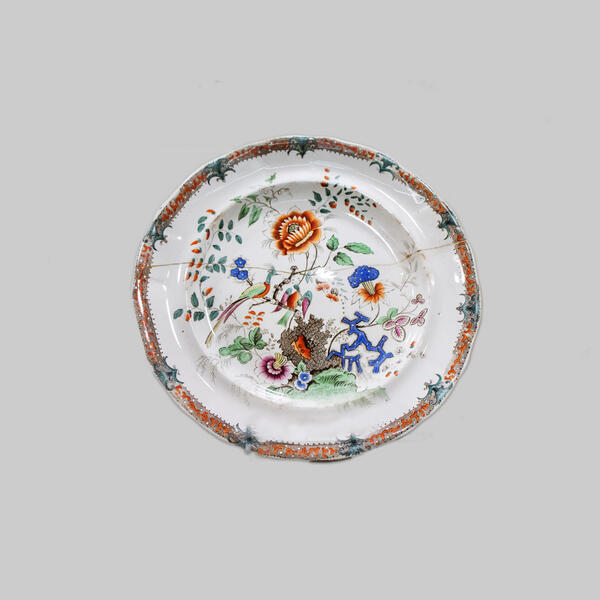
A Chinese theme in chinoiserie style on the dish bottom was a common design. Chinoiserie (a French word) refers to the use of stylistic devices of medieval Chinese art. The genre is widespread in European painting, crafts, fashion, and garden landscaping in the 18th century.
The emergence of this stylized design genre was inspired by the fascination with Chinese porcelain, which swept aristocratic Europe at the end of the 17th century. On the back of this fascination, interest in the Chinese artistic tradition picked up. This interest, however, was utterly superficial: without getting into Eastern philosophy, into the deep meaning of ancient art, into the symbolism of its elements.
Europeans knew very little about China, so the 18th-century craftsmen had to conjecture and fantasize based on their own idea of it.
As for the exhibit in question, in the center of the dish there is a stylized image of a Chinese peony branch, with two pheasants perched on it. Surrounding them, are fantastic flowers, leaves and fruits. The edges are decorated with an ornament. Such themes are usually said to depict birds of paradise and flowers.
While the picture was printed, it does not give the impression of being a print. A subtle hand-painting covers the entire bottom of the dish, running over the print. This way, the work of the artist comes to the fore and gives the impression of highly artistic hand-crafted work. On the back side of the dish, there is a depressed image of the Moscow city emblem, and the inscription: “Gardner Factory in Moscow.” This is not related to the location of the factory, but a confirmation of its government status.
For seven years, Gardner’s factory was solely managed by Pavel Petrovich Gardner (1828–1869), a descendant of the original owners. He was a tough manager, but thanks to his good artistic taste, he was able to identify and skillfully use development trends in the culture and the democratic movement, which saw a revival in the 1860s.
At an 1870 exhibition, products of the factory received a well-deserved award. In 1872, the plant was awarded another honorary badge of the Russian Empire. In those days, there was a special focus on boosting faience production, which required fewer costs and ensured a bigger market. Our exhibit is also made of faience.
The main decoration method was decal printing and finishing hand-painting with colored pigments.
A Chinese theme in chinoiserie style on the dish bottom was a common design. Chinoiserie (a French word) refers to the use of stylistic devices of medieval Chinese art. The genre is widespread in European painting, crafts, fashion, and garden landscaping in the 18th century.
The emergence of this stylized design genre was inspired by the fascination with Chinese porcelain, which swept aristocratic Europe at the end of the 17th century. On the back of this fascination, interest in the Chinese artistic tradition picked up. This interest, however, was utterly superficial: without getting into Eastern philosophy, into the deep meaning of ancient art, into the symbolism of its elements.
Europeans knew very little about China, so the 18th-century craftsmen had to conjecture and fantasize based on their own idea of it.
As for the exhibit in question, in the center of the dish there is a stylized image of a Chinese peony branch, with two pheasants perched on it. Surrounding them, are fantastic flowers, leaves and fruits. The edges are decorated with an ornament. Such themes are usually said to depict birds of paradise and flowers.
While the picture was printed, it does not give the impression of being a print. A subtle hand-painting covers the entire bottom of the dish, running over the print. This way, the work of the artist comes to the fore and gives the impression of highly artistic hand-crafted work. On the back side of the dish, there is a depressed image of the Moscow city emblem, and the inscription: “Gardner Factory in Moscow.” This is not related to the location of the factory, but a confirmation of its government status.
#9
Author: Manufactured at the Franz Yakovlevich Gardner Factory
Date: late 19th century
Technique: faience, color pigments
Dimensions: 27×27×3 cm
Collection: Porcelain, ceramics
Copyright: Ramenskoye History and Art Museum
Date: late 19th century
Technique: faience, color pigments
Dimensions: 27×27×3 cm
Collection: Porcelain, ceramics
Copyright: Ramenskoye History and Art Museum
read morehide
00:00
00:00
1x
Glass glass, Serving dish
Collection
0
 Point your smartphone camera to open in the app
Open in app
Share