By frequency of archaeological findings, knives rank second after ceramics.
This item had the most universal household significance and was the most common tool used by everyone. The same knife could be used for cooking, butchering animal carcasses, and skinning. It was also used for gutting fish and game, carving wood, cutting leather birch bark, and much more. People always carried a knife with them. It was an indispensable means of protection and a useful tool for basic activities.
In ancient times, people made knives from bone, horn, and stone, but most commonly from flint plates and obsidian, or volcanic glass. Silicon and obsidian were scarce in the territories of modern China, so knives made of bamboo became widespread. Among the peoples of the Russian Far North, bone knives were popular and used up until the 19th century.
About five thousand years ago, humans mastered the extraction and processing of metal. Stone knives were replaced by knives made of copper and bronze, and later iron. The important advantages of metal knives over their stone and bone predecessors were strength and durability.
In the Ancient Roman Empire, the first folding knife was invented — a distant ancestor of the modern pocket knife.
The great importance of knives for humans is also evident from their frequent presence in ancient burials and graveyards. Knives were placed around the waist, on the chest, near the head, and at the feet of the deceased. One burial could contain from one to three artifacts. Knives were often kept in sheaths made of birch bark, leather, or wood — such conclusions were drawn by archaeologists from fragments of these materials.
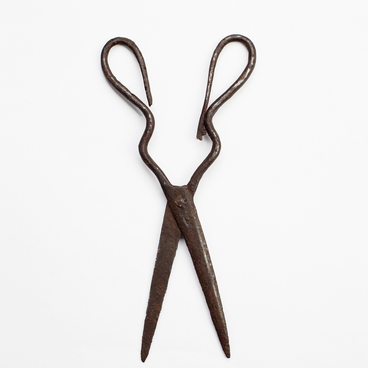
People believed that every sharp instrument protected its owner from evil spirits. Among some ethnic groups, there was a belief that to ward off evil forces that torment one during sleep, one should hide a knife, scissors, or some other iron cutting tools under the bed.