Until the middle of the 19th century, a “salt cellar” was usually a box for storing salt and seasonings. They were made, as a rule, of glass, ceramics, wood or metal.
The salt shaker, which is widely used today, was developed by the American John Landis Mason in 1858. He created a container with a screw cap that had many small holes in it.
In 1848, Alonzo Richmond opened a salt factory in Chicago, USA. Thus the history of Morton Salt, one of the largest salt production companies, began. That period in American history is also called the gold rush due to the discovery of numerous gold deposits in North America. Back then, gold prospectors came to the mining sites en masse. The demand for salt was very high among visitors, and locals sold it or exchanged it for gold in a ratio of 1:1. This is partly why for centuries this seasoning was called “white gold”.
In the 1910s, Morton Salt began adding magnesium carbonate to the product to avoid it becoming stale and clumped and to make it crumbly. In the following decade, the company released salt shakers, which became widespread in the 1930s during the Great Depression, the global economic crisis, when manufacturers focused on producing inexpensive goods.
Salt played a special role in the Russian Empire. In 1648, a Salt riot occurred in Moscow due to the establishment of high prices and a lack of salt among the population. In 1857, a new set of laws was formed — the “Charter of Salt” — which regulated the work of salt mines, controlled the quality of salt and the procedure for its storage and sale. Until 1881, salt was an excisable commodity that made a significant contribution to the state treasury. After the abolition of the excise tax, the price of salt plummeted: before, salt was sold at a price of 50 kopecks — 1 ruble per pood, or 16.4 kilograms, and after the tax abolition it began to cost 20–40 kopecks.
In Simbirsk, modern Ulyanovsk, basic goods, including salt, were widely available, as the city was a commercial one. The local trade fair was considered the largest in the country during the second half of the 19th century and often ranked fourth in terms of trade turnover in the Russian Empire.
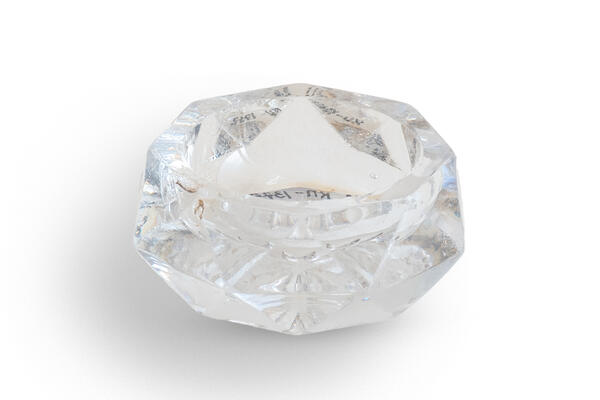
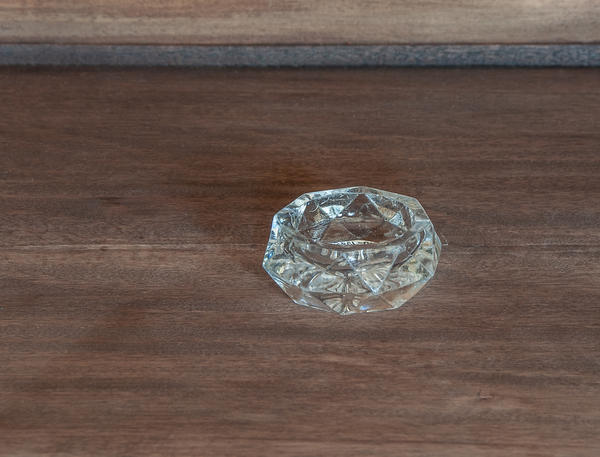
The salt cellar from the collection of the Ulyanov
family Apartment-Museum is round, crystal, faceted, with a pattern on the
bottom. This piece of kitchen utensils belonged to Anna Ilyinichna
Ulyanova-Elizarova, the elder sister of Vladimir Ilyich Lenin.