Font
Color
Graphics
Изображение точки

To see AR mode in action:

1. Install ARTEFACT app for iOS or Android;

2. Find the exhibition «Russians. Late 19th — Early 20th Century»

3. Push the «Augmented reality» button and point your phone's camera at the exhibit;

Скрыть точки интересаПоказать точки интереса
Показать в высоком качестве

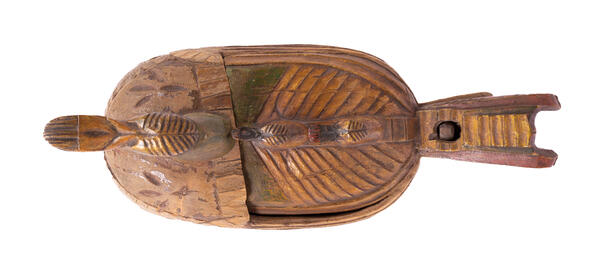
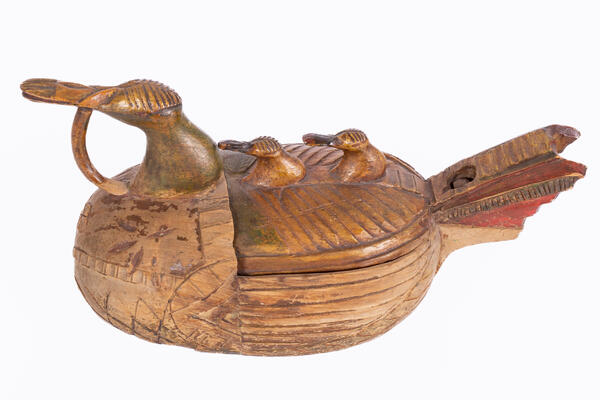
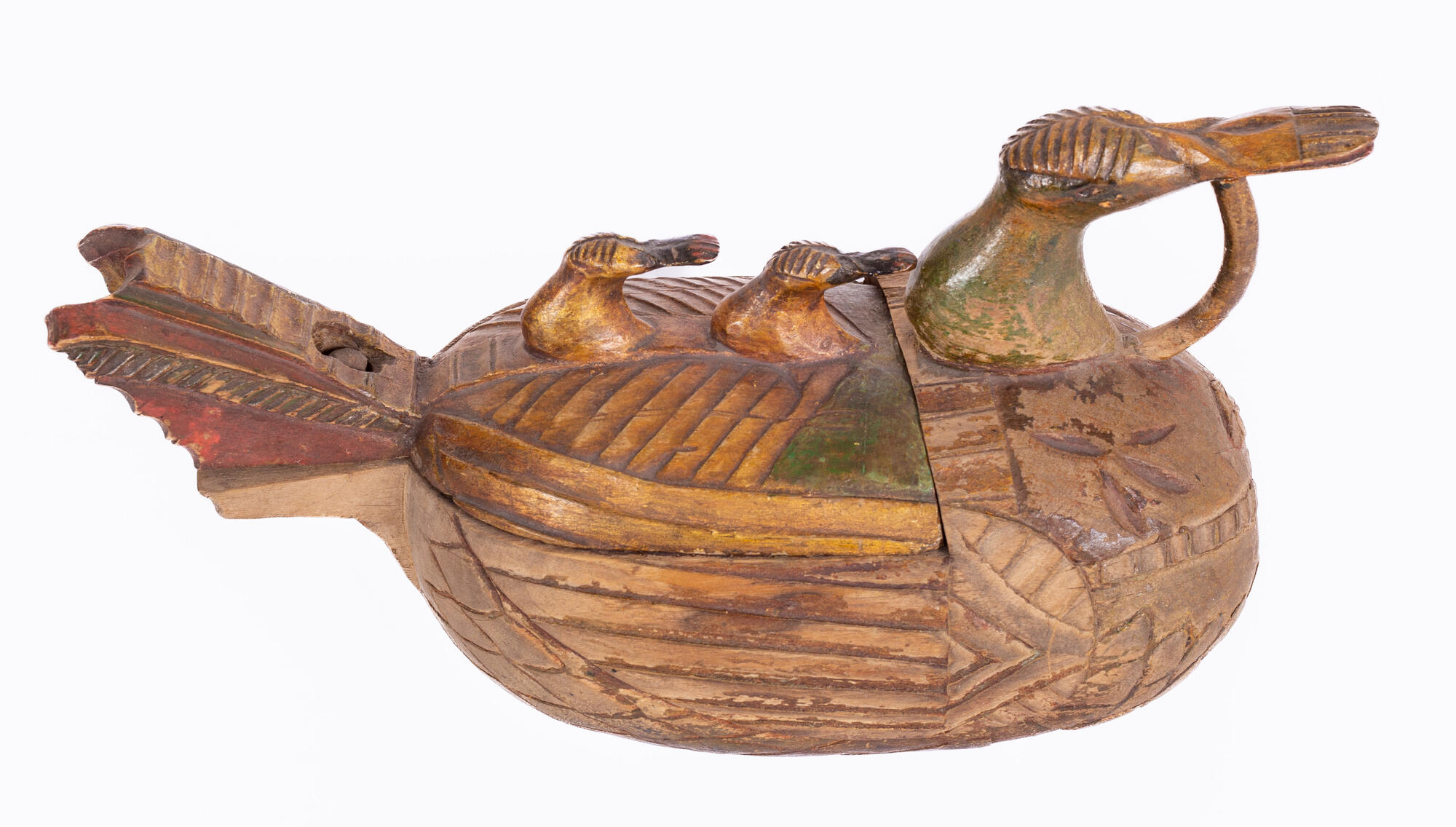
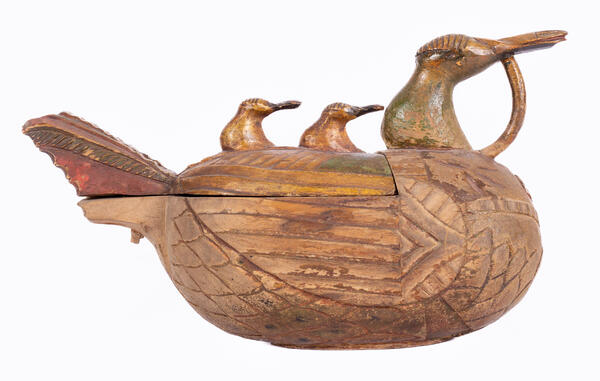
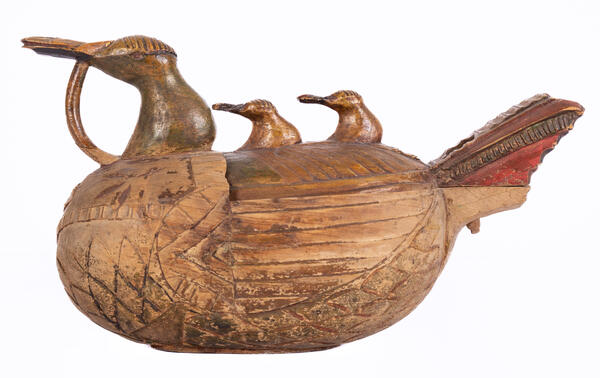
Saltcellar

Creation period
the 19th century
Place of сreation
the Russian Empire, Vologda Governorate
Dimensions
14x26 cm
Technique
wood, paint; carving, chiseling, decorative carving, staining
1
Open in app
#1

Salt was one of the few store-bought, and rather expensive, products on a peasant’s table. It was treated with special reverence. To store and serve salt, special vessels were made — saltcellars (solonitsa or, more common, solonka).

Saltcellars were hollowed out or turned out of wood and burl, woven from birch bark and root. They had a wide variety of shapes, depending on the local tradition, and were decorated with carvings or paintings depicting birds, horses, and church domes. There were table, kitchen and travel saltcellars and they always had a lid.

The special attitude to the saltcellar was conditioned by its connection with salt, which was sacred food. In ancient times, it was valued more than gold and sometimes could even be the cause of war. Salt, along with bread, was considered a symbol of prosperity and well-being, generosity and hospitality:
#2

Salt on the table and the table is a throne, while the table without salt is crooked.

#3

Bread (khleb) and salt (sol) became a symbol of festive meals and hospitality in general, which in the Russian North was called khlebosolstvo.

It was obligatory to have a saltcellar on the table at the viewing of the bride, engagement and at the wedding feast. The bridegroom brought a saltcellar, a tablecloth, and a treat to the bride’s house; the bride, in turn, took the saltcellar from her father’s home to her husband’s family.

The association of the saltcellar with the hearth was used in Christmas fortune-telling. Girls buried the saltcellar in the snow and made a series of mounds of snow: the diviners who guessed the place where the saltcellar was hidden would get married.

The symbolism of the multiplicity of salt, consisting of grains, was transferred to the saltcellar, which embodied the ideas of wealth, fertility and fate. So, during the christening ceremony, the godfather put a saltcellar on the table with the words:
#4

The number of grains of salt in the saltcellar is the number of my godson’s years to live.

#5

When the woman started to cut a loaf of bread, she left a small slice of it in the salt container, and two days later she ate it, “so that the bread would grow well”.

A saltcellar had a protective function: it was taken along on a trip not only for eating salt, but also to ward off evil spirits. For example, salt was poured into the fire to protect against the devil. The use of the saltcellar was strictly regulated: it was forbidden to dip bread in it or to take salt out of it by hand, which in popular consciousness made people think of Judas; when passing saltcellars around, people were supposed to laugh in order to avoid a quarrel.

#7
Saltcellar
#6
read morehide
00:00
00:00
1x

Saltcellar

Creation period
the 19th century
Place of сreation
the Russian Empire, Vologda Governorate
Dimensions
14x26 cm
Technique
wood, paint; carving, chiseling, decorative carving, staining
1
Point your smartphone camera to open in the app
Share
VkontakteOdnoklassnikiTelegram
Share on my website
Copy linkCopied
Copy
Open in app
To see AR mode in action:
  1. Install ARTEFACT app for 
  2. iOS or Android;
  3. Find and download the «Paintings in Details» exhibition
  4. Push the «Augmented reality» button and point your phone's camera at the painting;
  5. Watch what happens on your phone screen whilst you flip through the pictures.
 
We use Cookies
Cookies on the Artefact Website. We use cookies to ensure that we give you the best experience on our website. If you continue without changing your settings, we'll assume that you are happy to receive all cookies on the Artefact website. However, if you would like to, you can change your cookie settings at any time.
Learn more about useHide
Content is available only in Russian

X

Нашли опечатку?...

%title%%type%