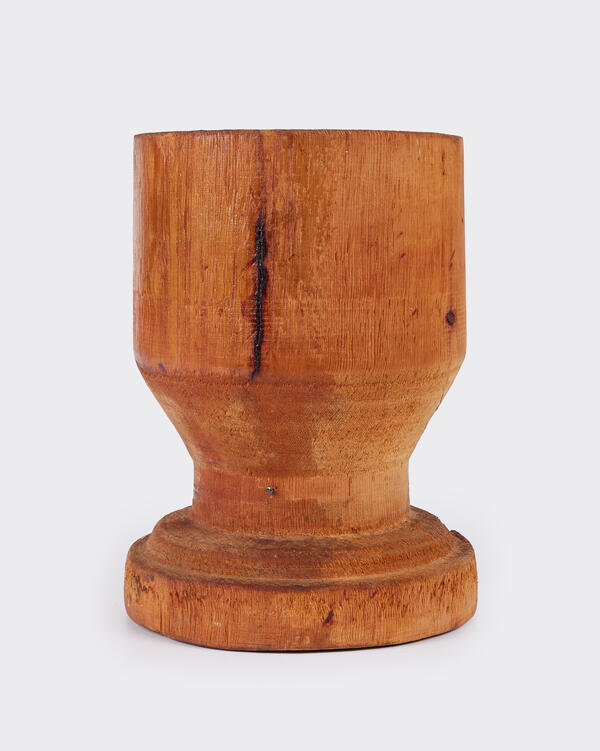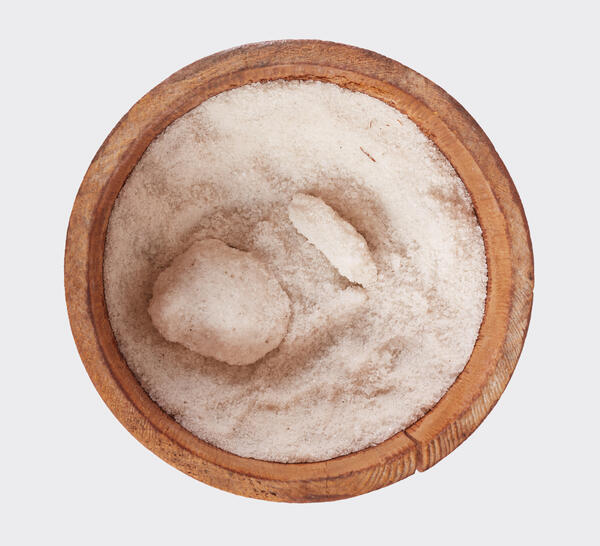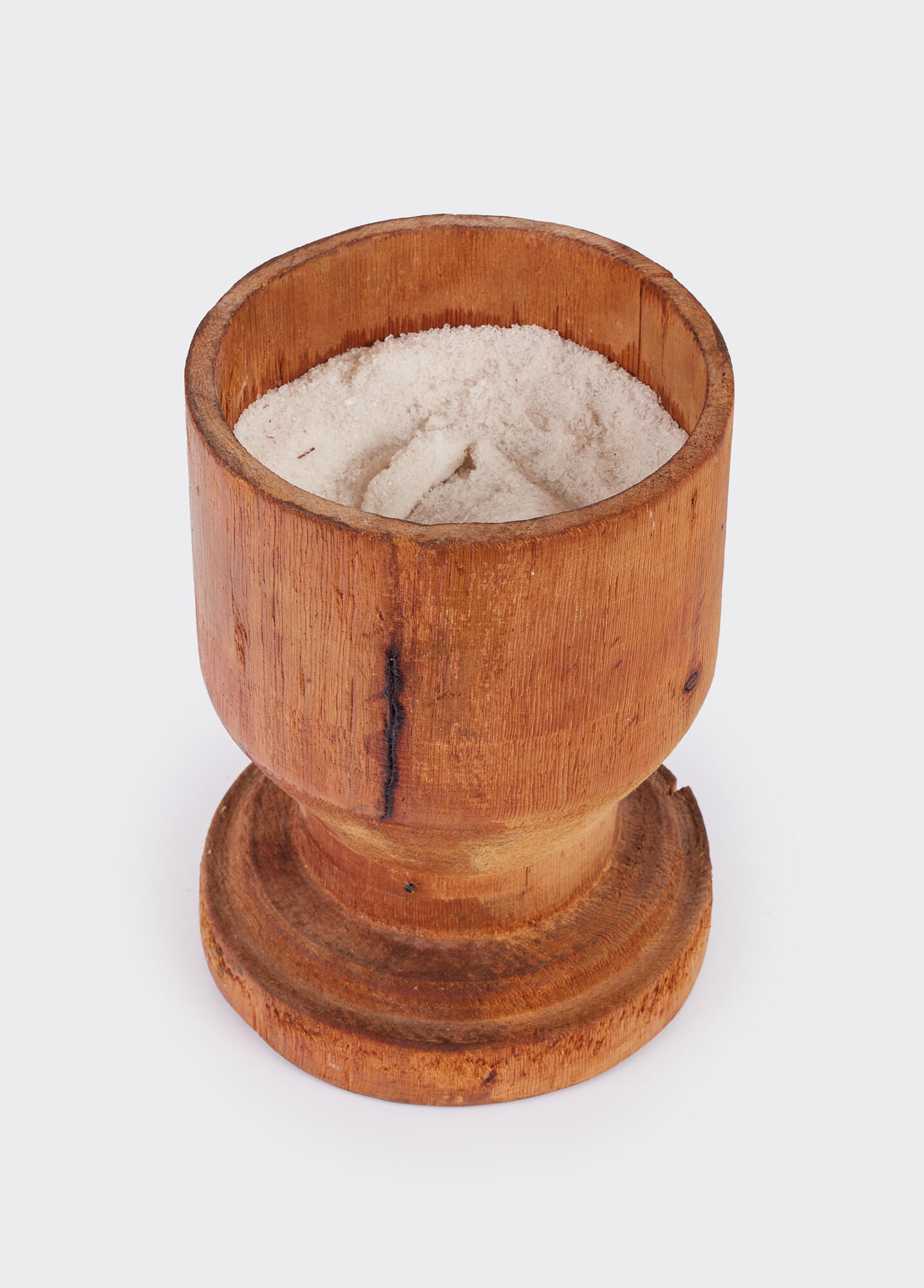


The exhibition of the Zheleznodorozhny Local Lore Museum presents a plain wooden salt cellar, hollowed out by hand from a single piece of wood. Such salt cellars were traditionally used in Russian villages and were intended for storing salt: salt in wooden cellars could be stored for a long time, it did not spoil or get damp.
One of the earliest mentions of a salt cellar in Russian written sources dates to the 16th century, but archaeological excavations in the layers of the 11th–13th centuries revealed turned salt cellars, which indicates that this household item was widely used even earlier. The attitude towards salt cellars was respectful. It was considered a family heirloom and could never be sold. This respectful attitude was the same as toward salt, which was considered a valuable indispensable product. A filled salt cellar was compared to a home full of goodness and prosperity.
Salt and salt cellars were widely used in Russian rituals, especially during the wedding. The salt cellar was placed on the table during the viewing of the bride and the discussion of the engagement between the couple’s parents. In some Russian governorates, the day after the wedding, the bride gave her mother-in-law a salt cellar, which was part of the dowry. Before that, the bride tied the cellar to a soroka headdress (worn by married women, consisting of several parts not sewn together, which were put on the head one after another) as a symbol of innocence. According to Russian tradition, the parents greet the bride and groom with bread and salt, as do hosts with their dear guests; but when the guests are uninvited, they leave “without trying salt”.
The salt cellar was also used in rituals of the
calendar cycle. For example, people in the Kostroma Governorate used it to tell
fortunes on the night before Christmas. Girls buried a salt cellar in the snow
and made a number of other piles of snow: whichever one of them stumbled upon
the snow pile with the salt cellar would get married. Salt and a loaf of bread
was the meal during the first grazing of cattle on George’s Day, on April 23
(May 6). In the Nizhny Novgorod Governorate, the newlyweds received a salt
cellar, cheese, two spoons, sometimes a rake, a flail for threshing bread and a
scythe as a gift on Peter’s Day on June 29 (July 12) from the bride’s mother.
The salt cellar is associated with certain rules of conduct during meals, as
well as all sorts of superstitious beliefs. A dish with bread and salt was
central on the festive table. It was also customary to laugh when passing salt
to someone at the table.